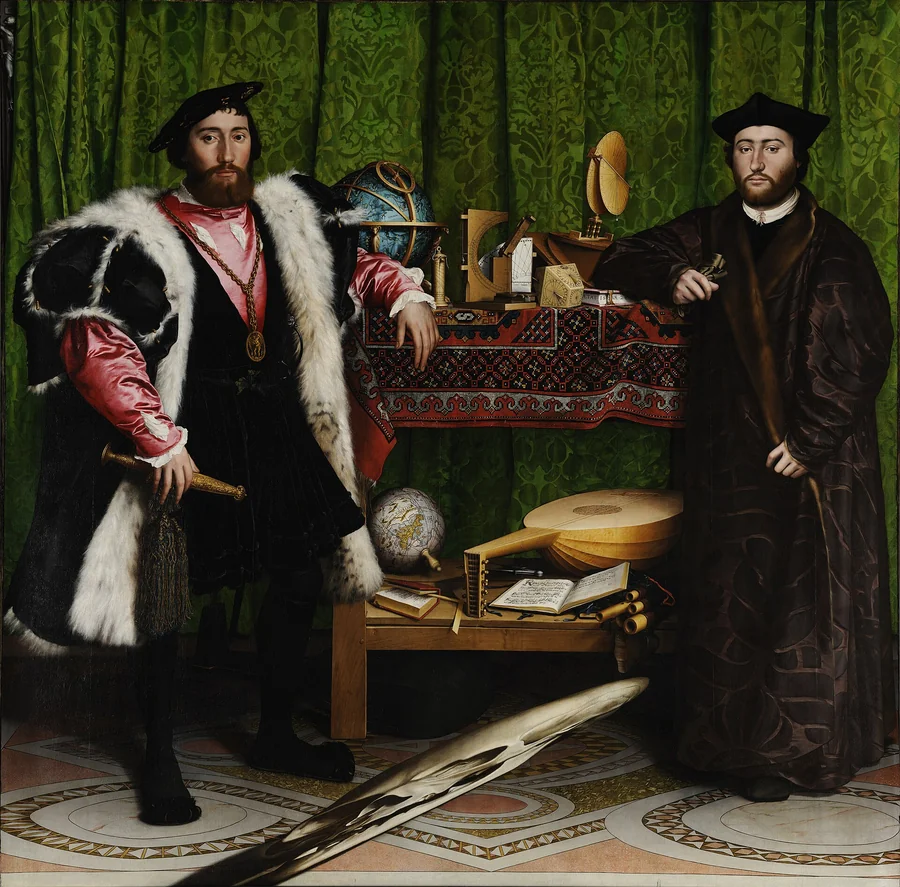
The Ambassadors
Hans Holbein the Younger
A double portrait with a skull that emerges from an oblique view.
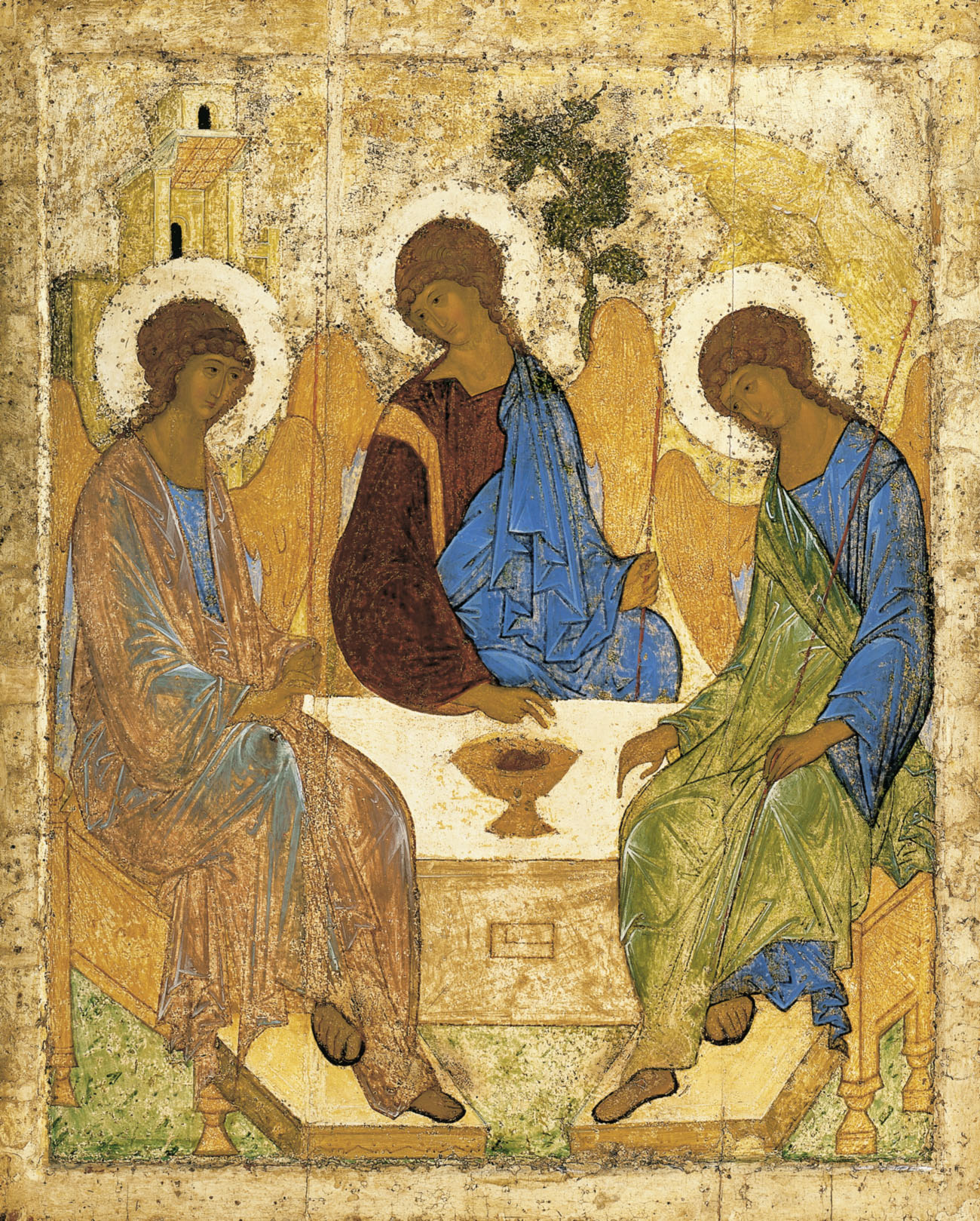
Three angels gather around a table in a space whose furniture opens towards the viewer instead of following a single distant vanishing point.
Follow the oblique edges of the footstools beneath the two outer angels. Compare their outward spread with a conventional perspective drawing, where receding parallel edges narrow towards a distant vanishing point. Look at the table and seats as separate local constructions.
Andrei Rublev · faithful reproduction; photographer not identified in the source record
Original file & attribution · Public domain (PD-Art)
Original image downloaded from Wikimedia Commons; the downloaded file is unchanged. Gallery previews may be resized or converted to WebP; animated previews show the first frame.
Download imageThree angels gather around a table in a space whose furniture opens towards the viewer instead of following a single distant vanishing point.
Follow the oblique edges of the footstools beneath the two outer angels. Compare their outward spread with a conventional perspective drawing, where receding parallel edges narrow towards a distant vanishing point. Look at the table and seats as separate local constructions.
Inverse perspective can represent receding parallel edges as diverging and show more than one face of an object. Rublev’s furniture uses local spatial arrangements within the overall composition. The space need not obey one consistent geometric projection to remain readable.
A double portrait with a skull that emerges from an oblique view.
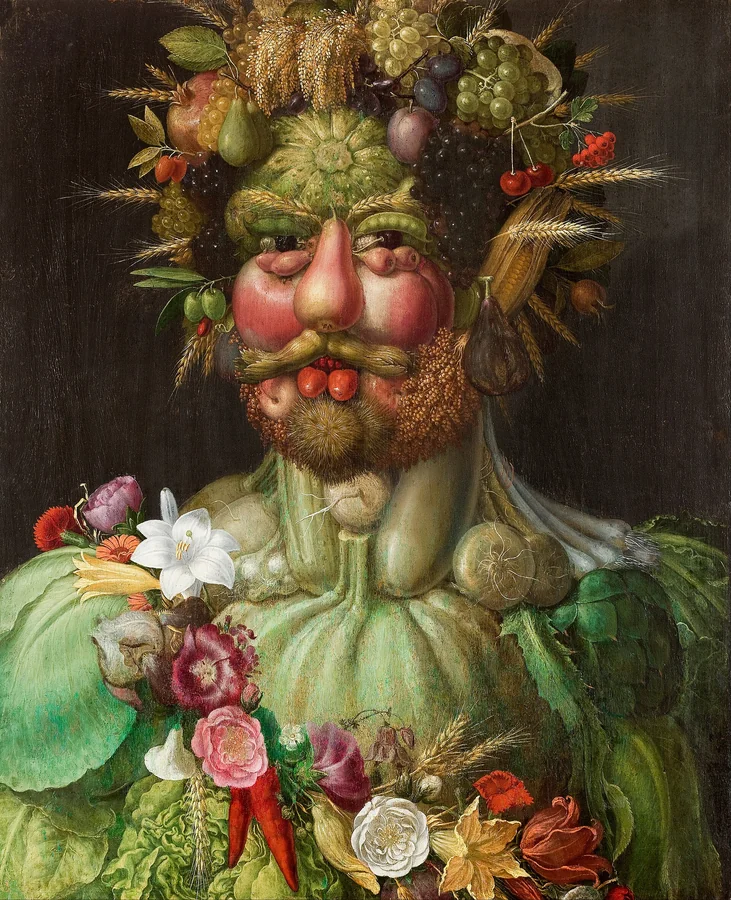
Rudolf II appears as a face assembled from fruit, flowers, and vegetables.
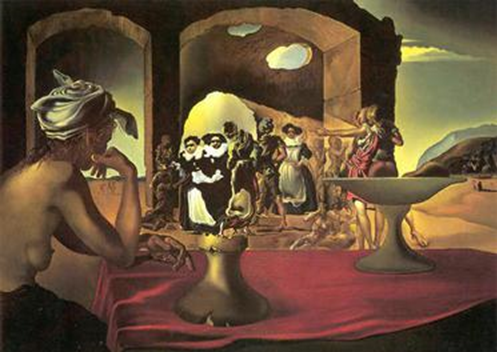
Two figures beneath an arch become the eyes of a much larger face.