LIGHT / WAVEFRONTS / APPARENT REALITY

Reflections & tricky projections.

From ghost-lantern shows to reflected performers, endless mirrors and changing façades. Follow the light behind apparent presences, repeated reflections and projection mapping.

7 examples, with diagrams, photographs and source demonstrations.

Reflections & tricky projections

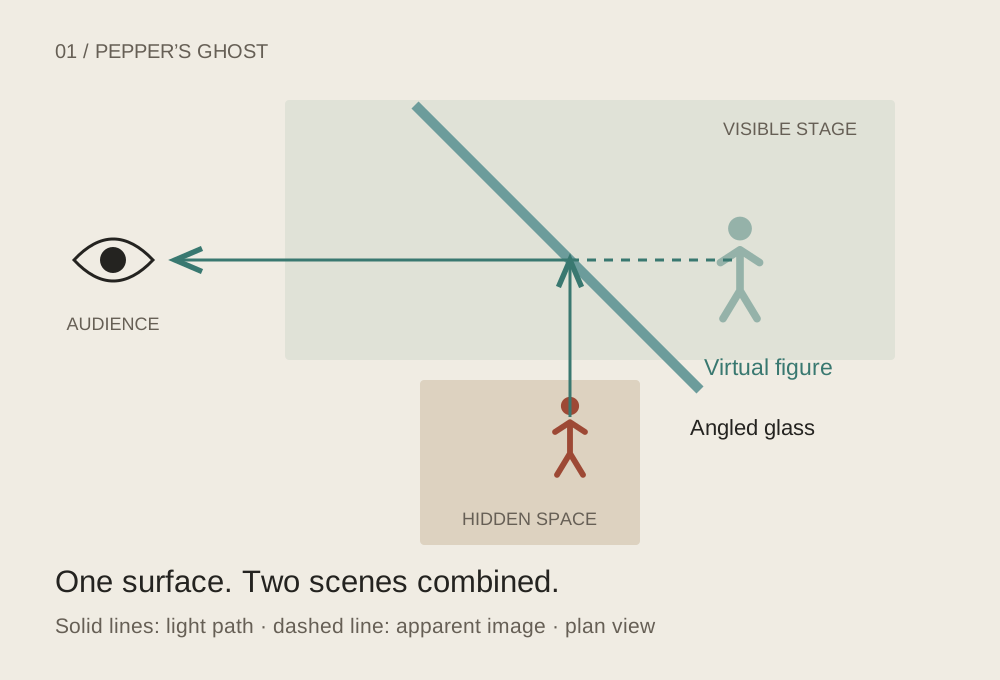
Original plan-view diagram of Pepper’s Ghost: a hidden figure is reflected in angled glass, appearing as a virtual figure on the visible stage.
Original explanatory diagram; follow the source link to see the real example. Image: Through Mirror · original explanatory diagram · Source · CC0 1.0. Original explanatory diagram (2026); viewing previews may be resized.
See a real display and a historical stage arrangement
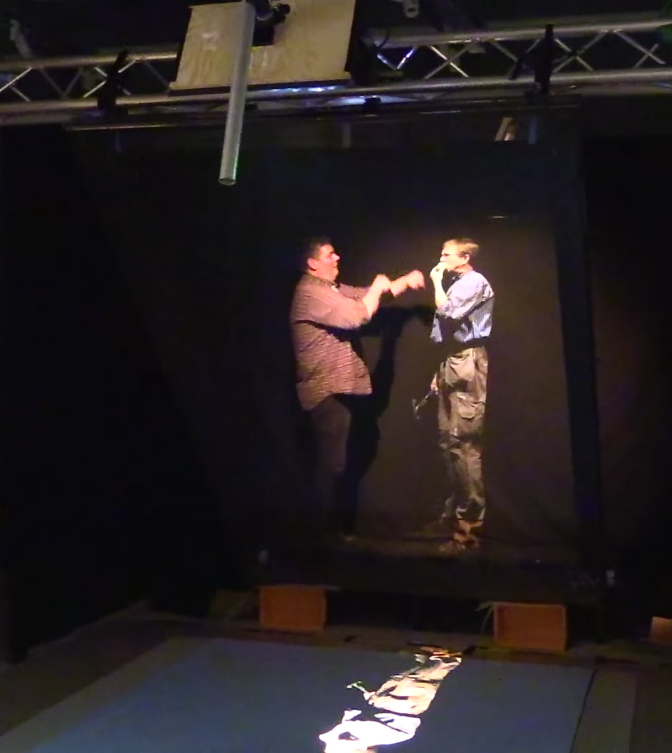
A Pepper’s Ghost workshop display using a video screen and reflective glass.
A modern workshop demonstration by the Swedish Exhibition Agency: a video screen supplies the reflected image. Image: Riksutställningar / Swedish Exhibition Agency · Source · CC BY-SA 3.0. Photograph of a Pepper’s Ghost workshop display using a video screen.; viewing previews may be resized.
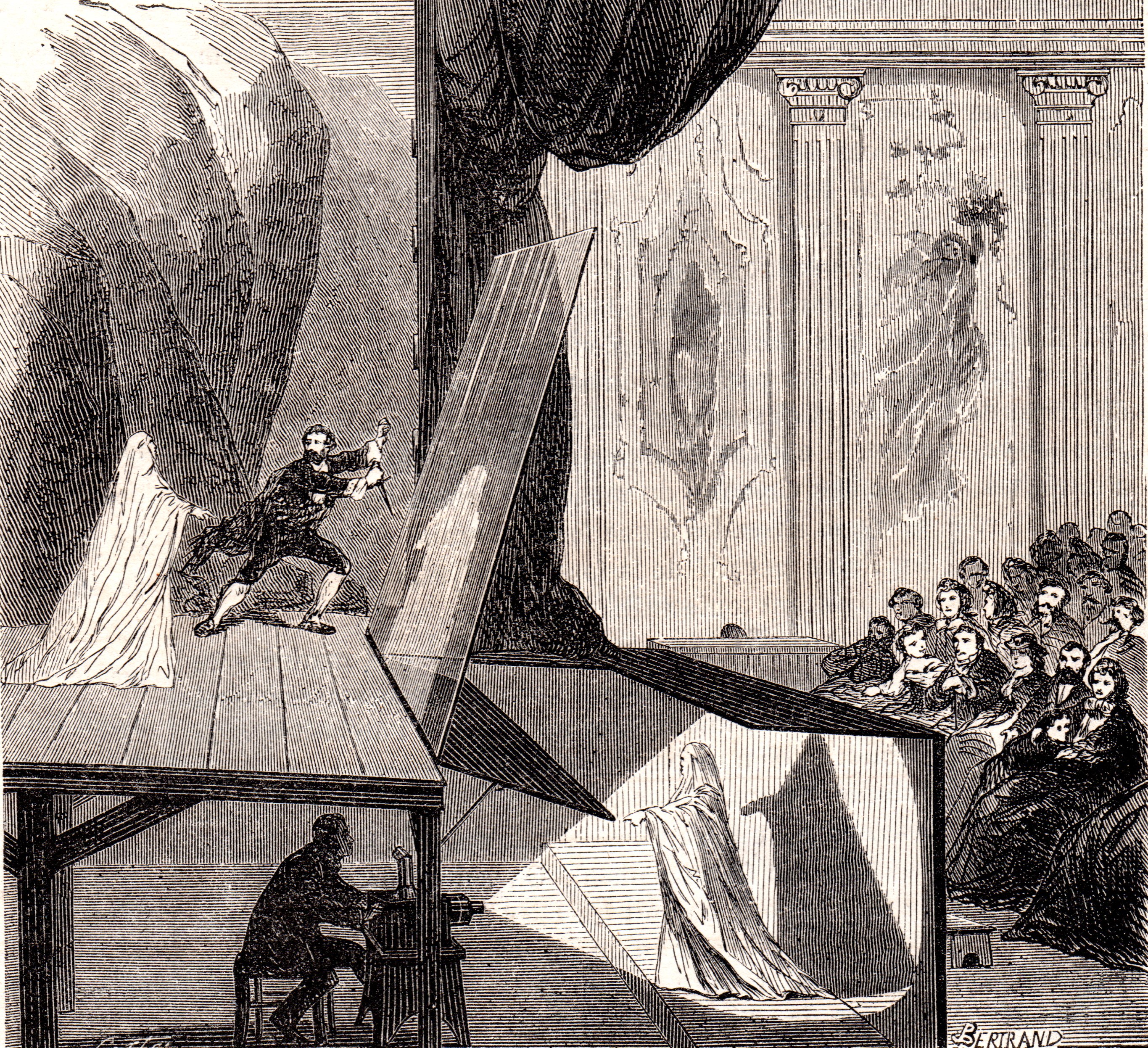
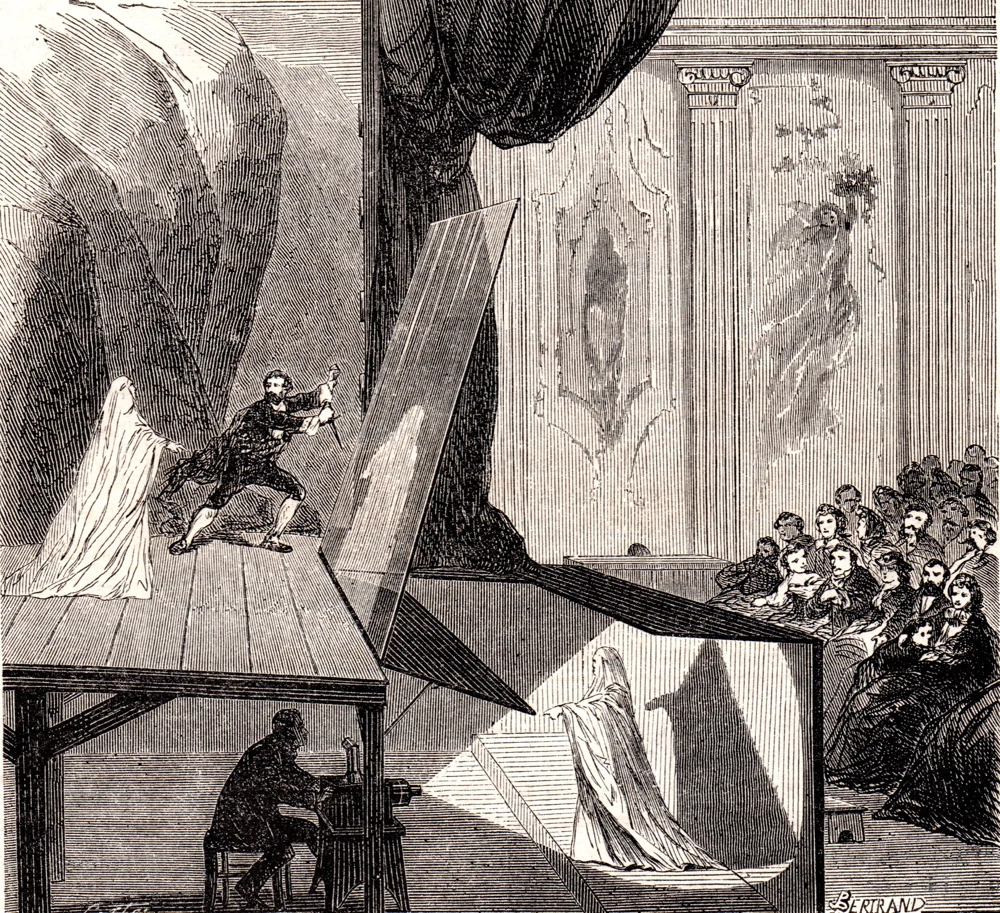
Bertrand’s 1865 engraving showing a Pepper’s Ghost stage, audience sight lines and the concealed illuminated figure beneath it.
Bertrand, Pepper’s Ghost stage arrangement, Le Monde Illustré, 21 January 1865. A historical engraving rather than a performance photograph. Image: Bertrand (no first name given) · Source · Public domain. Bertrand’s 1865 engraving of a Pepper’s Ghost stage arrangement; a historical illustration.; viewing previews may be resized.
See the historical stage illustration ↗
01 / 1862 · Royal Polytechnic Institution, London

Pepper’s Ghost

A Victorian stage illusion, still used in displays and theatre

A figure appears on an empty stage, transparent enough for the scenery to show through. Its real source is hidden elsewhere.

Henry Dircks devised an arrangement for making a reflected figure appear in a theatrical scene. John Henry Pepper adapted the idea for a large audience at London’s Royal Polytechnic Institution. Pepper presented it in December 1862 in a performance based on Charles Dickens’s The Haunted Man; the two men jointly patented their apparatus in 1863. Earlier phantasmagoria ghost shows used magic-lantern projection. Pepper’s reflected apparitions became another strand of theatrical ghost entertainment, including the Polytechnic’s staging of Dickens’s The Haunted Man.

An angled sheet of clear glass transmits the view of the stage while reflecting a brightly lit figure concealed beside or below it. The audience combines the transmitted scene with the reflected image and sees an apparent figure behind the glass. Carefully controlled lighting hides the glass and the source, and makes the figure appear or disappear.

FIND THE ILLUSION

Trace the light from the hidden figure to the glass and then towards the audience. Imagine dimming the hidden figure: its reflection fades while the visible stage stays in view.

The image is a reflection, rather than a holographic reconstruction. The diagram shows a simplified arrangement viewed from above; it is not a reconstruction of the original theatre.

Henry Dircks and John Henry Pepper

Open the full entry & images →
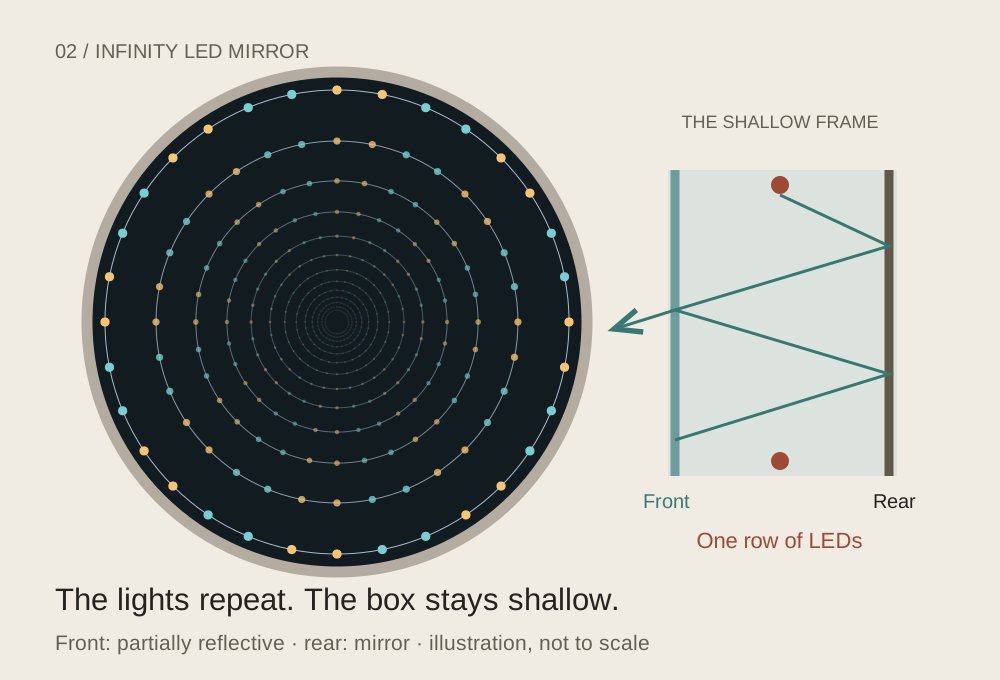
Original illustration of an infinity LED mirror with nested glowing rings and a side-view inset showing LEDs between a rear mirror and a partially reflective front panel.
Original explanatory diagram; follow the source link to see the real example. Image: Through Mirror · original explanatory diagram · Source · CC0 1.0. Original explanatory diagram (2026); viewing previews may be resized.
See photographed infinity mirrors
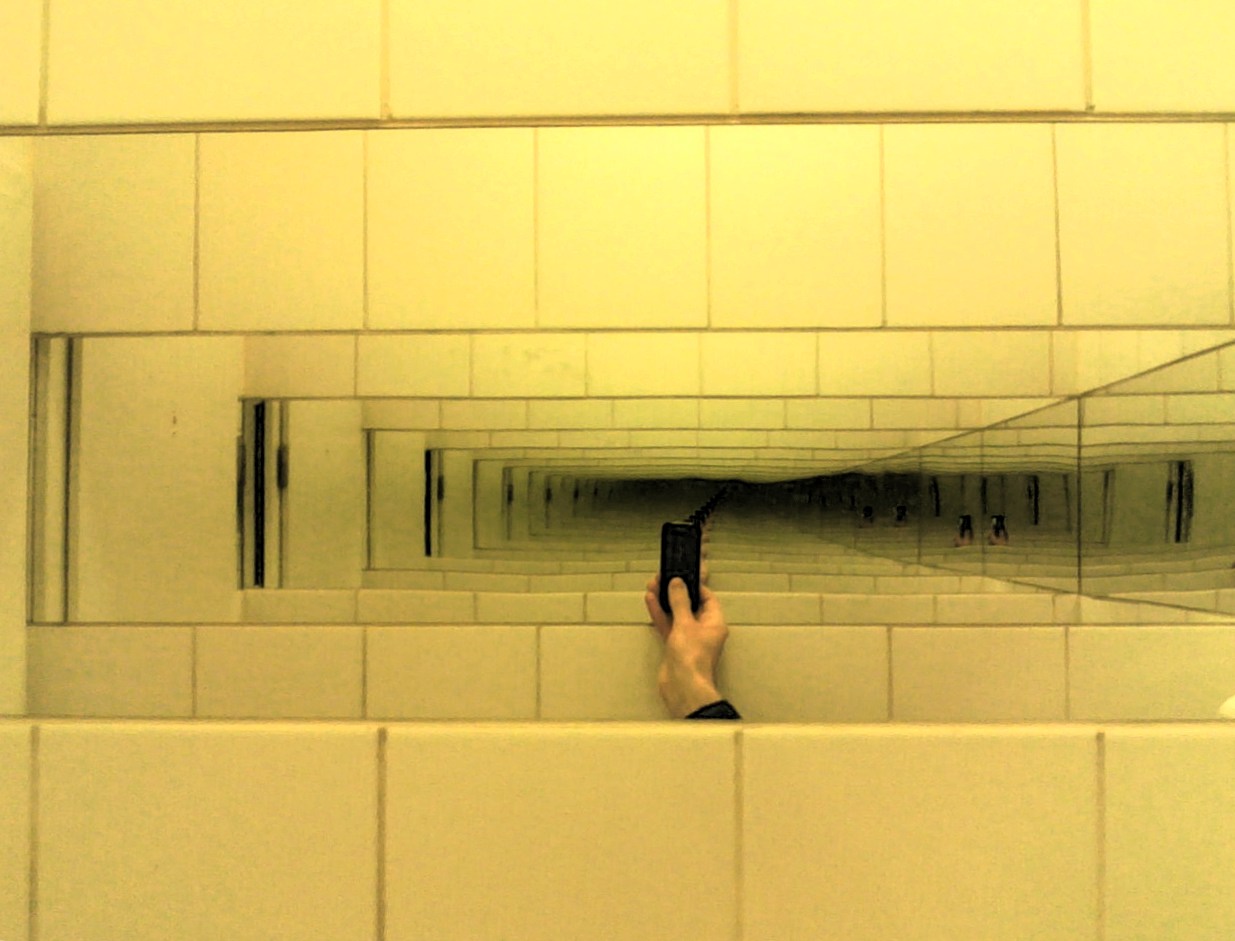
Bright lights repeating into the apparent depth of an infinity mirror.
Photographed repeating lights show the real mirror effect alongside the explanatory diagram. Image: Elsamuko from Kiel, Germany · Source · CC BY-SA 2.0. Photograph of repeated lights in an infinity mirror.; viewing previews may be resized.
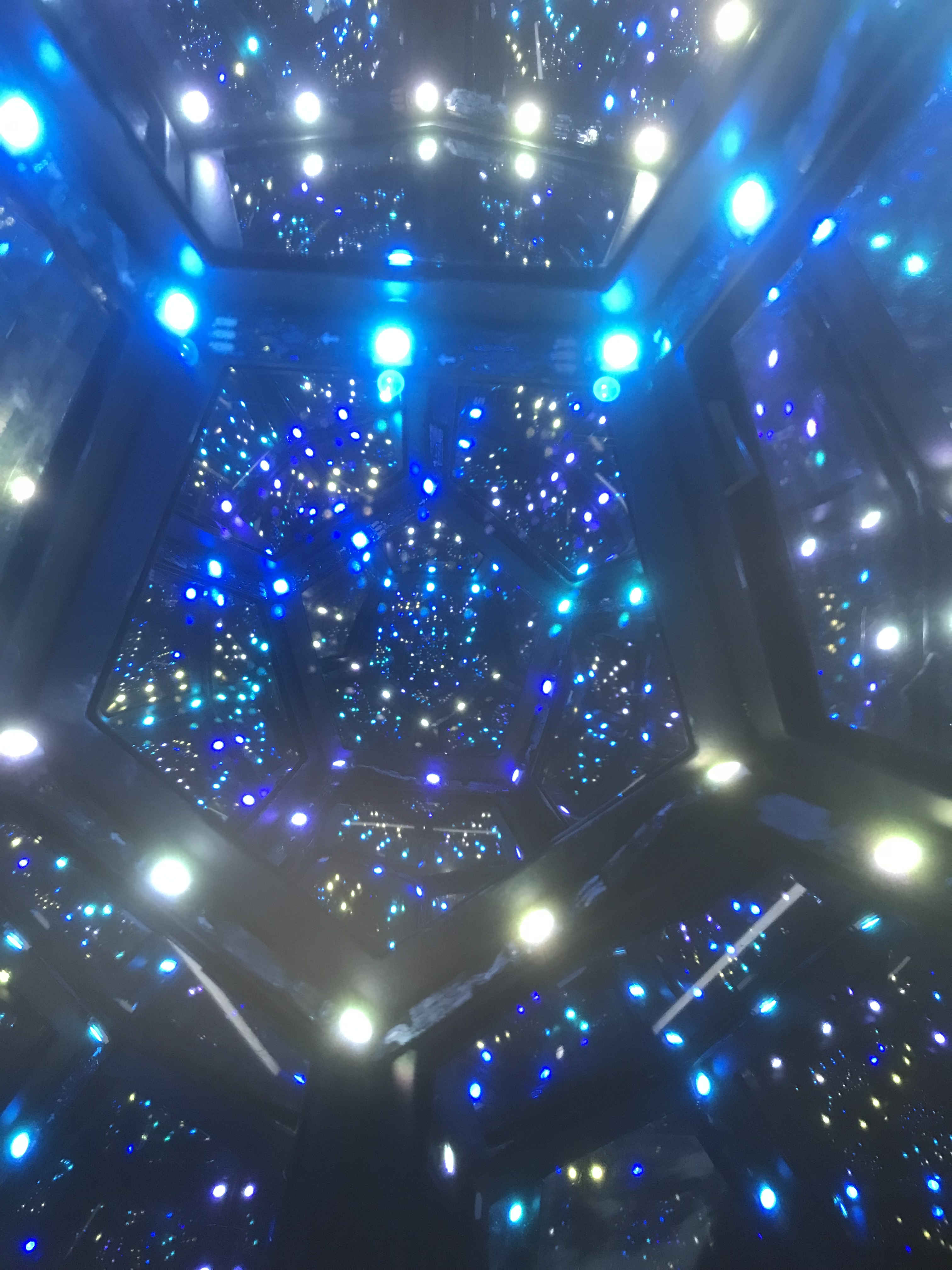
An illuminated mirrored dodecahedron creating repeating lights in multiple directions.
A mirrored dodecahedron extends repeating reflections into a polyhedral form. Image: The Sophocrat · Source · CC BY 4.0. Photograph of an illuminated mirror dodecahedron with repeating reflections.; viewing previews may be resized.
Watch a real infinity LED mirror ↗
02 / Modern LED display · earlier mirror principle

Infinity LED mirror

Two mirrors, one row of lights, an apparently endless tunnel

A shallow frame seems to contain a deep tunnel of lights. A single row of LEDs becomes a chain of reflections that fades into the distance.

An infinity mirror uses the familiar repetition of images between facing mirrors. Modern makers place LEDs around the gap, with a full mirror behind them and a partially reflective front panel. Adafruit’s NeoPixel projects provide practical examples of this compact display; the mirror principle is older than the LEDs.

The front panel lets some light reach your eyes and reflects some back towards the rear mirror. The light bounces between the surfaces, producing successive virtual images at increasing apparent depths. Each round trip loses light through transmission and absorption, so the copies fade. Perspective makes the repeated LED outlines look progressively smaller.

FIND THE ILLUSION

Follow the repeated rings towards the centre. Each gets smaller and dimmer. Then inspect the side-view inset: the actual lights occupy only the narrow gap between two mirrors.

The tunnel is virtual and its visible extent is finite. A partially reflective panel is sometimes sold as a ‘one-way mirror’, but its coating does not switch between transparency and reflection when the lights turn on.

Multiple-reflection principle; contemporary LED designs by many makers

Open the full entry & images →
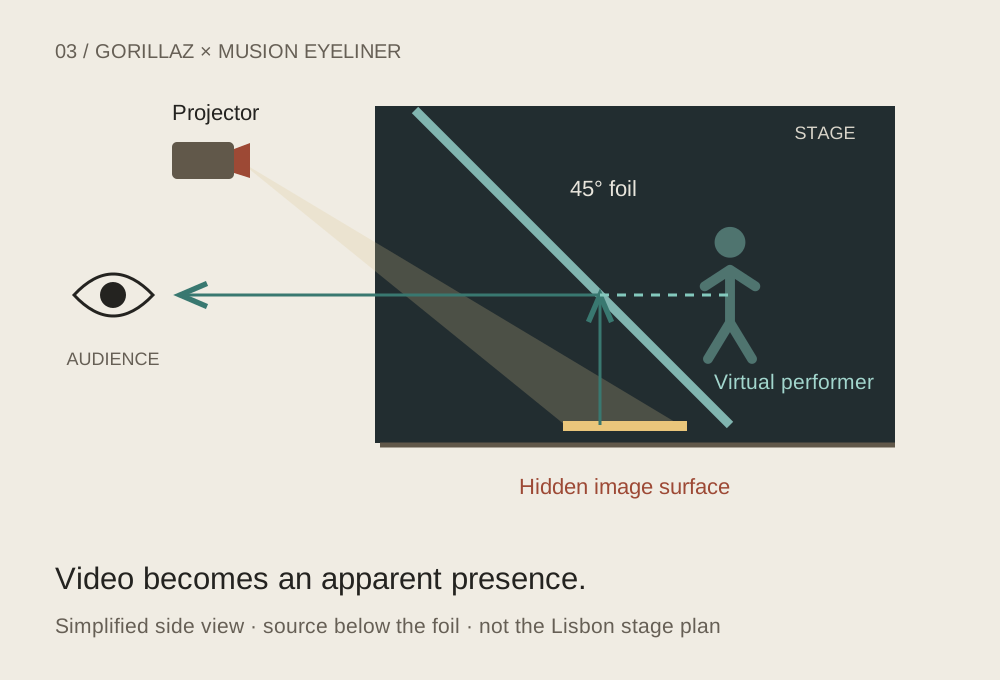
Original side-view diagram of a Musion-style stage: a projector lights a hidden floor image that angled transparent foil reflects towards the audience as an upright virtual performer.
Original explanatory diagram; follow the source link to see the real example. Image: Through Mirror · original explanatory diagram · Source · CC0 1.0. Original explanatory diagram (2026); viewing previews may be resized.

Official recording: Gorillaz · Feel Good Inc., live at the MTV EMAs.

03 / 2005 · MTV Europe Music Awards, Lisbon

Gorillaz on stage — Musion Eyeliner

A virtual band appears to occupy a live stage

Gorillaz’s animated band members appear to perform on stage. Musion’s holographic presentation turns video into an apparently present performer.

Musion documents Gorillaz’s November 2005 appearance at the MTV Europe Music Awards in Lisbon as a breakthrough for its stage system. Its project portfolio also records Gorillaz at the 2006 Grammy Awards. The dates here refer to those award-show appearances.

Eyeliner develops the Pepper’s Ghost principle with a large transparent polymer foil set at about 45 degrees. Video is projected onto a concealed image surface on the floor or ceiling, depending on the arrangement, and reflected towards the audience by the foil. Viewers also see the stage through it. Dark backgrounds, controlled lighting and carefully prepared imagery make the reflected performers seem to share the space.

FIND THE ILLUSION

Watch Gorillaz’s official Feel Good Inc. performance at the MTV EMAs. Look at the animated performers against the real stage, then trace the hidden image surface, angled foil and audience sightline in the diagram.

Musion markets the effect as holographic projection. Optically, this arrangement reflects a video image; it does not reconstruct a recorded light wavefront. The diagram explains the system and does not reproduce the Gorillaz characters or the exact Lisbon stage layout.

Gorillaz with Musion’s Eyeliner projection system

Open the full entry & images →
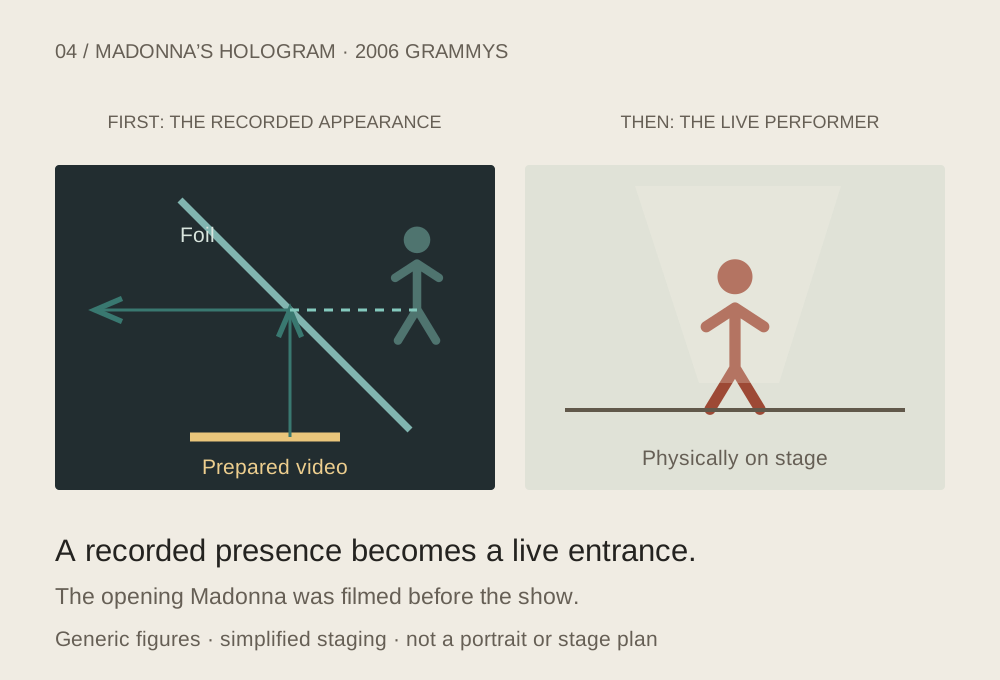
Original two-panel diagram comparing a recorded performer reflected into a virtual stage with a later live performer physically standing on stage. Generic figures illustrate Madonna’s 2006 Grammy transition.
Original explanatory diagram; follow the source link to see the real example. Image: Through Mirror · original explanatory diagram · Source · CC0 1.0. Original explanatory diagram (2026); viewing previews may be resized.

Official recording: Madonna · Hung Up, live at the 2006 Grammys with Gorillaz.

Watch Madonna’s performance on YouTube ↗

If the embedded player is unavailable, open the official recording on YouTube.

04 / 2006 · 48th Grammy Awards, Los Angeles

Madonna’s hologram — 2006 Grammys

A recorded Madonna joins a virtual band before her live entrance

Madonna appears to share the stage with Gorillaz during the 2006 Grammys. Her opening appearance is a projected recording, followed by Madonna performing live with her dancers.

Madonna and Gorillaz opened the 2006 Grammy Awards with Feel Good Inc. leading into Hung Up. In a contemporary production interview, Musion director James Rock explained that Madonna’s virtual appearance had been filmed three weeks earlier, with a planned walking route so Gorillaz could be added around her. The performance then continued with Madonna herself on stage.

The opening combines filmed footage of Madonna with Gorillaz animation. Musion’s Eyeliner system reflects that prepared video towards the audience using angled transparent foil. Shared timing and apparent overlap between figures make the recorded singer seem to interact with the band. The later live entrance turns the illusion into a reveal: the same performer is now physically present.

FIND THE ILLUSION

Watch the opening of Hung Up in the official recording. Follow Madonna as she appears among the animated band members, then watch the transition to the main stage and dancers. The first Madonna is part of the projected imagery.

“Hologram” describes the stage effect here. It uses reflected video, following Pepper’s Ghost, rather than optical wavefront reconstruction. The diagram shows the two phases of the performance with a generic figure; it is not a portrait or stage plan.

Madonna and Gorillaz · Musion Eyeliner stage system

Open the full entry & images →
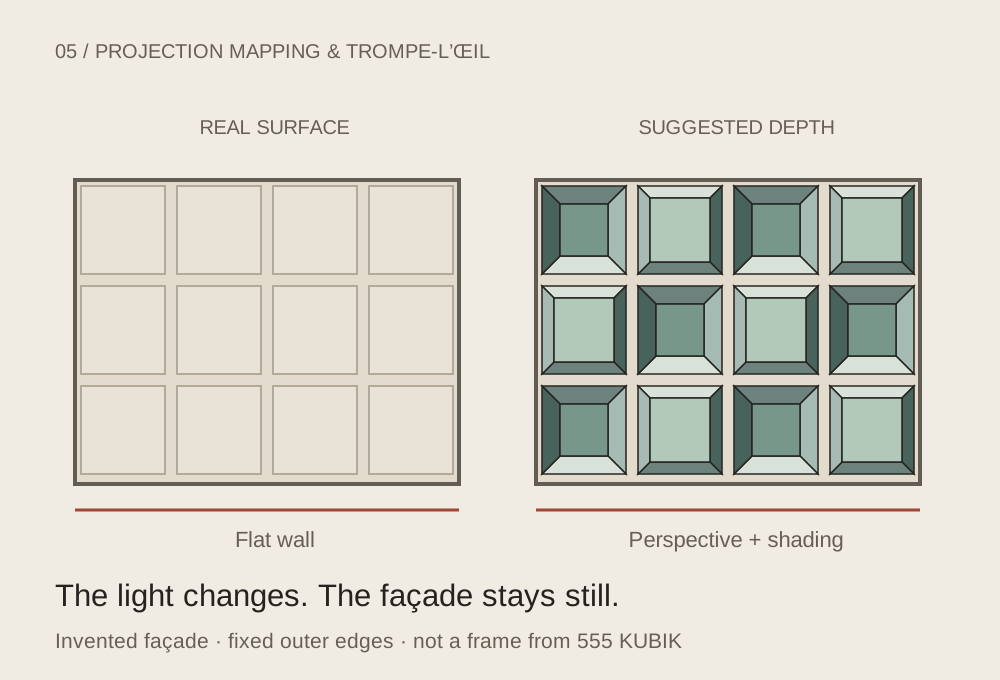
Original illustration comparing a flat gridded façade with projected shading that makes its panels appear recessed or protruding, while its outer edges remain fixed.
Original explanatory diagram; follow the source link to see the real example. Image: Through Mirror · original explanatory diagram · Source · CC0 1.0. Original explanatory diagram (2026); viewing previews may be resized.
Watch 555 KUBIK on the project page ↗
05 / 2009 · 555 KUBIK, Hamburger Kunsthalle

Projection mapping & trompe-l’œil

Light makes a solid façade appear to change shape

A building seems to fold, open or gain impossible depth. Precisely aligned projected images turn its real façade into a moving trompe-l’œil.

URBANSCREEN’s 555 KUBIK reinterprets O. M. Ungers’s Galerie der Gegenwart at the Hamburger Kunsthalle. The project works with the façade’s existing geometry to make its solid architecture seem to dissolve and transform. The studio records the production in its 2009 awards history. It is one example of architectural projection mapping.

Mapping aligns projected imagery with the shape and position of a real surface. Masks and image warping let the light follow corners, panels and openings. When the content adds convincing perspective, highlights, shadows and motion, it can suggest new volumes or moving structures: a projected form of trompe-l’œil, meaning ‘deceive the eye’. The strongest depth effect may depend on the intended viewing position.

FIND THE ILLUSION

Watch URBANSCREEN’s 555 KUBIK film. Follow the building’s fixed edges while the apparent volumes change. Compare the real surface with the invented depth in the diagram: the light changes, while the wall stays still.

Projection mapping is the alignment method; trompe-l’œil describes the deceptive visual effect. Mapping can also display patterns or information without creating an illusion of depth. The illustration is an invented façade, not a still from 555 KUBIK.

URBANSCREEN · 555 KUBIK; art direction by Daniel Rossa

Open the full entry & images →
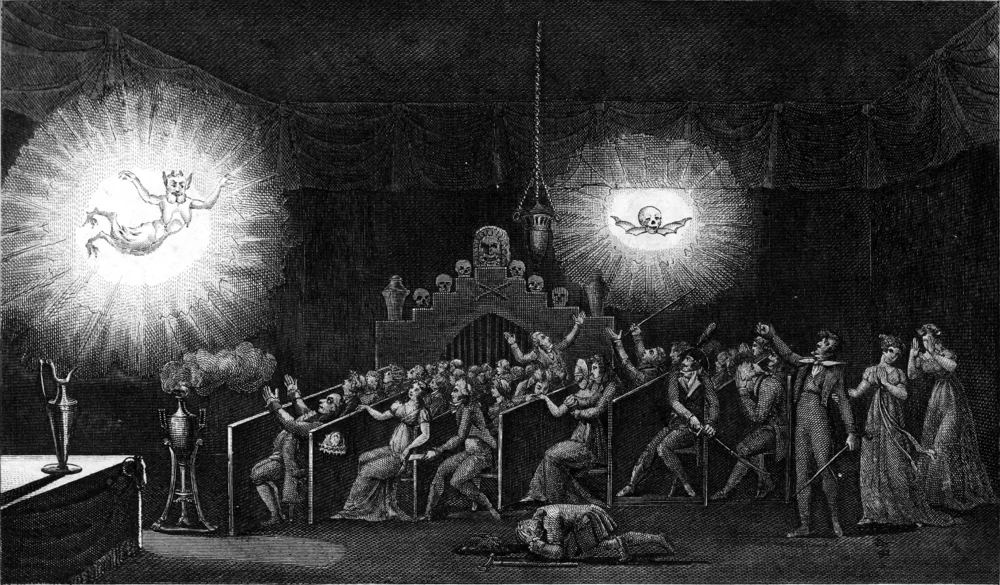
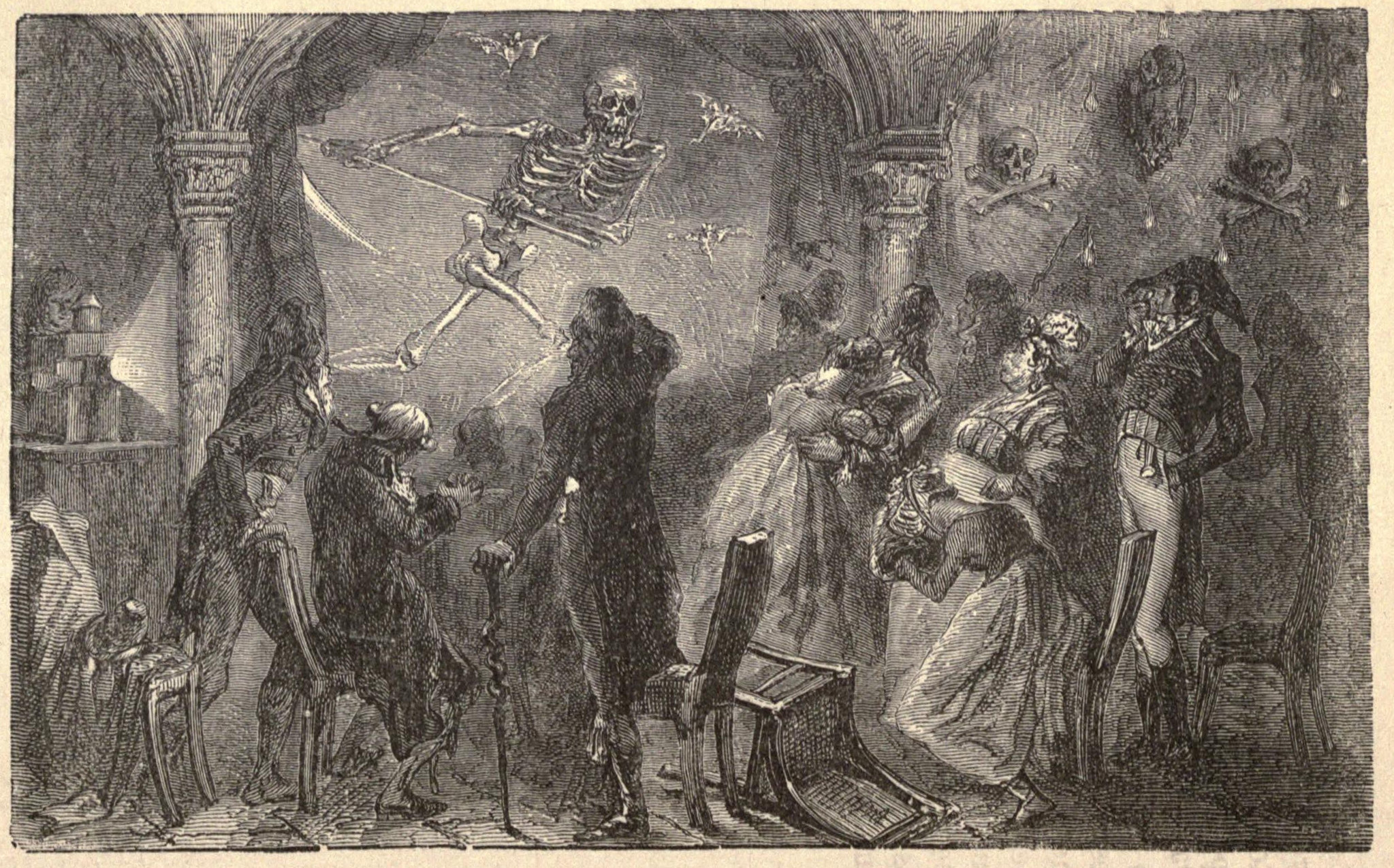
Historical engraving showing Robertson’s phantasmagoria, with lantern operators, an apparition and spectators in a dark theatrical setting.
Lejeune’s 1831 frontispiece for Robertson’s memoirs, illustrating his phantasmagoria. The engraving’s caption places the scene in 1797. Image: Étienne-Gaspard Robert (designer & publisher), Lejeune (engraver) · Source · Public domain. Lejeune’s 1831 frontispiece for Robertson’s memoirs; a historical illustration of a ghost-lantern show.; viewing previews may be resized.
Compare a later illustration of a ghost-lantern show
An 1867 illustration of Robertson’s phantasmagoria, with ghostly figures above the audience.
A later, 1867 interpretation of Robertson’s show. It illustrates the spectacle rather than recording a performance photographically. Image: Alphonse de Neuville or A. Jahandier · Source · Public domain. An 1867 interpretation of Robertson’s phantasmagoria; a later historical illustration.; viewing previews may be resized.
Explore a surviving phantasmagoria lantern ↗
06 / Late eighteenth and early nineteenth centuries

Phantasmagoria — magic-lantern ghost shows

Magic lanterns, darkened rooms and hidden projection screens

Ghosts and skeletons appear in darkness, grow larger and seem to approach the audience. Hidden magic lanterns turn painted slides into an unsettling moving spectacle.

Phantasmagoria was a family of ghost-lantern entertainments popular around the turn of the nineteenth century. Robertson became its best-known showman. Performers concealed their lanterns and used darkness, narration and sound to make frightening images seem present. The Science Museum Group preserves a phantasmagoria lantern dated about 1820.

A lantern sends light through a painted slide and a lens onto a screen or another receiving surface. Rear projection can hide the apparatus. Moving the projector while adjusting focus changes the image’s size and suggests an approaching or retreating apparition. Pepper’s Ghost achieves apparent presence through reflection instead of lantern projection.

FIND THE ILLUSION

Look at the lantern operators, the apparition and the spectators in the engraving. Imagine the illuminated image growing as the lantern moves away from its screen. Compare this projected ghost with the reflected figure in Pepper’s Ghost.

The main image is an 1831 frontispiece, with a caption describing a 1797 scene. It is an illustration published later, not a photograph or proof of the show’s exact first date. Ghost shows used a range of optical arrangements.

Étienne-Gaspard Robertson and other lantern showmen

Open the full entry & images →
Bertrand’s 1865 engraving showing a Pepper’s Ghost stage, audience sight lines and the concealed illuminated figure beneath it.
Bertrand, Pepper’s Ghost stage arrangement, Le Monde Illustré, 21 January 1865. A historical engraving rather than a performance photograph. Image: Bertrand (no first name given) · Source · Public domain. Bertrand’s 1865 engraving of a Pepper’s Ghost stage arrangement; a historical illustration.; viewing previews may be resized.
Read the archive’s account of the ghost shows ↗
07 / Christmas Eve 1862 · Royal Polytechnic Institution, London

Victorian ghost shows — Pepper at the Polytechnic

The Haunted Man and the Ghost’s Bargain; later theatrical ghost entertainments

A ghost shares the stage with a living actor, then fades away. Victorian ghost shows turned hidden performers and sheets of glass into public spectacles of apparent presence.

At the Royal Polytechnic Institution on Christmas Eve 1862, Pepper presented a ghost illusion in a performance based on Dickens’s The Haunted Man and the Ghost’s Bargain. The effect became a popular attraction and entered later theatrical entertainments. University of Westminster Archives documents the Polytechnic’s productions and contemporary accounts.

An audience sees the stage through an angled pane of glass and simultaneously receives a reflection of a hidden illuminated figure. Changing that figure’s lighting controls the apparition’s visibility. Position and rehearsal align the reflected presence with the visible actors. The illusion relies on optics and staging, rather than a physical figure occupying the ghost’s apparent position.

FIND THE ILLUSION

Compare the public stage with the hidden illuminated performer in the 1865 engraving. Trace a path from that figure to the angled glass and then to the audience. The actors’ positions must make the reflection appear to meet the visible scene.

This 1865 engraving documents a historical arrangement of the effect. It is not an image of the first 1862 performance. “Ghost show” describes an entertainment format; some shows used lantern projection or other methods alongside reflection.

John Henry Pepper; optical arrangement developed with Henry Dircks

Open the full entry & images →

Frequently asked questions

How is Pepper’s Ghost different from a hologram?

Pepper’s Ghost combines light reflected by angled glass or film with a visible scene. Optical holography reconstructs a recorded wavefront through diffraction. Both can suggest an absent object, but their light paths differ.

Were all historical ghost shows Pepper’s Ghost?

Ghost shows used several methods. Phantasmagoria used magic lanterns and projection, while Pepper’s Ghost used reflection from an illuminated performer hidden from the audience. The guide compares their histories and mechanisms.