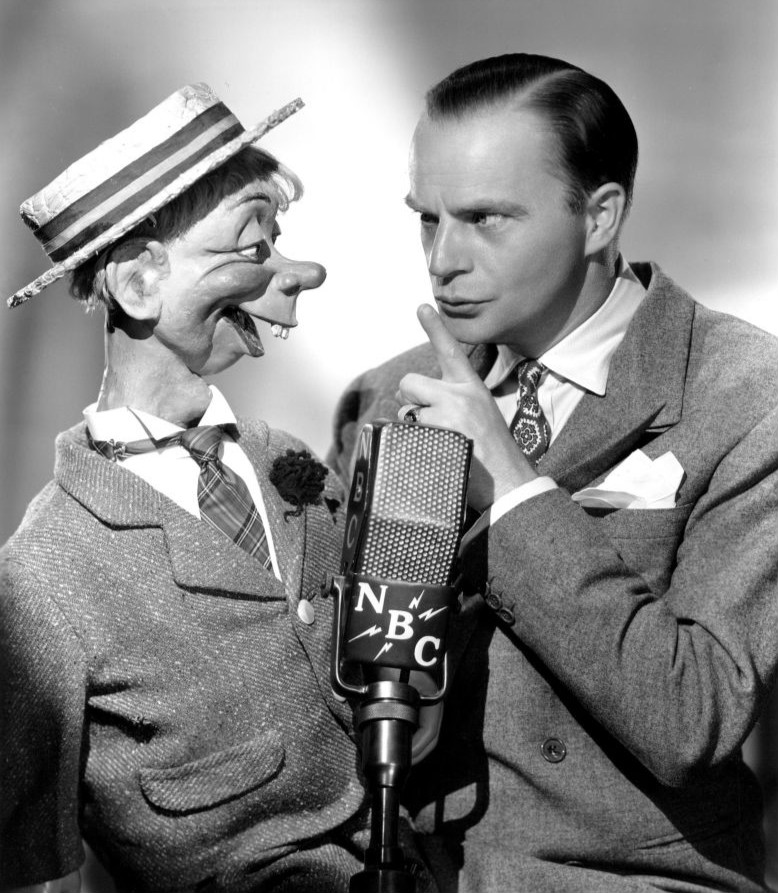
Instructions
Watch the video and listen to the speech. Do the sounds produced by the man change throughout the video?
Effect
Although the sound remains the same throughout the video, when watching different lip movements, you should experience an illusory change in the sound.
Illusion credit
Harry McGurk (1936 -1998) and John MacDonald
Video demonstration in the player above.
McGurk effect is a cross-modal effect and illusion that results from conflicting information coming from different senses, namely sight and hearing.
The effect was discovered by Harry McGurk and John MacDonald, and was published in Nature in 1976. The illusion can be observed when one is asked to watch a video of lip movements alongside listening to sounds uttered, apparently by the same person whose lip movements one is watching. If the lip movements and the sounds do not match—for example, if the lip movements indicate a “ba-ba” sound, whereas the auditory information is that of “ga-ga”—one typically experiences an illusory third sound—for example “da-da”. McGurk and MacDonald hypothesise that the effect is due to the fact that the brain is trying to make a “best guess”, given the information that is coming from different senses is contradictory. The effect is reported to be particularly salient when the quality of auditory information is poor, in which case the visual information trumps the auditory information (Massaro & Cohen 2000).
McGurk effect is philosophically interesting because it highlights the difficulties surrounding the question of how to individuate sensory modalities. The traditional view, attributed to Aristotle, and taught to pretty much every schoolchild in early years of education, is that humans have five senses: sight, hearing, smell, touch and taste. The traditional view has often been accompanied by the view that these senses work separately and can be studied in isolation, as they process distinct types of sensory information. Both of these views are now largely overturned. See Macpherson (2011a) for a philosophical discussion of what sensory modalities there are and how they can be individuated or distinguished from one another, although alternative perspectives are given in Nudds (2004) and Richardson (2013). The existence (and abundance) of cross-modal illusions and cross-modal effects on perceptual experience puts pressure on the view that the senses work separately and can be studied in isolation. Much work has been carried out on this topic is psychology. See for instance, Stein (2012). Likewise, philosophers are also considering what this means for thinking about the types of experience that there can be. See, for example, Macpherson (2011b) and Richardson (2014).
References
Macpherson, F. (2011a) "Individuating the Senses", in Macpherson (ed.) The Senses: Classical and Contemporary Readings, Oxford University Press.
Macpherson, F. (2011b) "Cross-Modal Experiences". Proceedings of the Aristotelian Society, 111(3): 429-468.
Massaro, DW. and Cohen, MM. (Aug 2000). "Tests of auditory-visual integration efficiency within the framework of the fuzzy logical model of perception.". Journal of Acoustical Society of America. 108 (2): 784–789.
McGurk H., and MacDonald J. (1976). "Hearing lips and seeing voices.". Nature. 264 (5588): 746–8.
Nudds, M. (2004) "The Significance of the Senses", The Proceedings of the Aristotelian Society, 104 pp. 31-51
Richardson, L. (2013) "Flavour, Taste and Smell", Mind and Language, 28: 322–341
Richardson, L. (2014) “Non Sense-Specific Perception and the Distinction Between the Senses’, Res Philosophica, 91 (2): 215 - 239
Stein, B. E. (2012) The New Handbook of Multisensory Processing, Cambridge MA: MIT Press
Additional images & credits
Images and audio are stored on this website. Source media credits and license labels are reproduced as supplied; an author credit alone does not grant a reuse license.
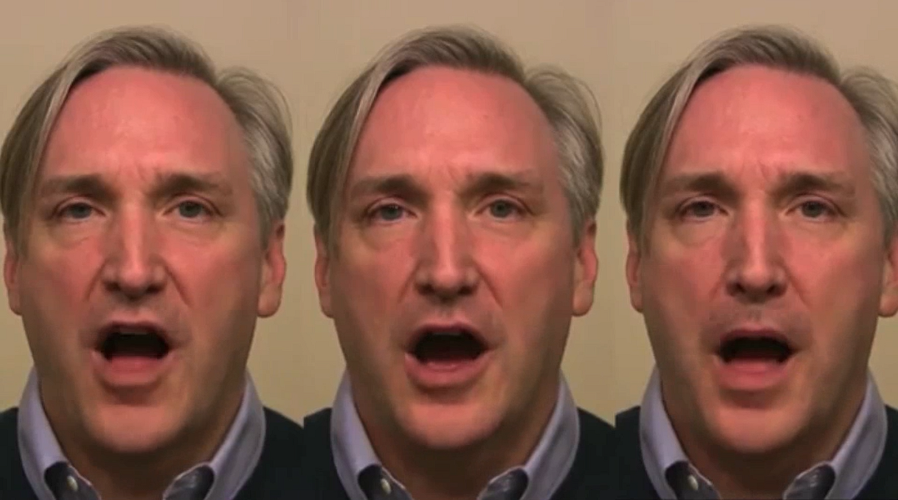
Three frames of a man articulating speech, illustrating visual mouth movements used in the McGurk effect.
McGurk effect is a cross-modal effect resulting from conflicting information coming from different senses, namely sight and hearing.
Source license / credit label: Mark Mitton and Josh Aviner.
Source credit: https://www.youtube.com/watch?v=PWGeUztTkRA.