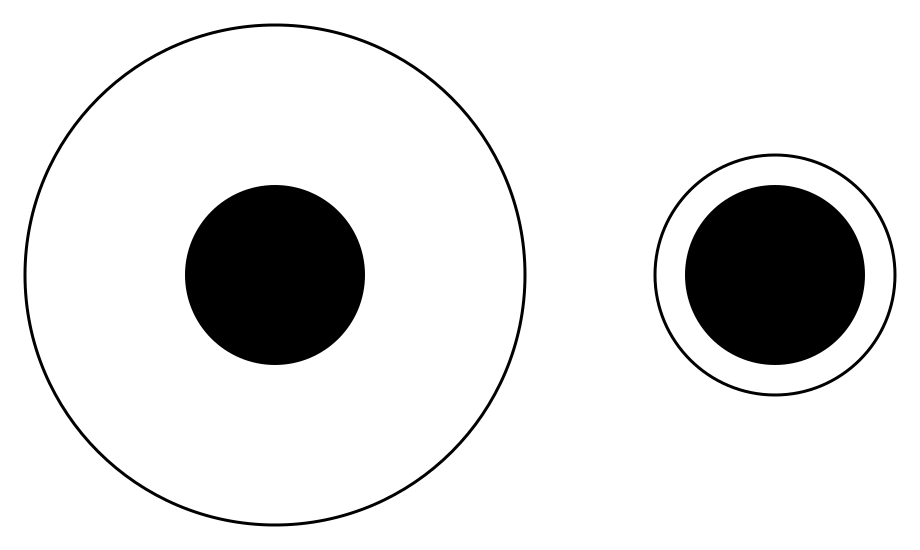
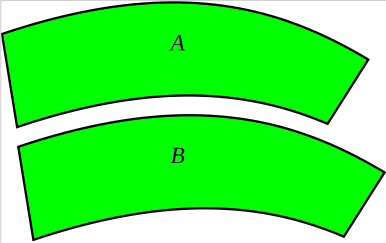
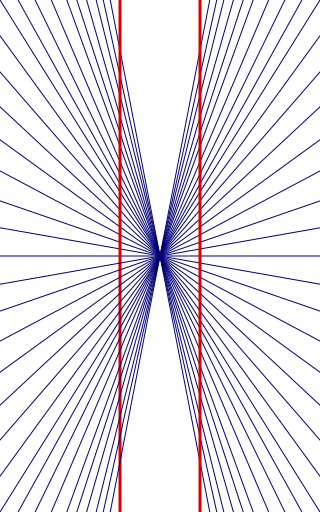
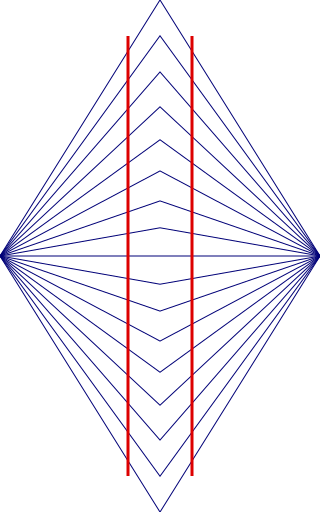
Explore size and geometric optical illusions, including Müller-Lyer, Ponzo and Café Wall. See how context changes apparent length, angle and shape. When context bends lines and changes proportions.
Ranked by everyone’s votes. Thumbs up adds 1; thumbs down subtracts 1. Select your vote again to remove it.
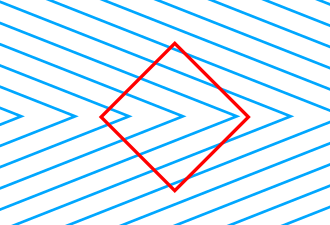
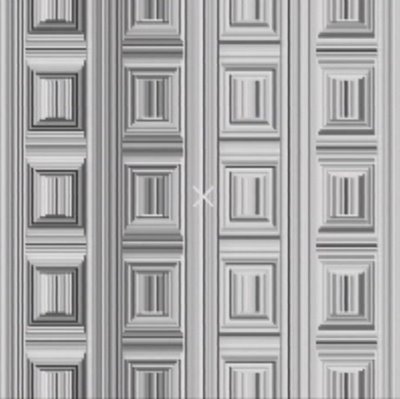
The illusion was created by Kohske Takahashi, who introduced it to the academic literature in a 2017 publication. The illusion was awarded 2nd place in the 8th Illusion Contest in Japan in 2016.
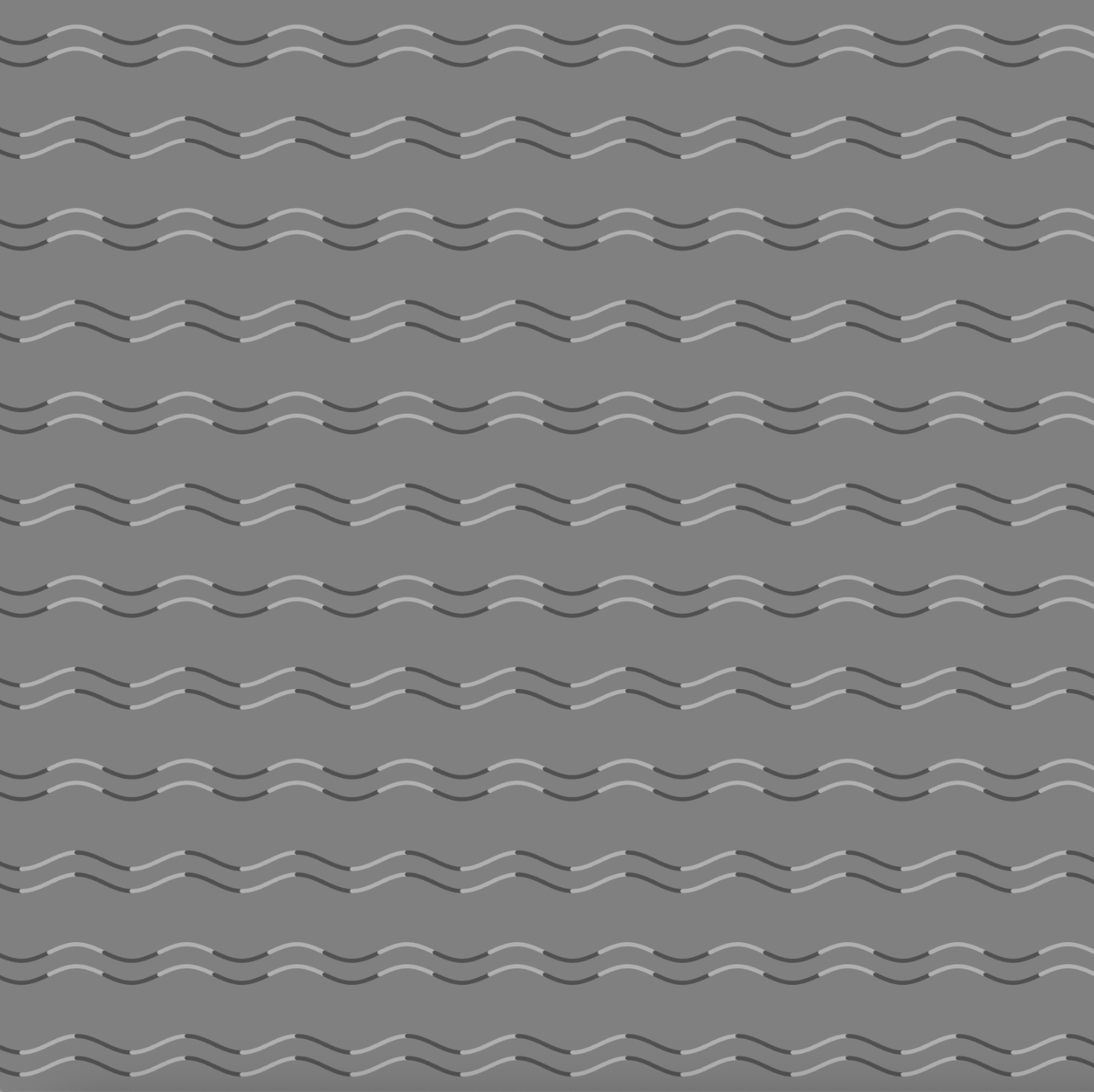
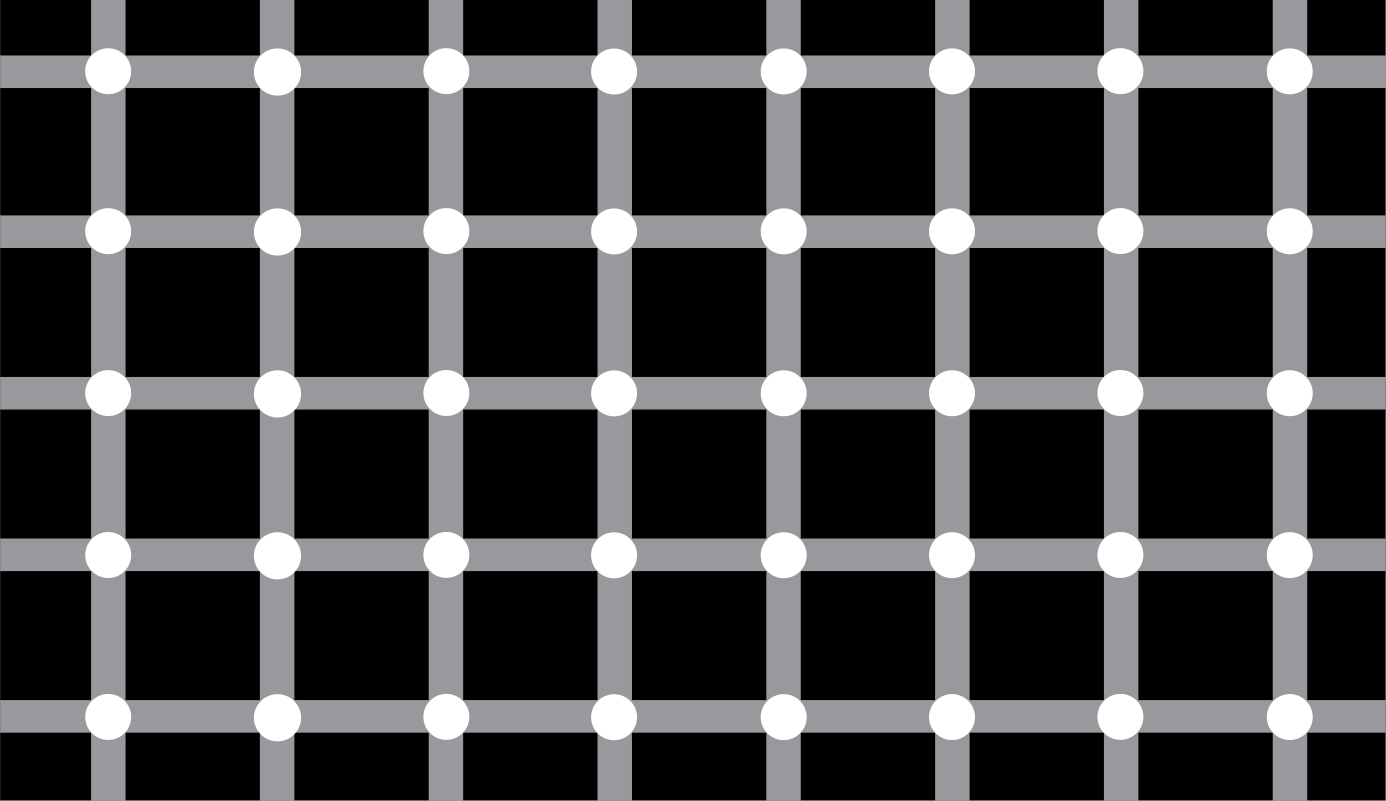
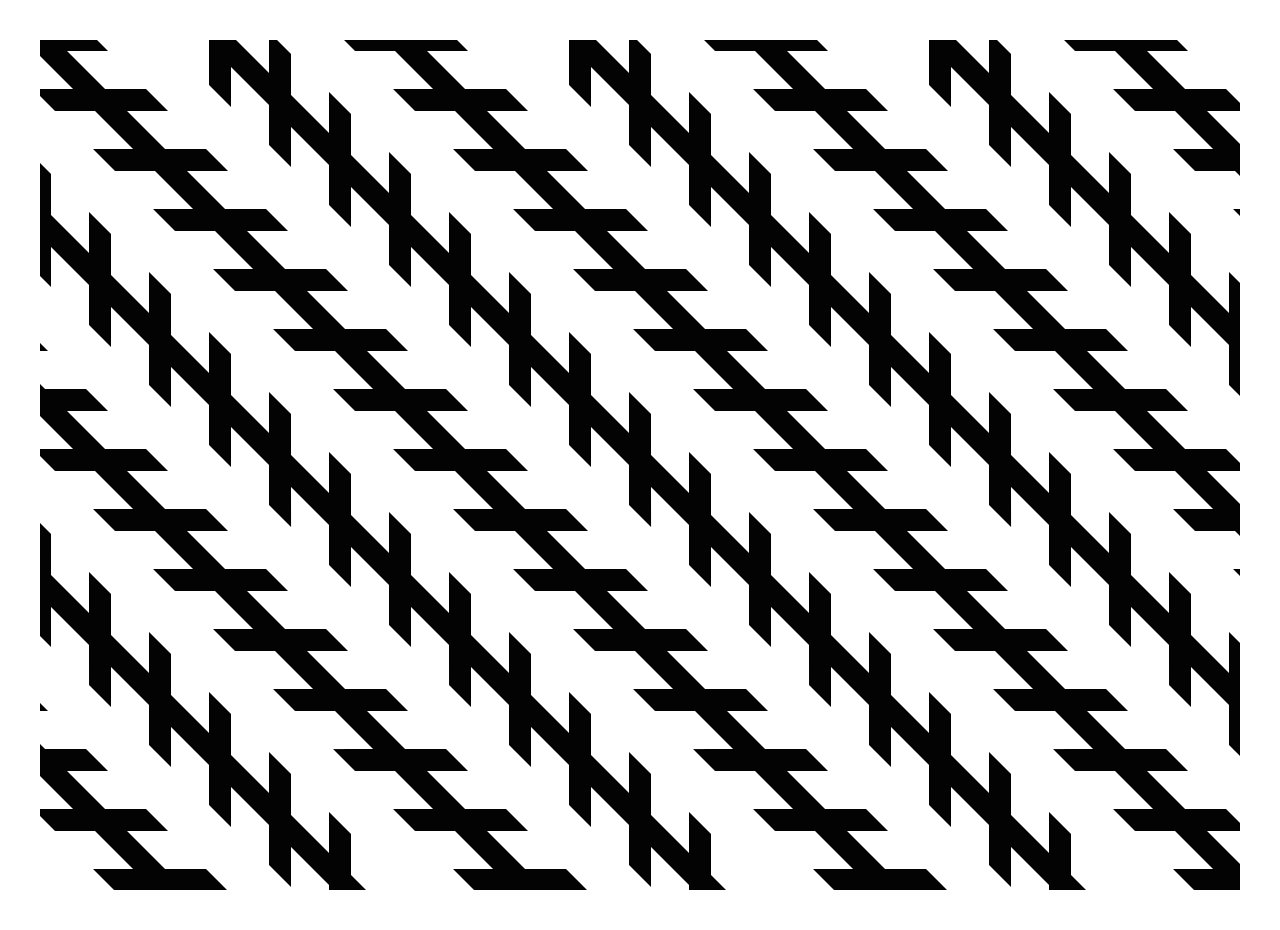
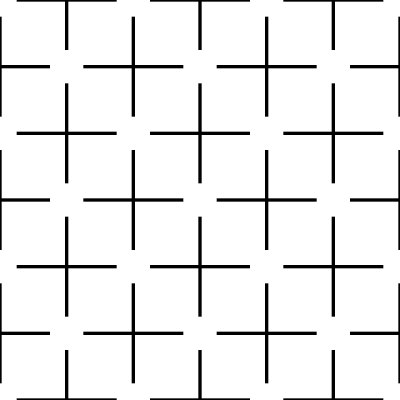
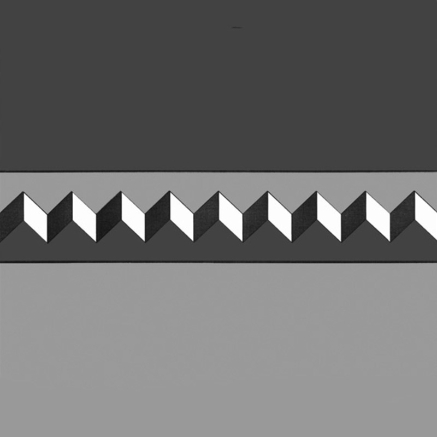
Many people perceive every second line being smooth and curved, and the others being angular, zigzag lines. However, there are no angular, zigzag lines in the image. Hovering your cursor…
You should have an experience of a third beat that accompanies the sound. Also, as the video proceeds, the apparent beat should change, as the sounds that you receive from left and right…
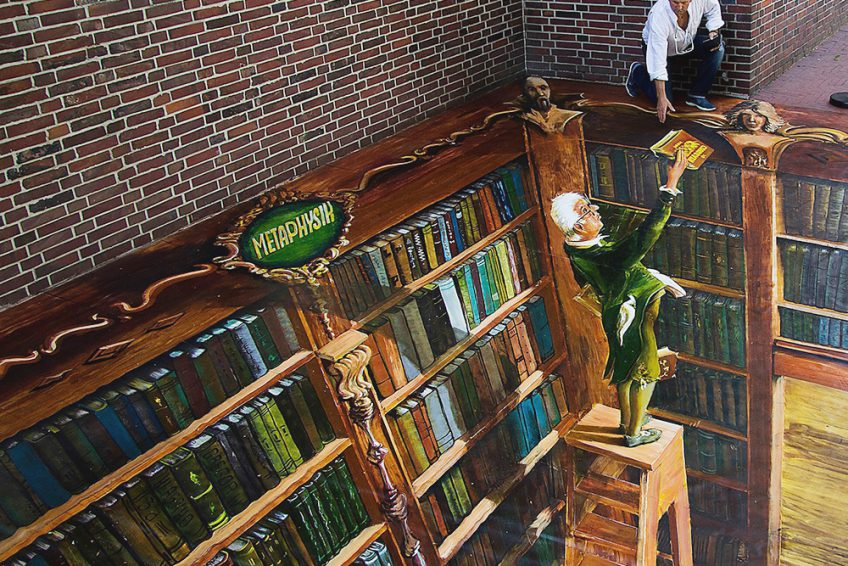
You should have the visual experience of a man reaching down to get a book from a librarian. However, although the man reaching down is real, the library and the librarian are just a…
An effect of this kind was noted by D.M. MacKay (1958) but current research on the flash-lag illusion follows a revival of interest stemming from studies by Romi Nijhawan (1994).
Most observers report that the green square appears to “lag” the red square, i.e. the green square appears slightly to the left of the red square’s horizontal position. However, the green…
You should have the visual experience of giant people seeming to stand on top of buildings. However, although people are real, they are not giants and the buildings they seem to be…
Celeste McCollough (1927 - 2023), American psychologist
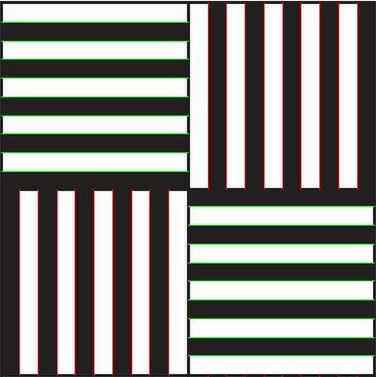
The black and white test figure will have taken on an illusory tinge of colour - the horizontal white stripes appear tinged red, while the vertical stripes appear green.
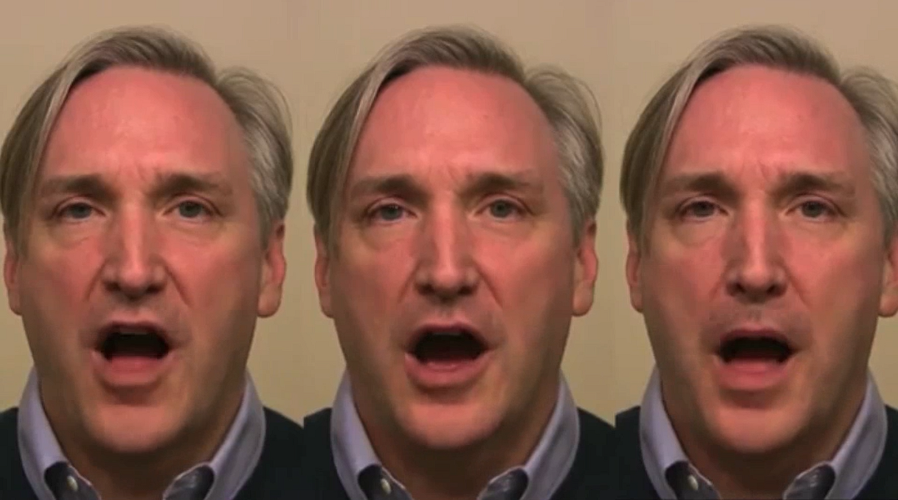
Although the sound remains the same throughout the video, when watching different lip movements, you should experience an illusory change in the sound.
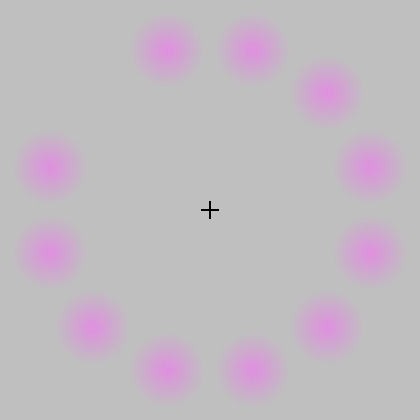
You should experience an image similar to the pink inducing circles in the region of the white inducing patch. It should exhibit inverted colours, appearing yellowish-green.
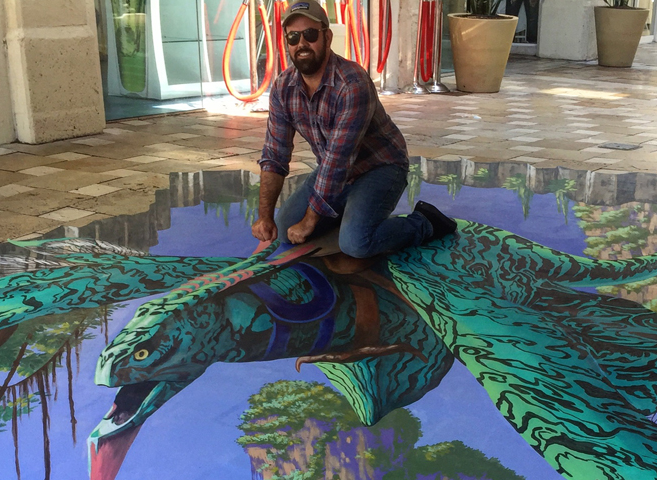
You should have the visual experience of a man riding a mythical bird. However, although the man is real, the bird is just a cleverly constructed 2D drawing on the pavement.
When your eyes are closed and covered again, you should continue to experience the view through the window, or the lamp, or the computer screen, which will likely fade away quickly. This…
You should experience a 'Gestalt switch' between experiencing the triangles as pointing downwards and resting on the dark grey lower plane, or as pointing upwards and resting on a light…
This illusion was introduced to the academic literature in a publication by Karlovich & Wallisch in 2021. This illusion is also sometimes referred to as the "Sunray illusion" because it is reminiscent of sunlight breaking through the clouds. The illusion was originally created by Michael Karlovich in 2019 while designing a logo for his start-up company, Recursia Studios. Author credit: Karlovich, MW & Wallisch, P (2023).
Bright lines will appear to be coming from the centre. If you look at them directly, you will realise that they are not actually there.
Roger Newland Shepard (1929 - 2022), cognitive scientist
In the first sound file, you should experience the pitch as ever increasing. In the second file, you should experience the pitch as ever decreasing. These are illusory experiences, for the…
Ladan Shams, Yukiyasu Kamitani, and Shinsuke Shimojo
The disk always flashes once. Sometimes it is accompanied by one beep, and then people report one flash. However, when it is accompanied by two beeps some people report experiencing two…
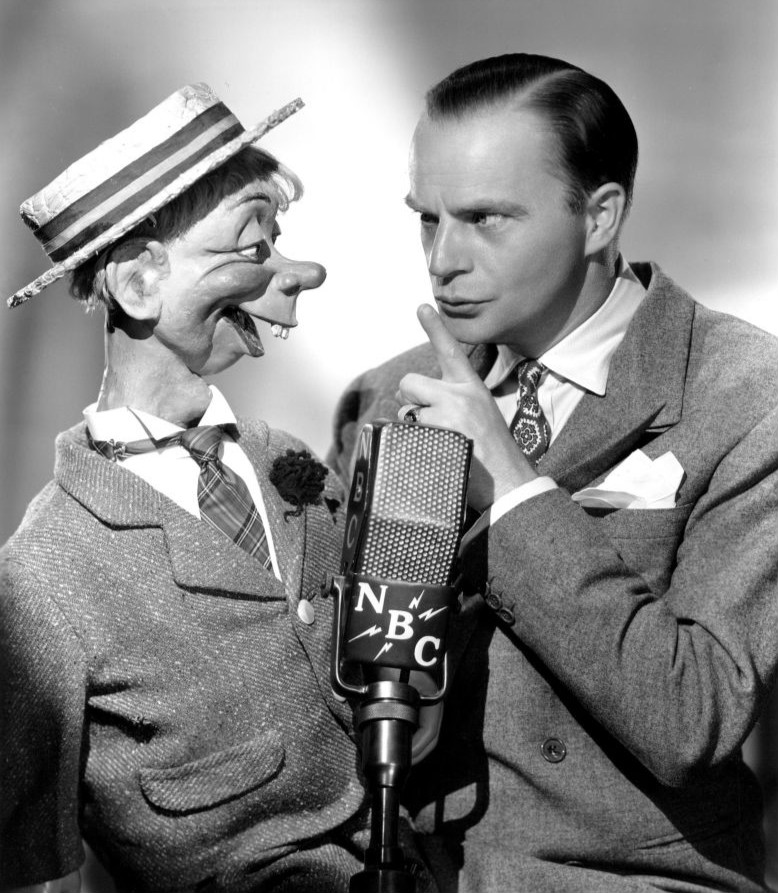
The spatial ventriloquism illusion is extremely popular, as numerous ventriloquist shows attest. Below is a video taken from Paul Zerdin's Youtube channel. In 2015, Zerdin won America's Got Talent with his ventriloquist act.
When viewing the video, you should experience the voice as coming from the puppet, even though the source of the sound is actually the puppeteer.
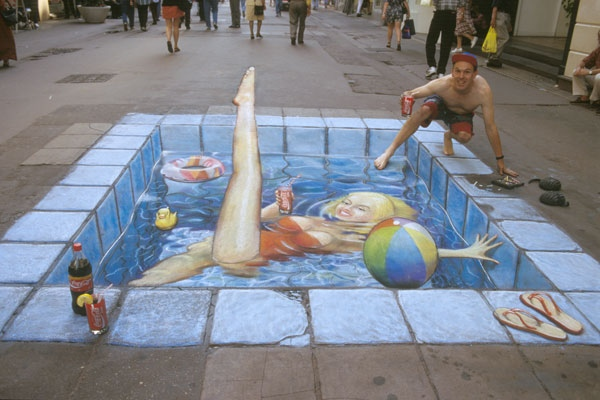
Julian Beever (1959 –), a British sidewalk chalk artist
You should have the visual experience of a man seeming to climb down into a 3D swimming pool. However, although the man is real, the swimming pool is just a cleverly constructed 2D drawing…
In the first few seconds you should notice that the dove appears red—a faint version of the red that was in the background of the first image. You are experiencing a positive afterimage…
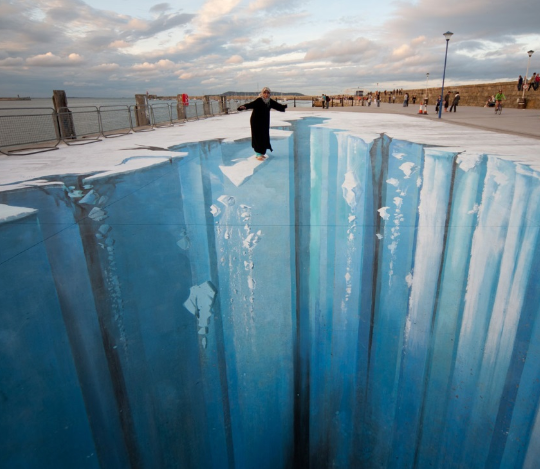
Edgar Müller (1968 –), a German illusionist street painter
You should have the visual experience of a woman seeming to stand on top of a crevasse. However, although the woman is real, the crevasse is just a cleverly constructed 2D drawing on the…
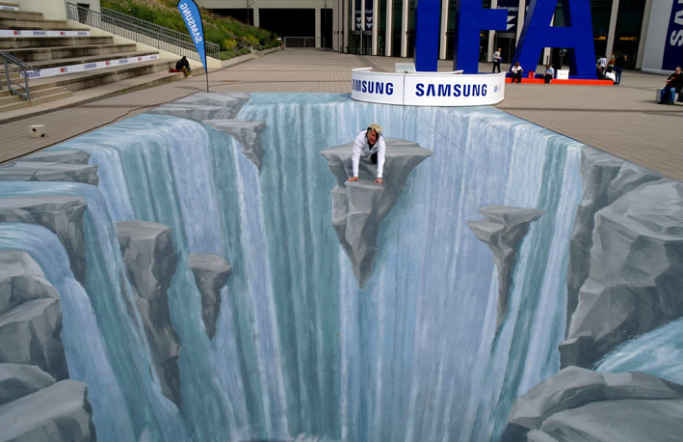
You should have the visual experience of a person seeming to crouch on a rock on top of a waterfall. However, although the person is real, the waterfall is just a cleverly constructed 2D…
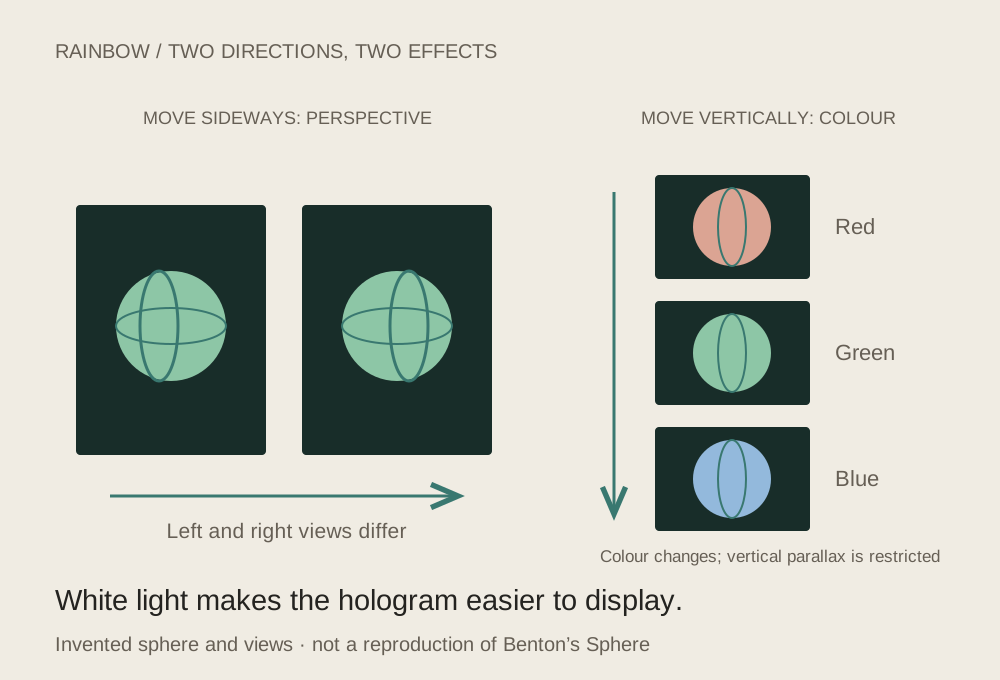
A flat glass plate reconstructs light from a still life. Move sideways and the objects reveal a different view, as though you were looking through a window.
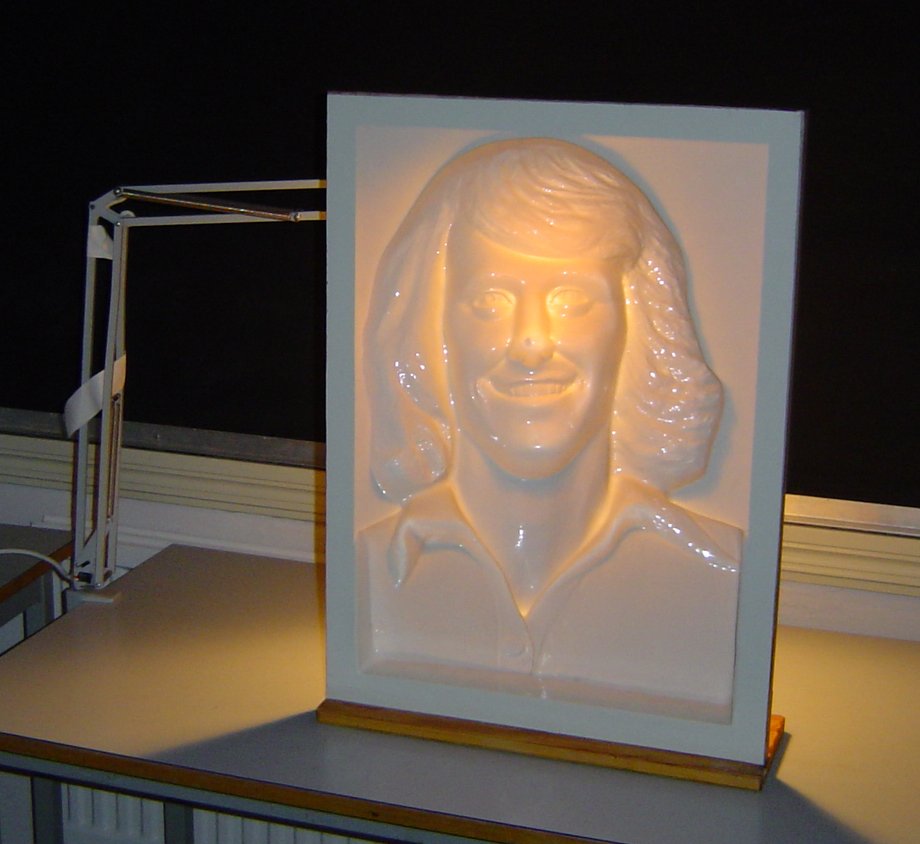
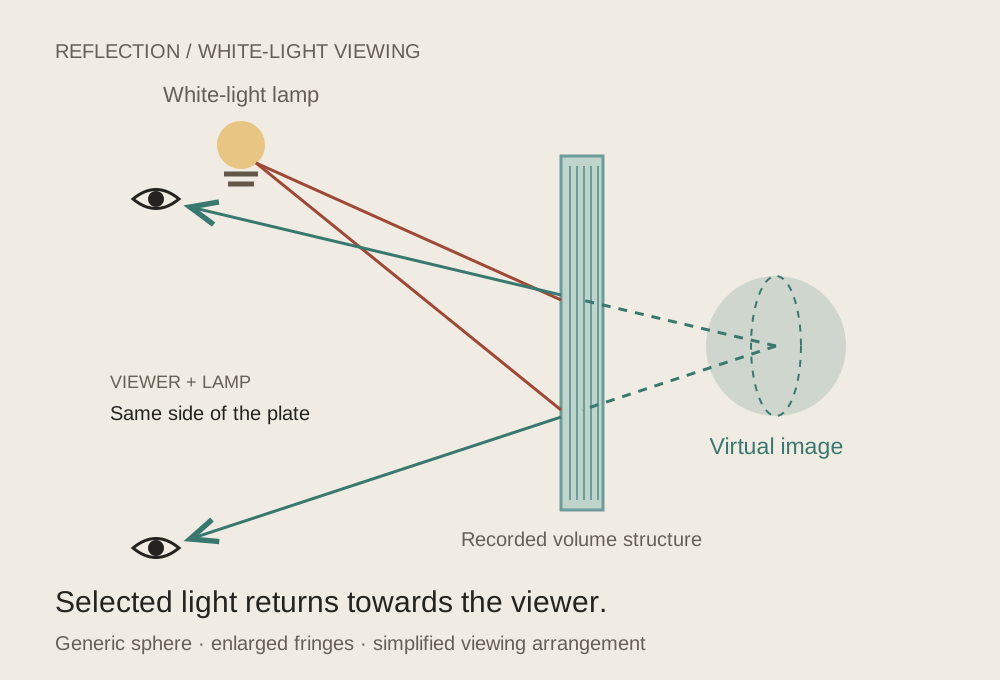
A lamp illuminates a flat plate and an image appears to occupy depth. The light returns towards the viewer from a recorded structure inside the holographic material.
Madonna and Gorillaz · Musion Eyeliner stage system
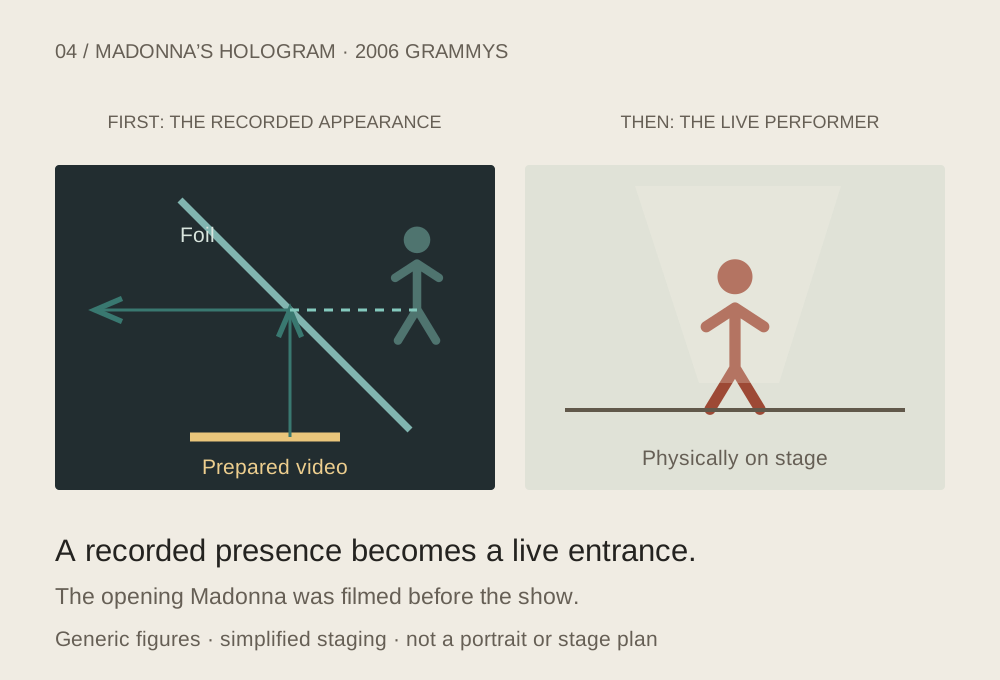
Madonna appears to share the stage with Gorillaz during the 2006 Grammys. Her opening appearance is a projected recording, followed by Madonna performing live with her dancers.
Étienne-Gaspard Robertson and other lantern showmen
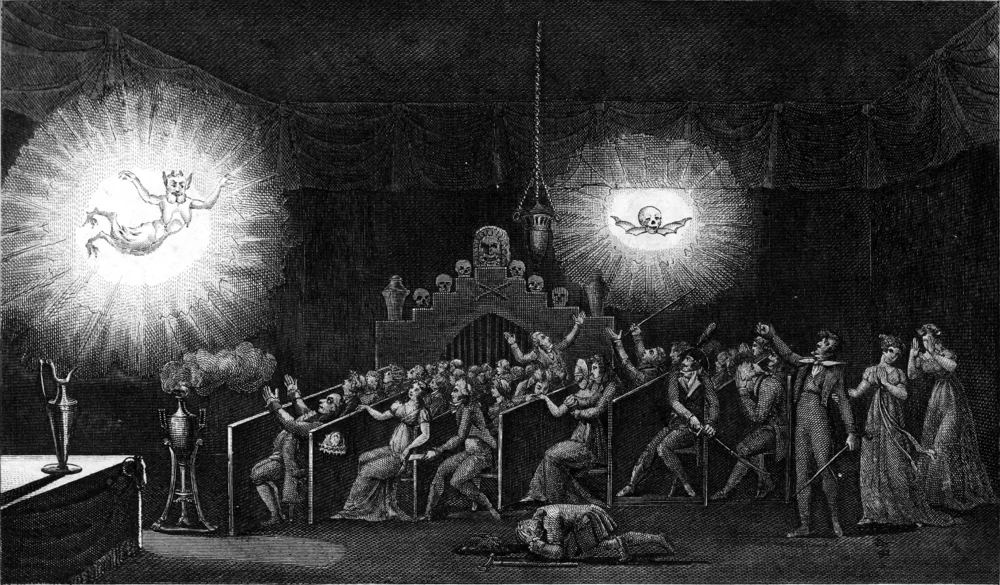
Ghosts and skeletons appear in darkness, grow larger and seem to approach the audience. Hidden magic lanterns turn painted slides into an unsettling moving spectacle.
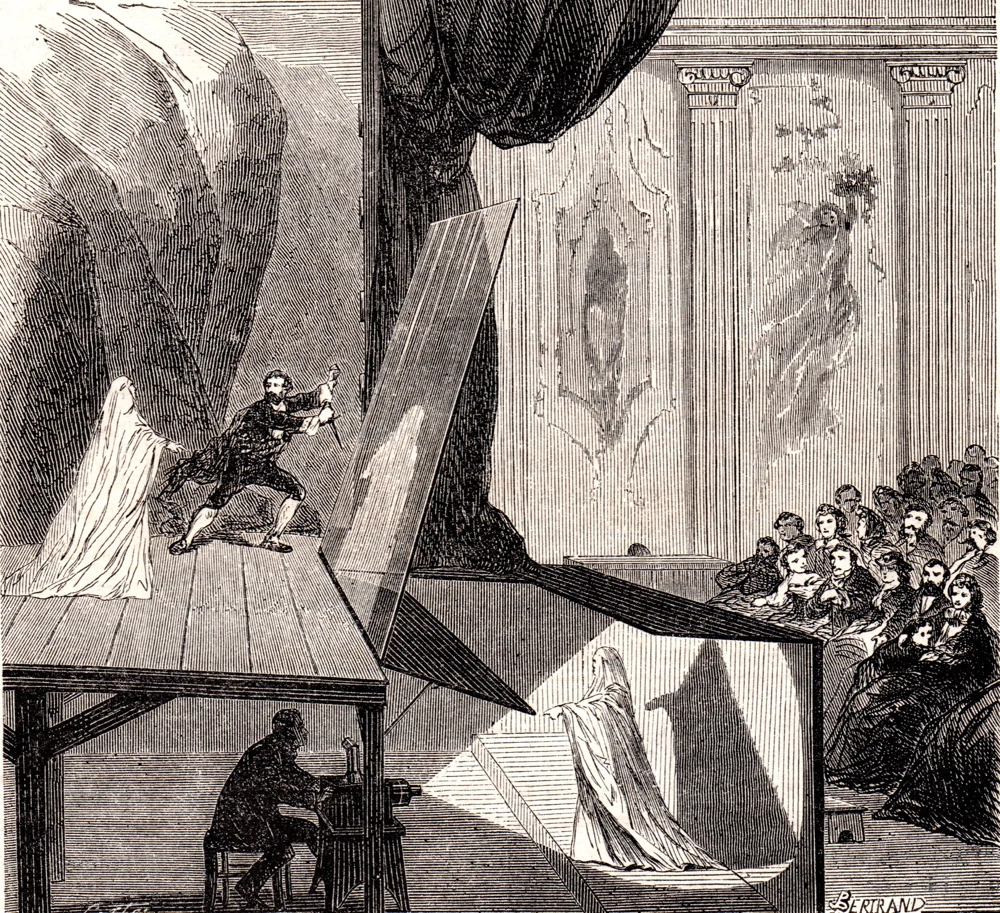
John Henry Pepper; optical arrangement developed with Henry Dircks
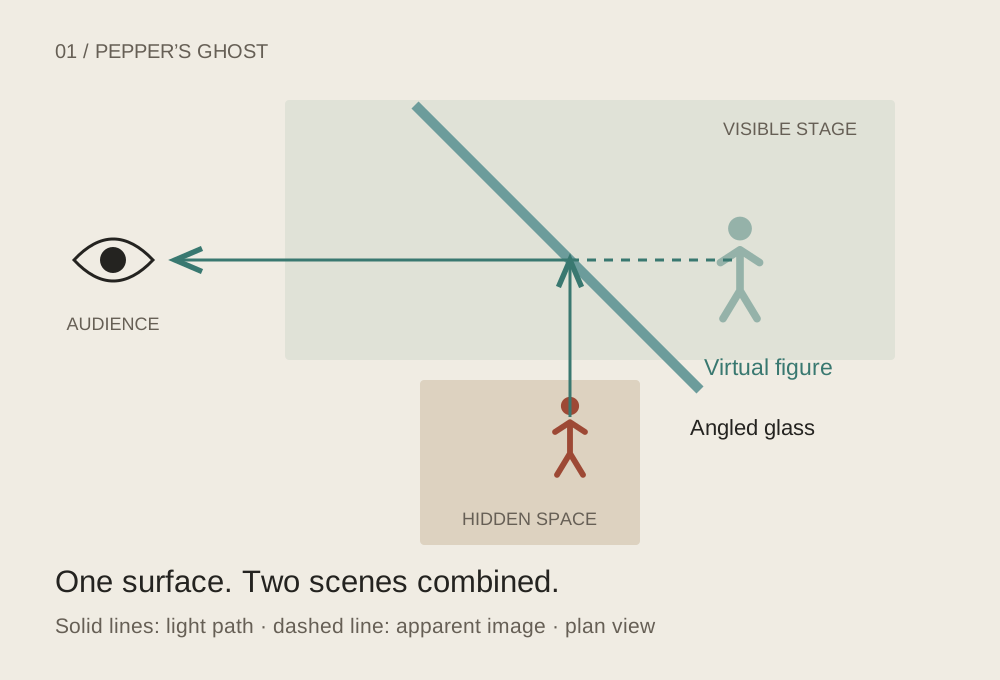
A ghost shares the stage with a living actor, then fades away. Victorian ghost shows turned hidden performers and sheets of glass into public spectacles of apparent presence.
A desk opens across a collage of photographs made from different positions. Its surfaces belong to a walk around the subject rather than a single camera view.
An optical illusion is an image or scene that creates a difference between its physical features and the way it is perceived. Context, perspective, contrast and visual adaptation can all contribute to the effect.
Why do optical illusions happen?
Vision interprets light using surrounding shapes, colours, depth cues and prior experience. Illusions reveal situations in which these normally useful processes produce surprising interpretations. Different illusions involve different mechanisms.
Which optical illusions can I explore here?
Through Mirror includes size and geometry illusions, light and colour effects, ambiguous figures, impossible objects, motion illusions and hidden contours. The collection also explores illusion art, architecture, fractals, animal camouflage and other senses.
How do I view the demonstrations?
Open an entry for its viewing instructions, explanation, history and sources. Gallery images can be enlarged, reversible pictures can be rotated, and animations play when selected. Some demonstrations link to their original source.
Frequently asked questions
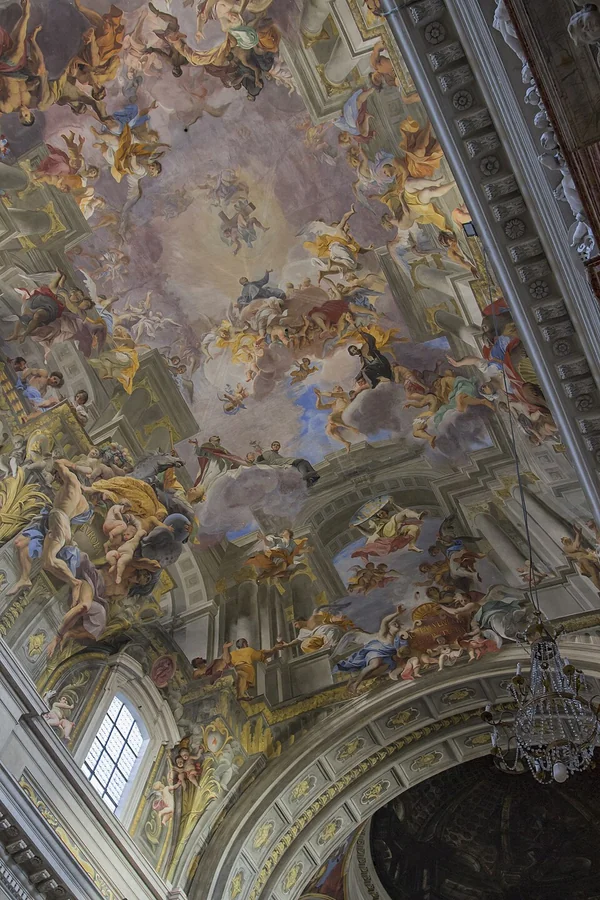
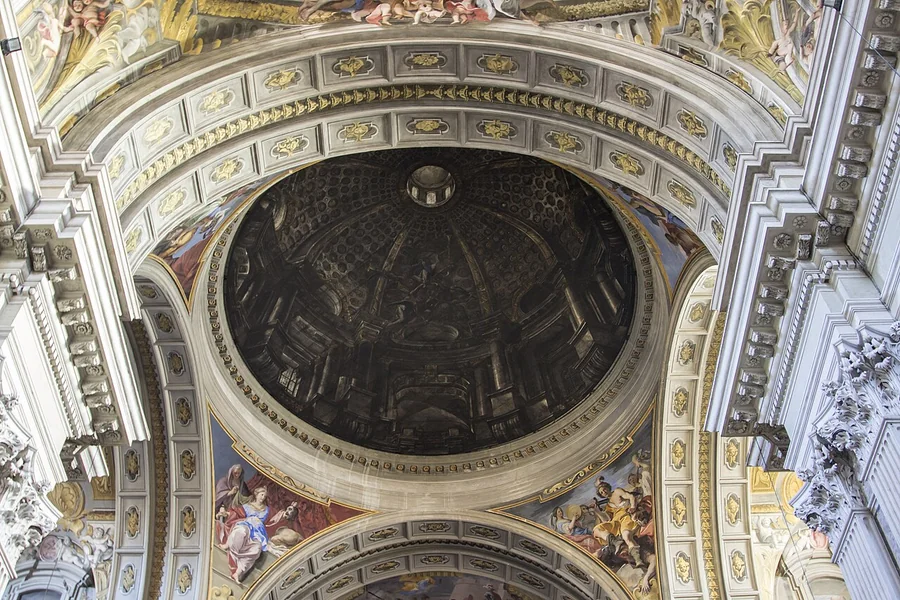
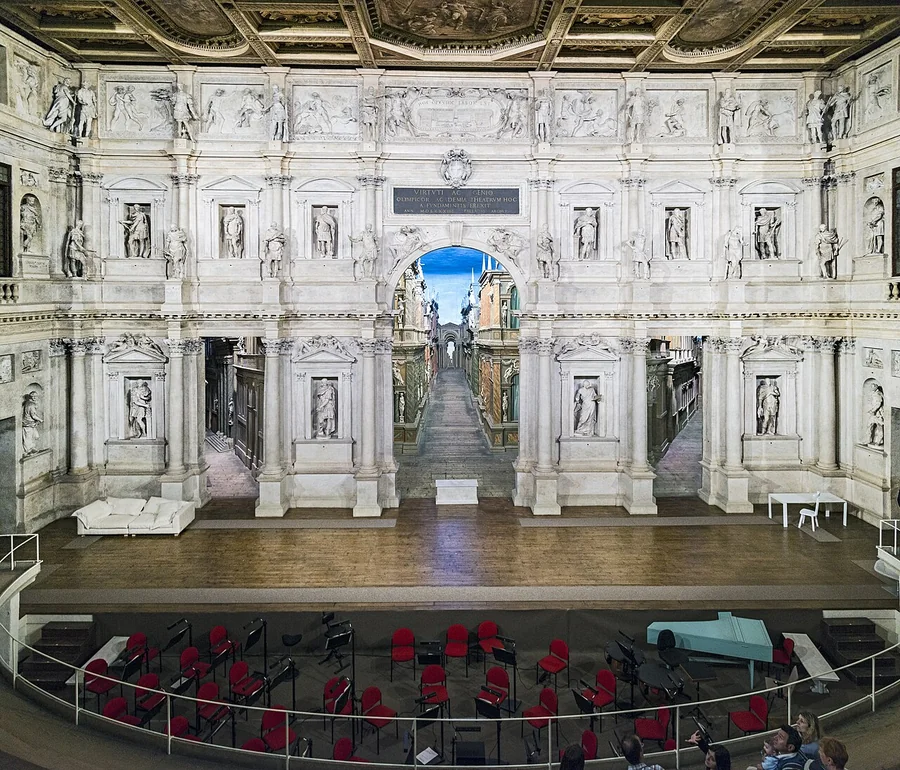
What is an architectural illusion?
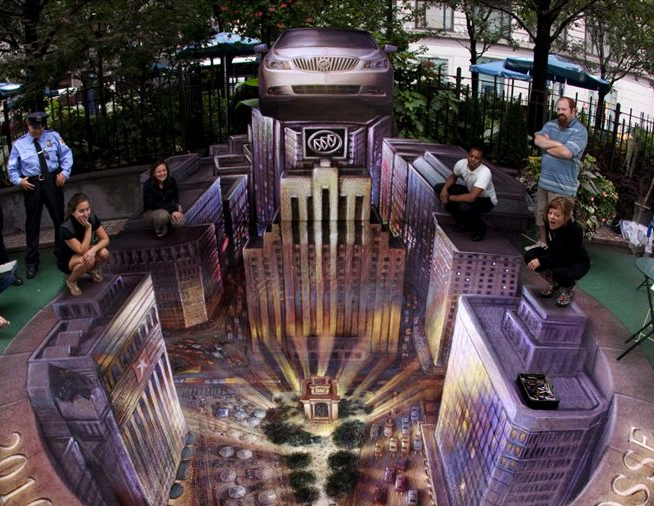
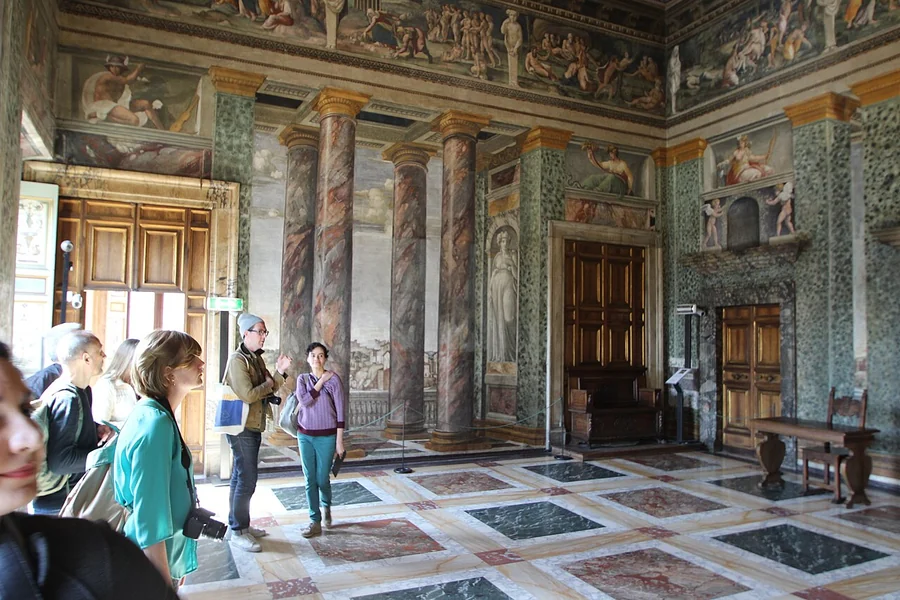
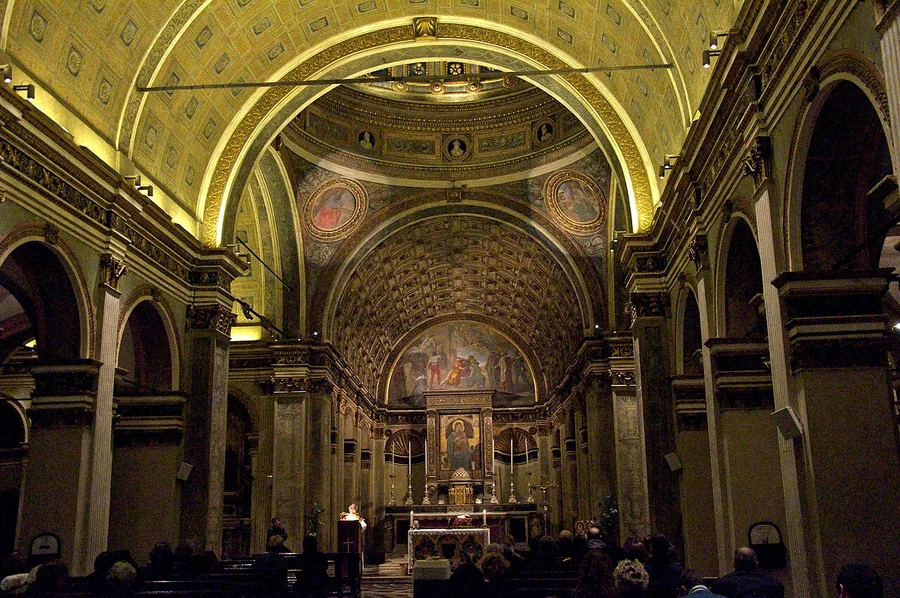
An architectural illusion changes the apparent shape, depth or extent of a real place through painting, perspective, geometry or reflection. Its effect often depends on where the observer stands.
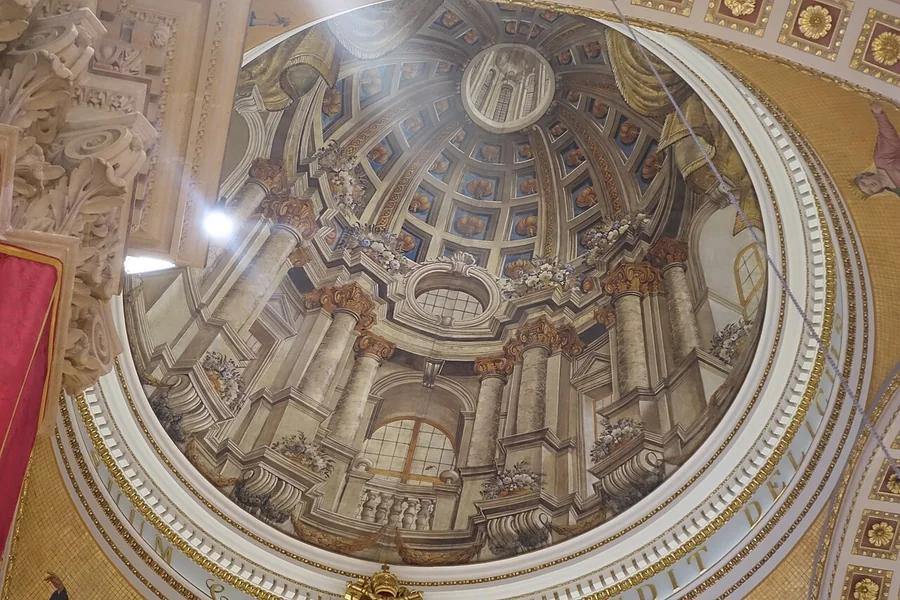
Does Gozo Cathedral have a real dome?
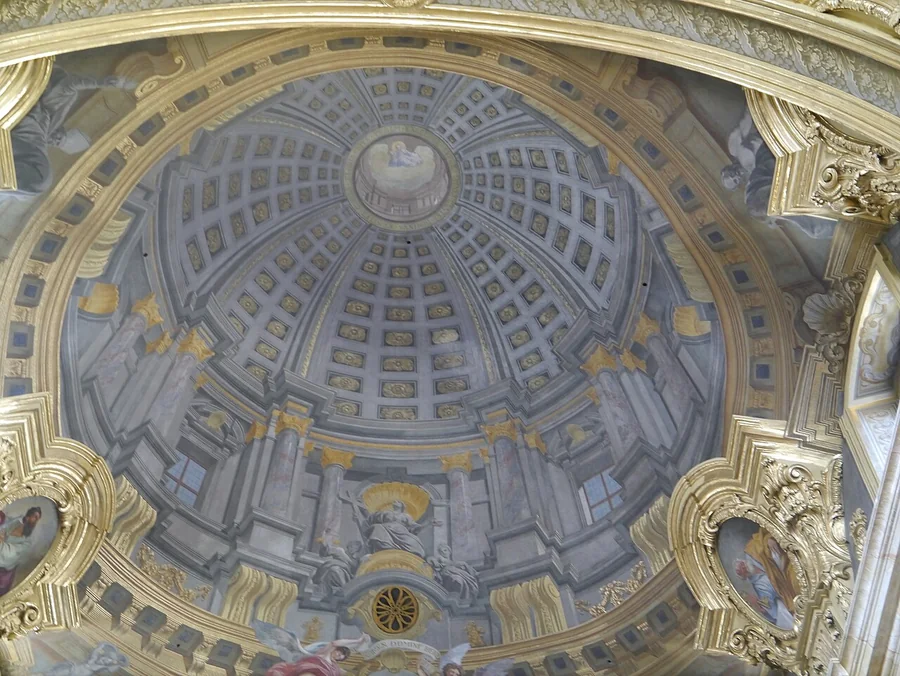
The cathedral’s famous apparent dome is a painted illusion by Antonino Emanuele, dating to 1739. The painting makes a flat ceiling appear to rise into a dome from the intended viewpoint.
How does forced perspective work in architecture?
Forced perspective changes scale and alignment to suggest a different depth or size. Borromini’s corridor at Palazzo Spada uses a compressed construction that appears longer from its intended viewing position.
Frequently asked questions
Which optical holography examples are in the collection?
The collection explores Gary Fisher’s Optical Interactions as a laser transmission example, Matthew Schreiber’s Cassadaga (Spirit Pond) as a reflection hologram, and Stephen Benton’s Sphere as an early white-light transmission example. Diagrams explain each method, with links to the artists’ archives or original exhibition catalogue.
Are stage holograms the same as optical holography?
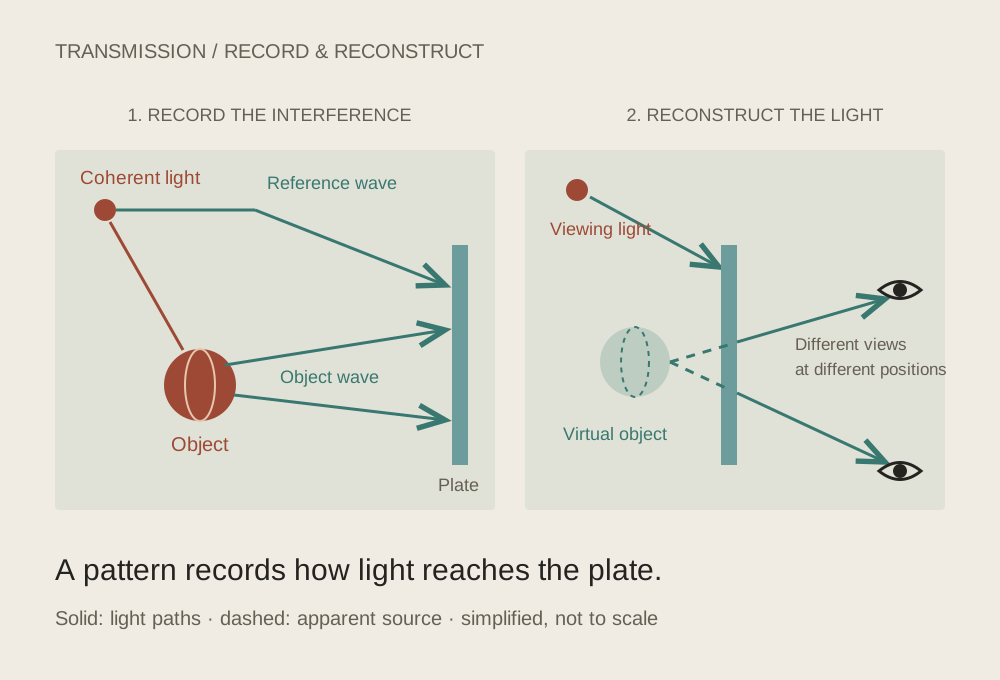
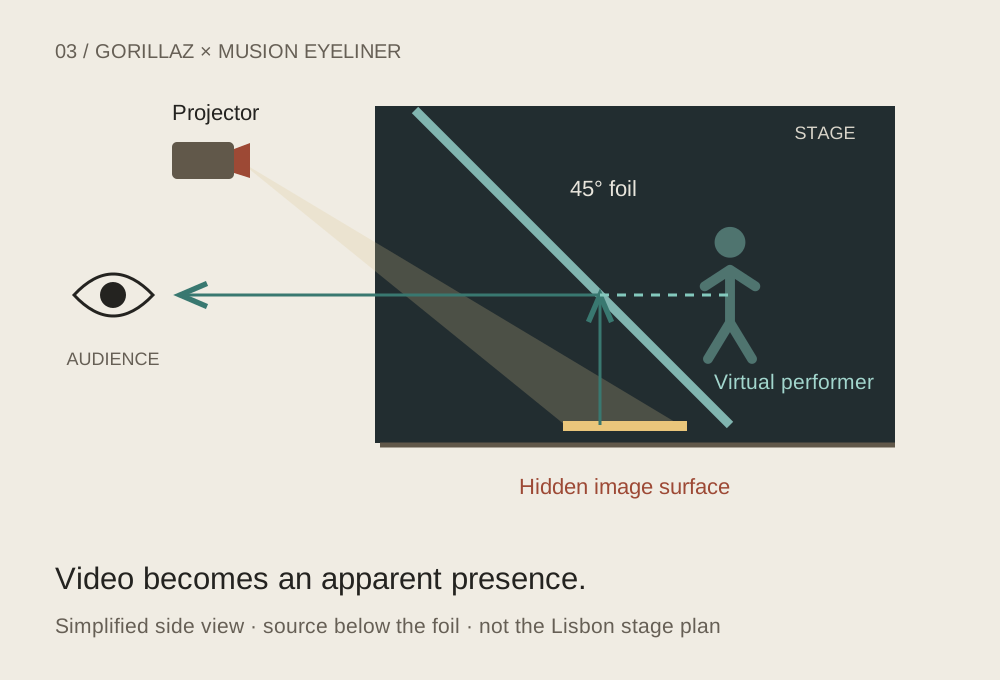
Optical holography encodes and reconstructs a light wavefront using an interference pattern. Pepper’s Ghost and Musion Eyeliner instead reflect an image into the audience’s view, making it appear to occupy the stage. Both can create a convincing presence, but their optical mechanisms differ.
How does an infinity LED mirror create depth?
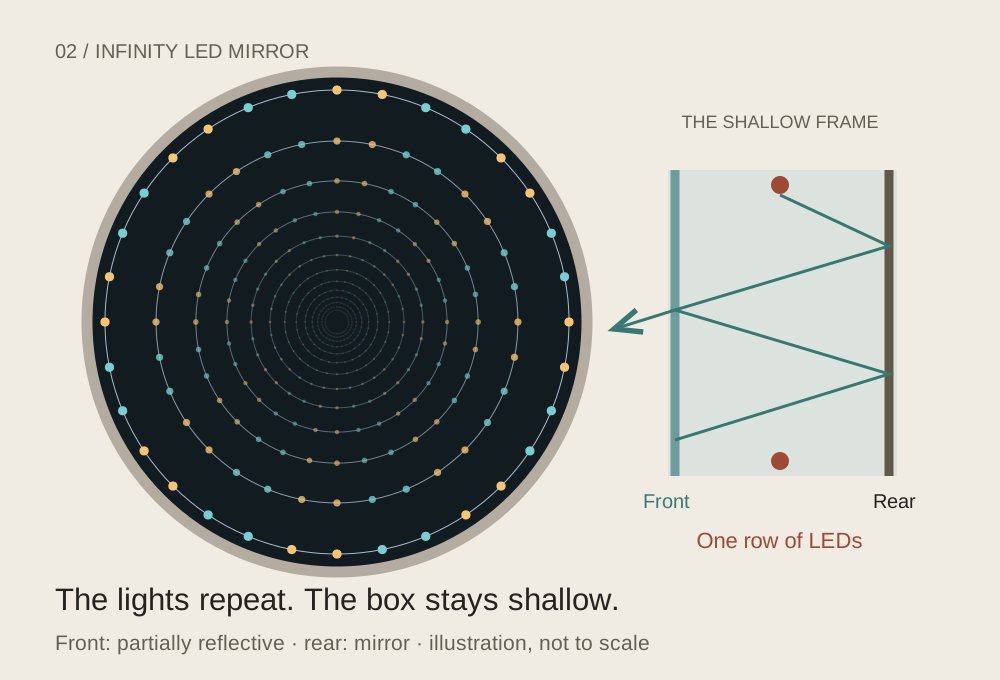
A row of LEDs sits between a rear mirror and a partially reflective front panel. Repeated reflections create successive virtual images that appear farther away. Each loses light, so the apparent tunnel fades even though the frame is shallow.
Which Gorillaz performance used Musion’s system?
Musion documents Gorillaz at the November 2005 MTV Europe Music Awards in Lisbon and lists the band’s 2006 Grammy Awards appearance in its portfolio. Eyeliner uses angled transparent foil and video imagery to create the stage illusion.
How is projection mapping related to trompe-l’œil?
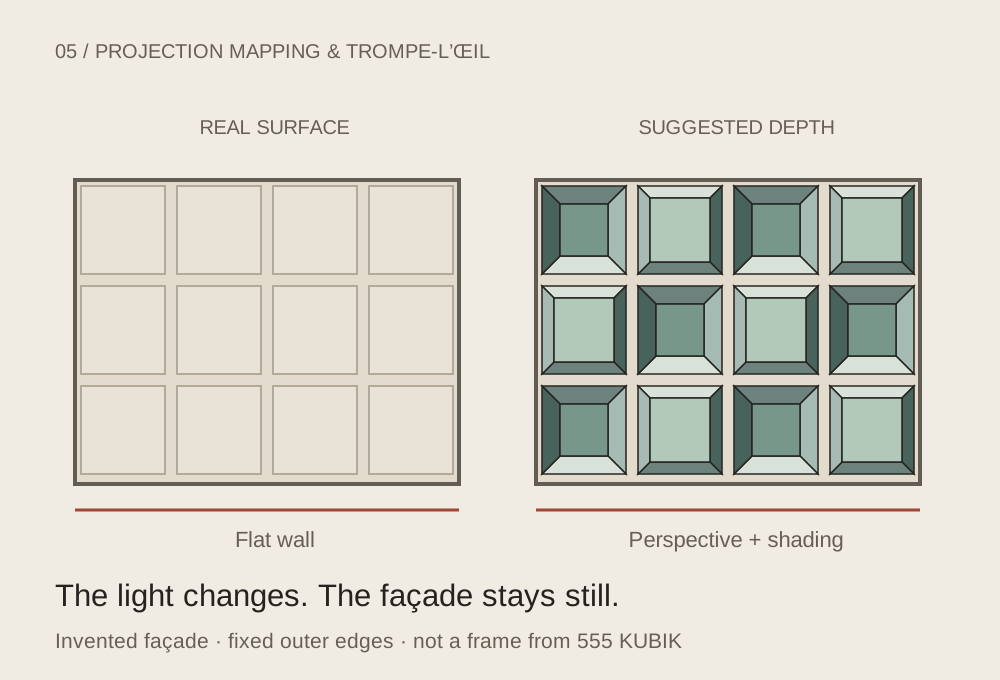
Projection mapping aligns light with a real object or building. Content that adds convincing perspective, shading or motion can turn that surface into a trompe-l’œil: it seems to gain depth or change shape. URBANSCREEN’s 555 KUBIK is an architectural example.
Was Madonna herself a hologram at the 2006 Grammys?
Her first appearance alongside Gorillaz was prerecorded footage presented through Musion’s reflected-video system. Musion director James Rock described filming it three weeks before the show. The performance then moved to Madonna appearing live with her dancers, so it combines a virtual appearance with a real performer.
Frequently asked questions
What is camouflage?
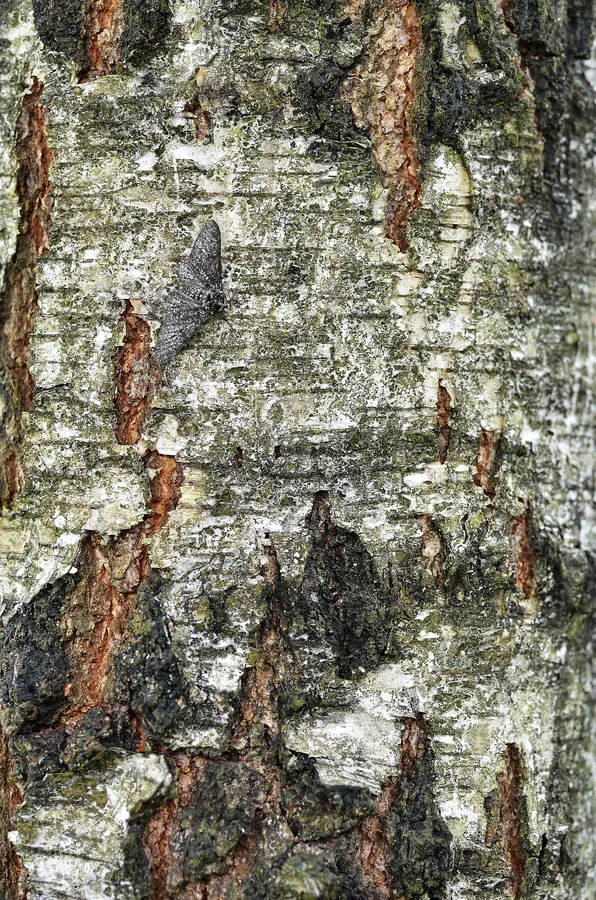
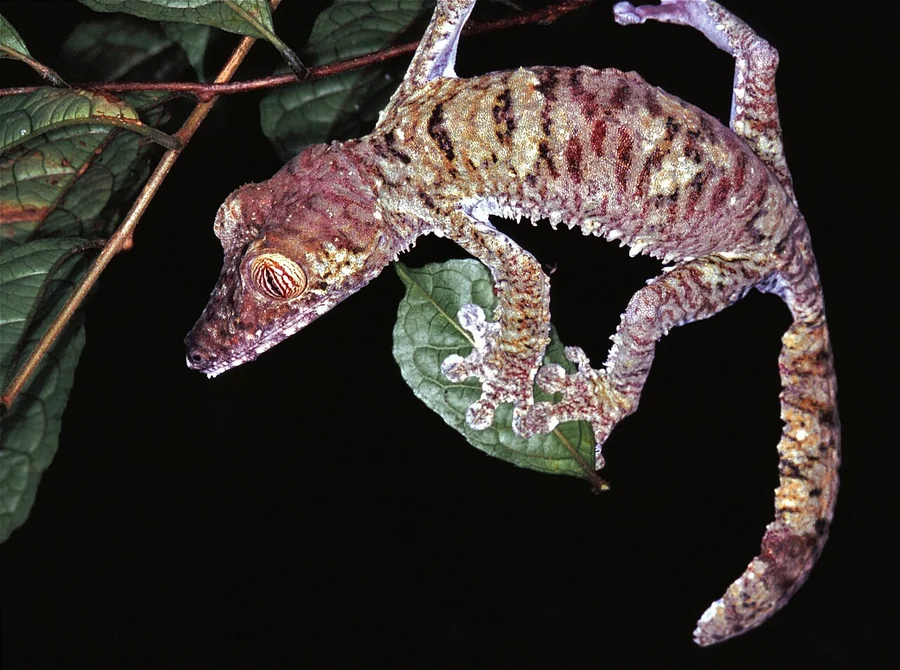
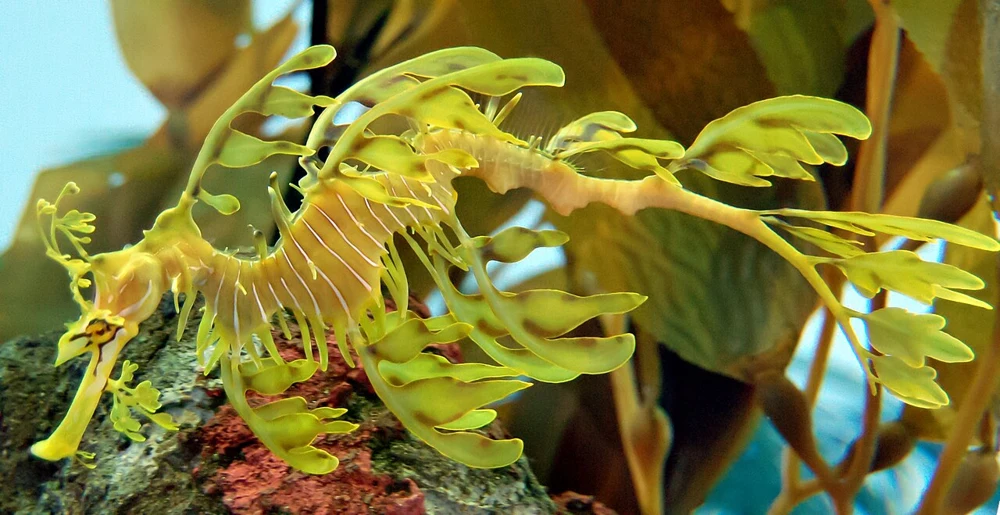
Camouflage changes how an observer detects or recognises an organism or object. It includes matching a background, breaking up an outline, masquerading as something else, borrowing cover and confusing judgments of shape or direction.
Is camouflage only found in animals?
No. Plants such as Lithops resemble stones. People use camouflage in clothing, face paint, netting, disguised structures and painted ships. Some designs also challenge how computer vision models detect people or faces.
What is the difference between background matching and masquerade?
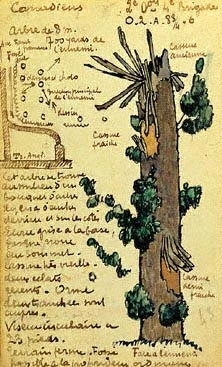
Background matching reduces the visual contrast between an object and its surroundings. Masquerade makes an object resemble something the observer may ignore, such as a leaf, a stone or a tree.
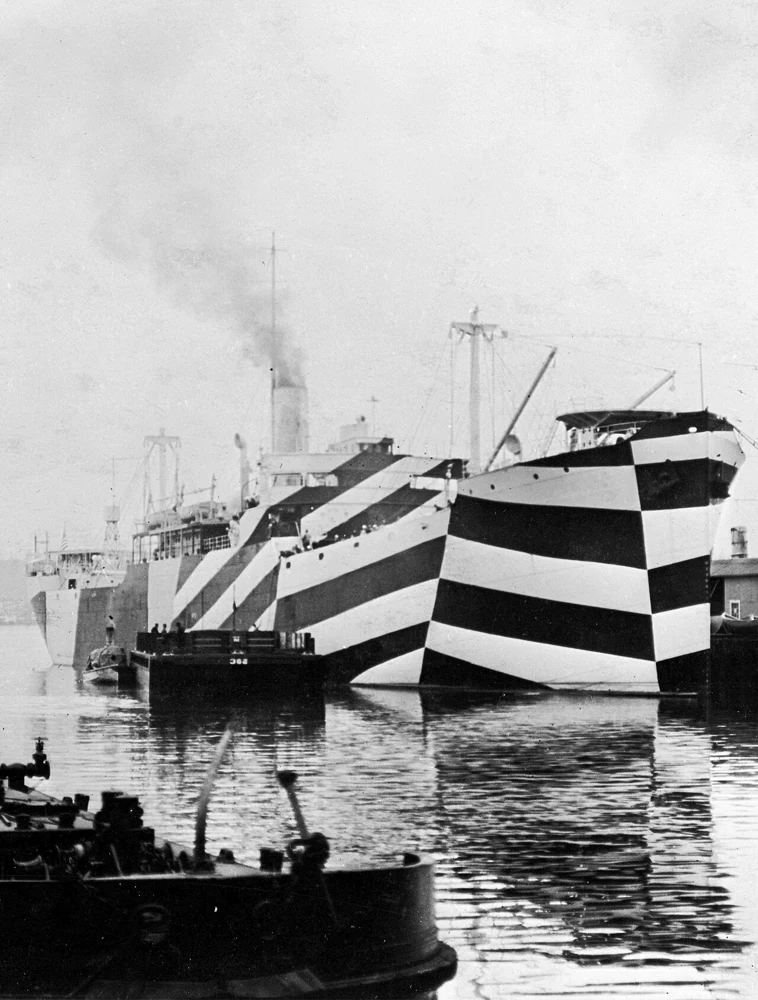
Does dazzle camouflage make a ship invisible?
Dazzle patterns were intended to confuse judgments of a ship’s form and course while it remained visible. Their historical effectiveness is difficult to establish; they are different from background matching.
Does camouflage work equally well everywhere?
No. Visibility depends on the background, light, distance, movement and the observer’s sensory abilities. A photograph illustrates appearance but does not establish effectiveness in every setting.
Can face patterns on a shirt confuse facial recognition?
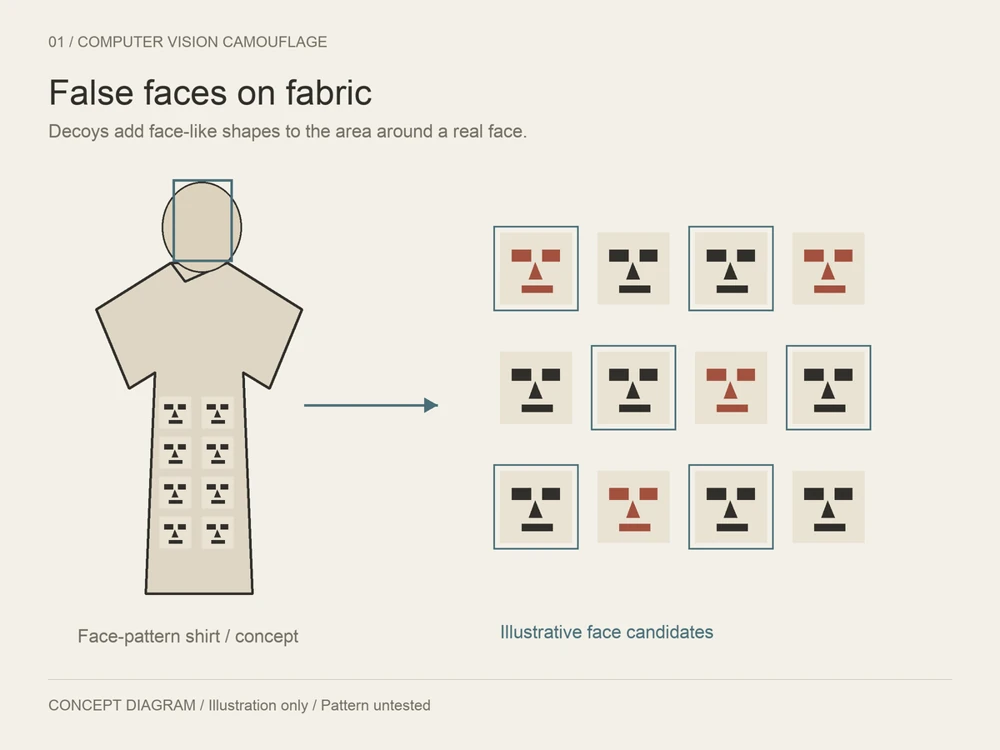
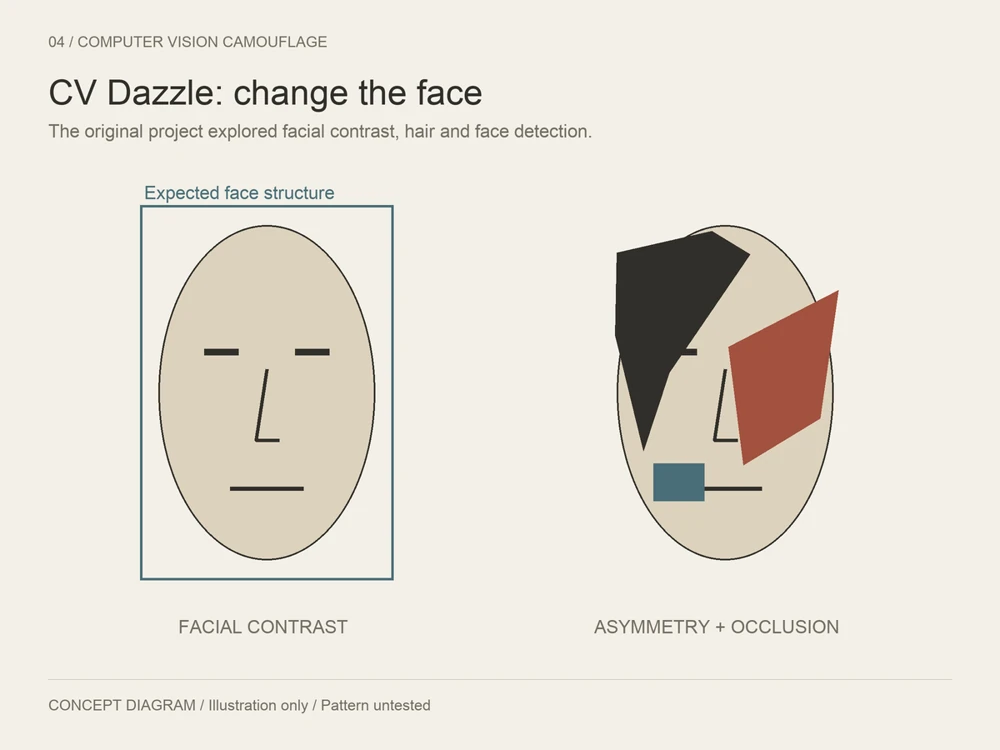
Face-like prints can act as decoys for a specific face detector, as explored by HyperFace. The original prototype used a scarf and targeted an older OpenCV detector. Producing false face detections does not prove that the real face is missed or that its identity cannot be matched. A generic face-pattern shirt has no established protective effect.
How do adversarial shirts differ from face-pattern clothing?
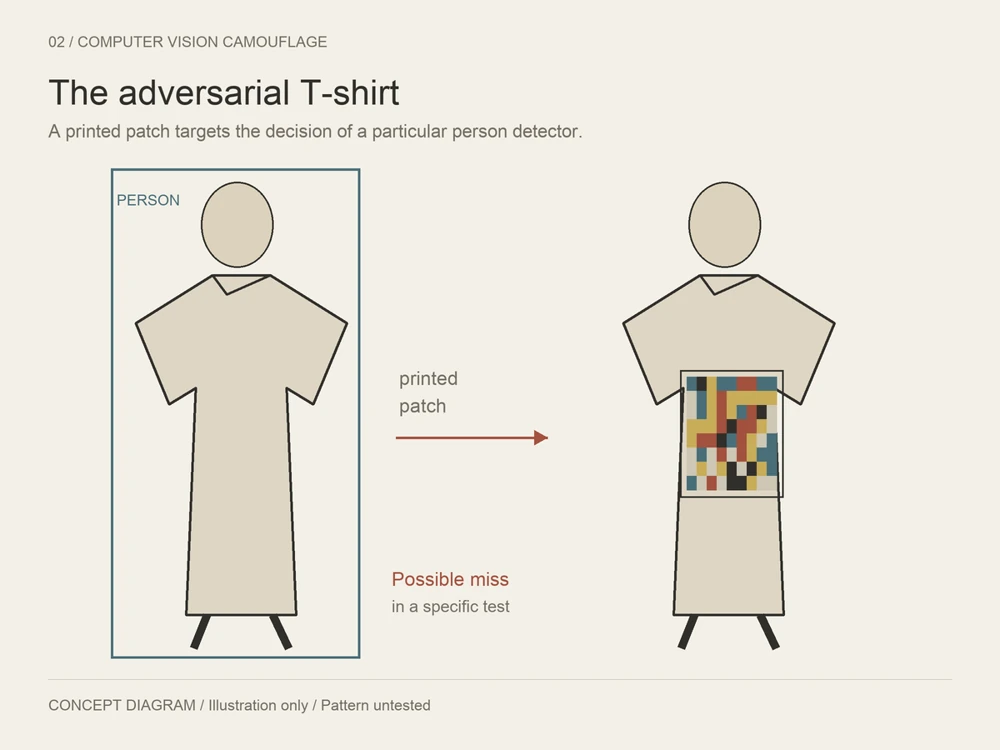
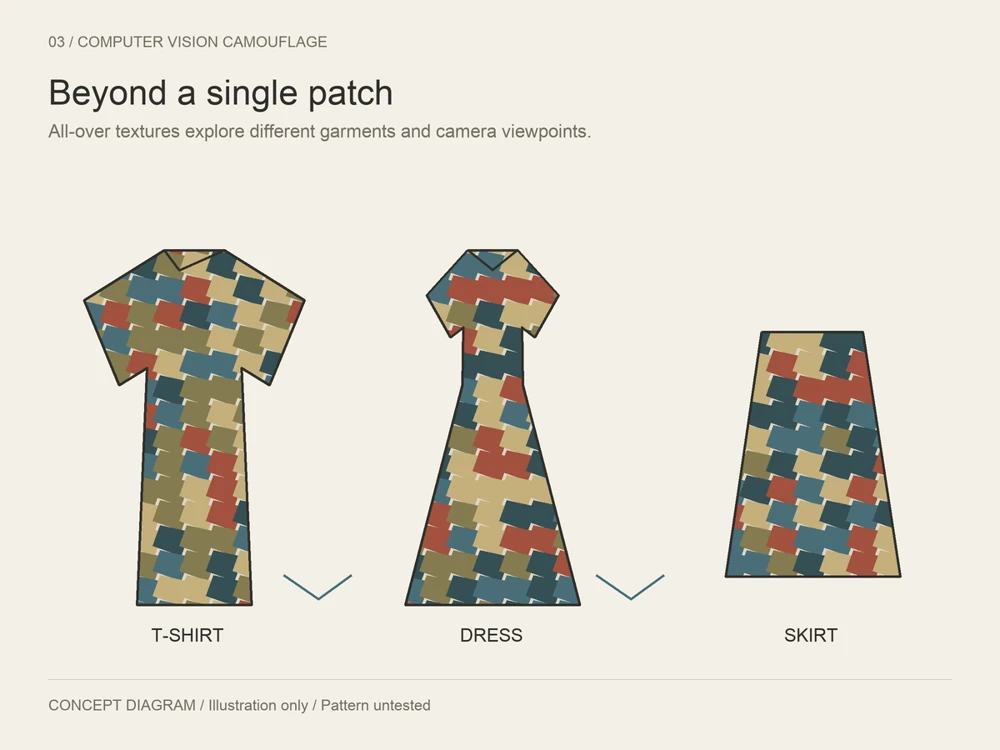
HyperFace adds face-like decoys around a person. Adversarial shirt research designs prints to change a person detector’s decisions; those prints need not resemble faces. Some studies use a chest patch, while others cover shirts, skirts and dresses with an all-over texture.
What is the difference between face detection and face recognition?
Face detection locates a face in an image. Face recognition compares a face with stored identities. Person detection locates the whole person. Confusing one of these tasks does not by itself establish that the other tasks have failed.
Does computer vision camouflage work against every AI model?
No universal effect is established by these examples. Results depend on the target model, camera viewpoint, movement, lighting and fabric deformation. The original HyperFace and CV Dazzle looks targeted older face detectors. The diagrams here explain the ideas and are not tested camouflage patterns.
Frequently asked questions
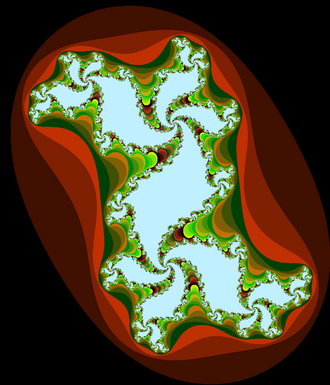
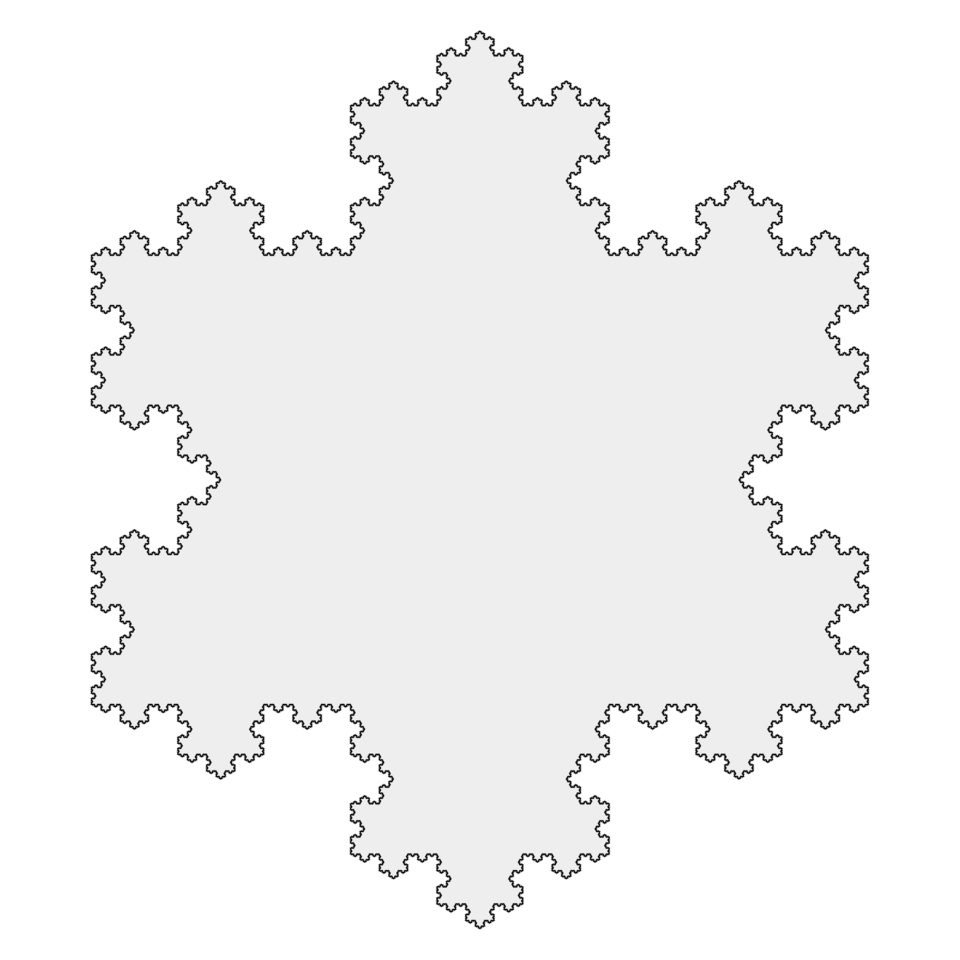
What is a fractal?
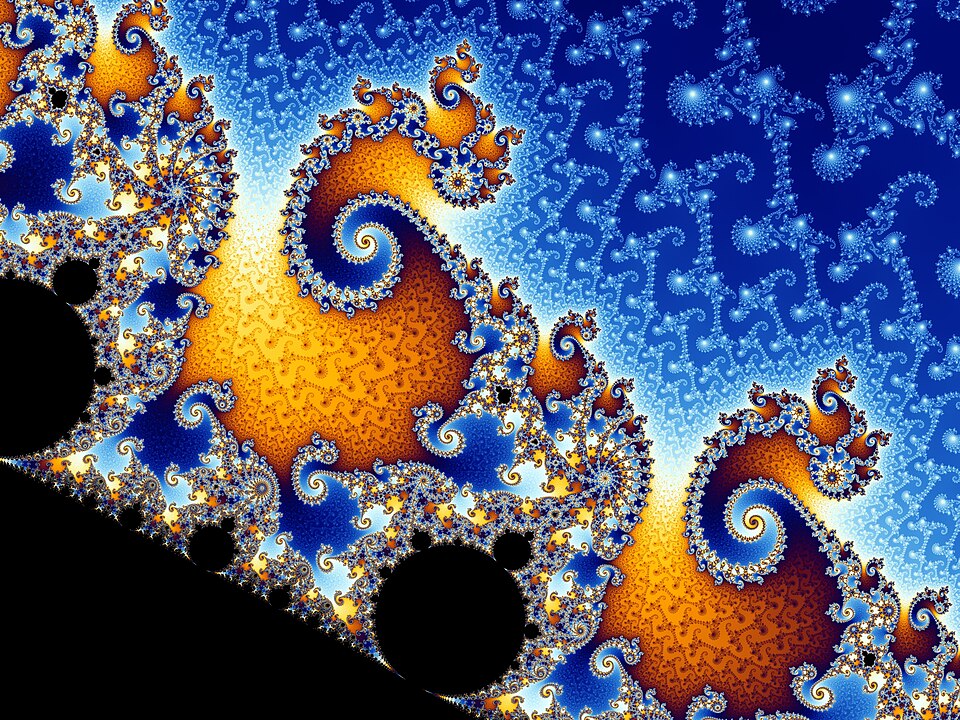
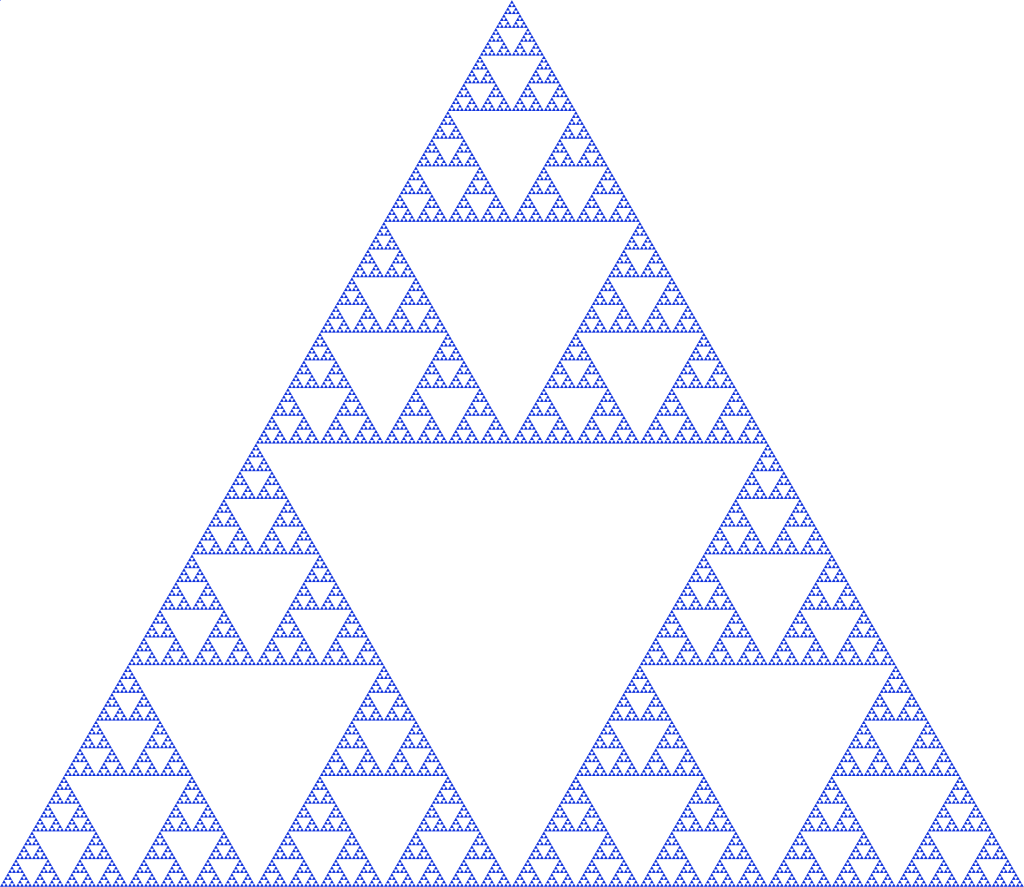
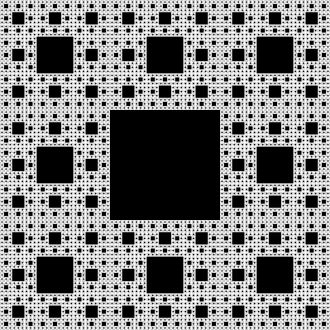
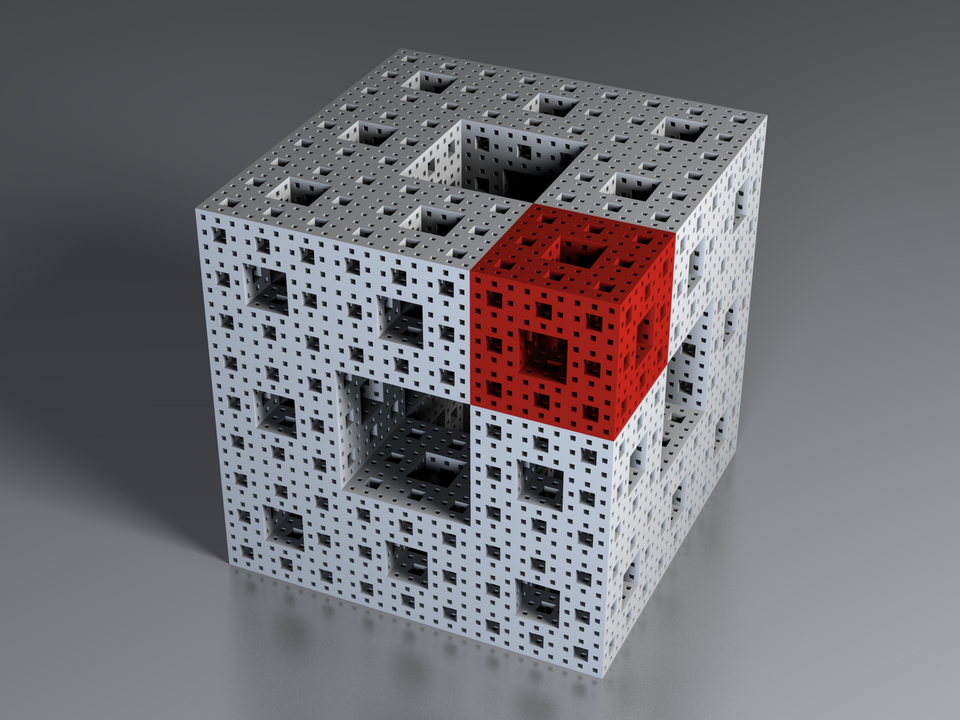
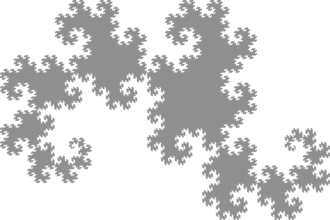
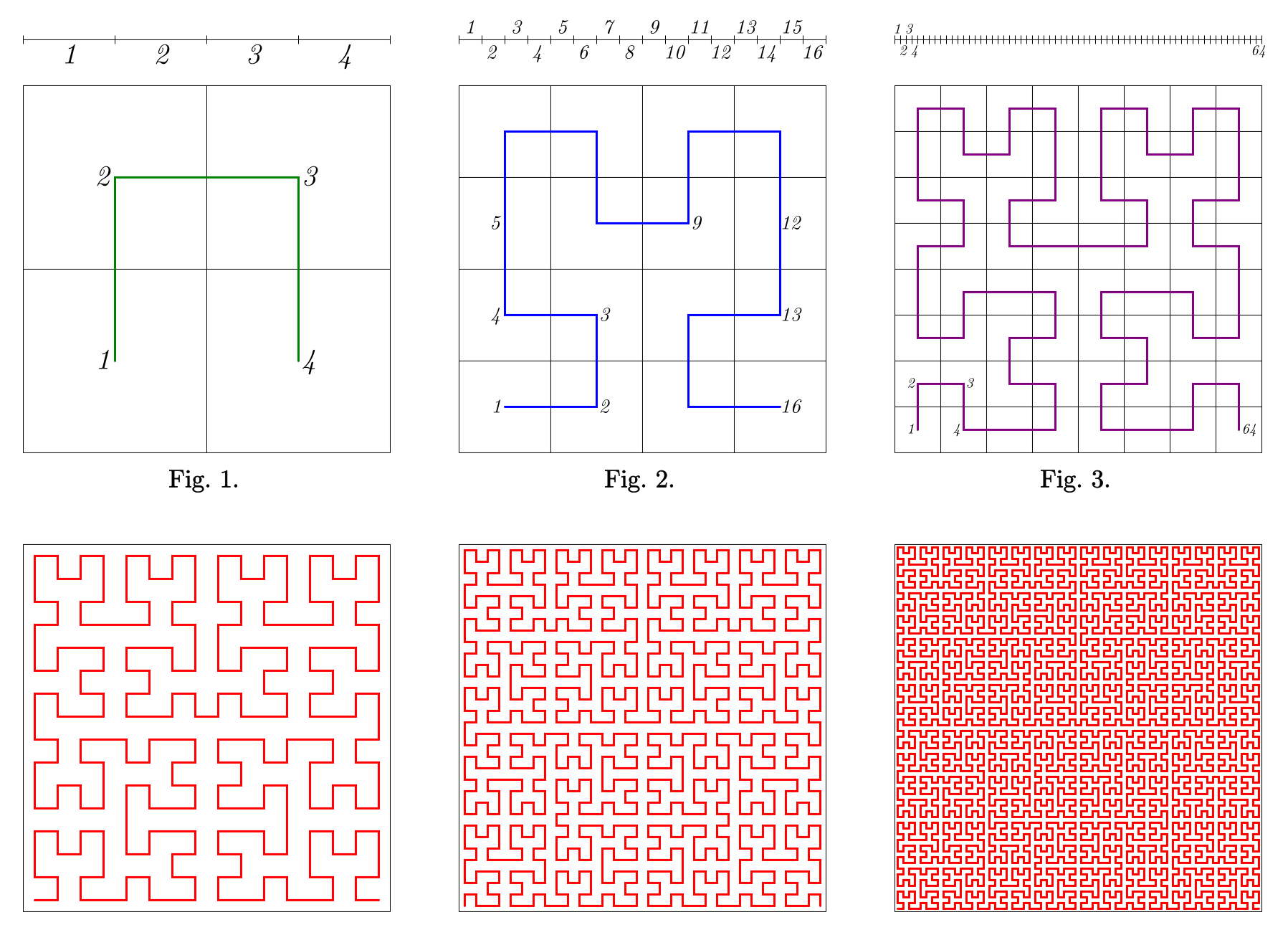
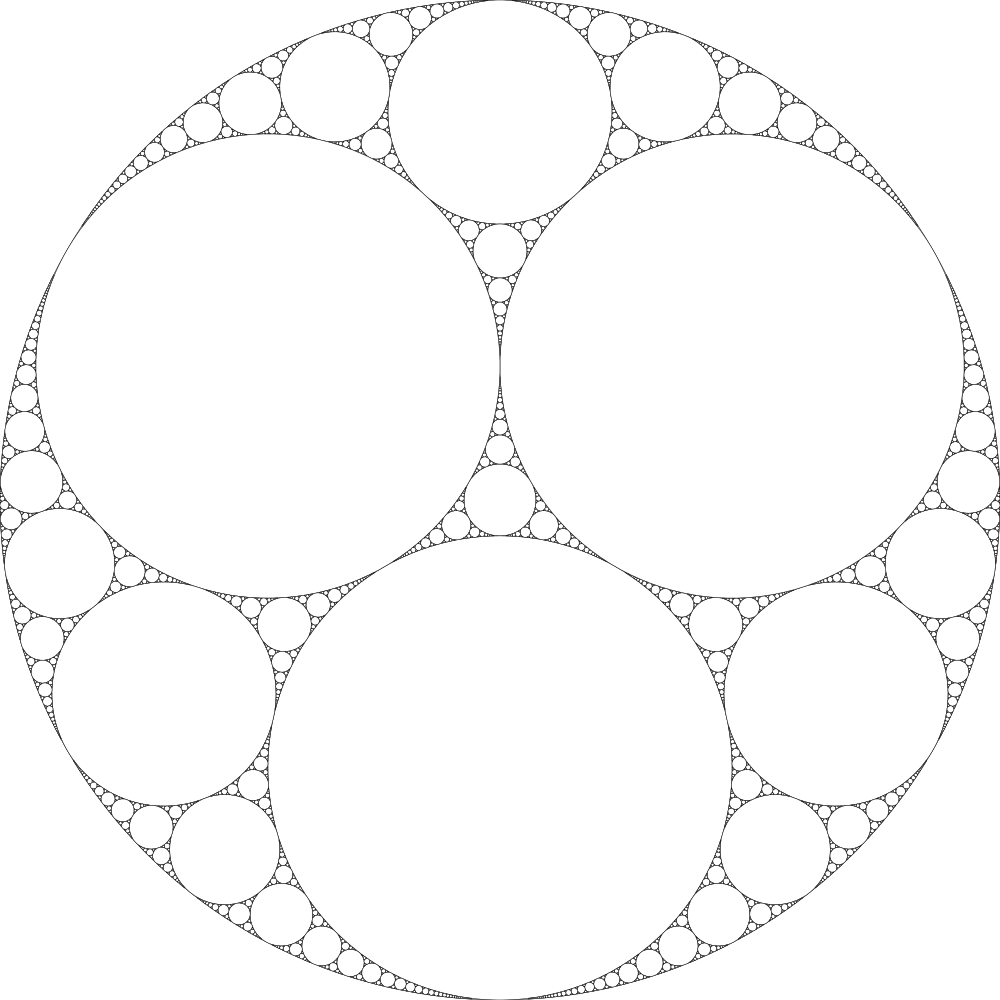
A fractal is a mathematical structure with detail or related patterns across different scales. Some fractals repeat an exact construction; others show more varied forms of self-similarity.
Are fractals optical illusions?
Not necessarily. Through Mirror includes fractals because their repetition, intricate boundaries and nested patterns challenge visual intuition. Their geometry does not have to create a perceptual error.
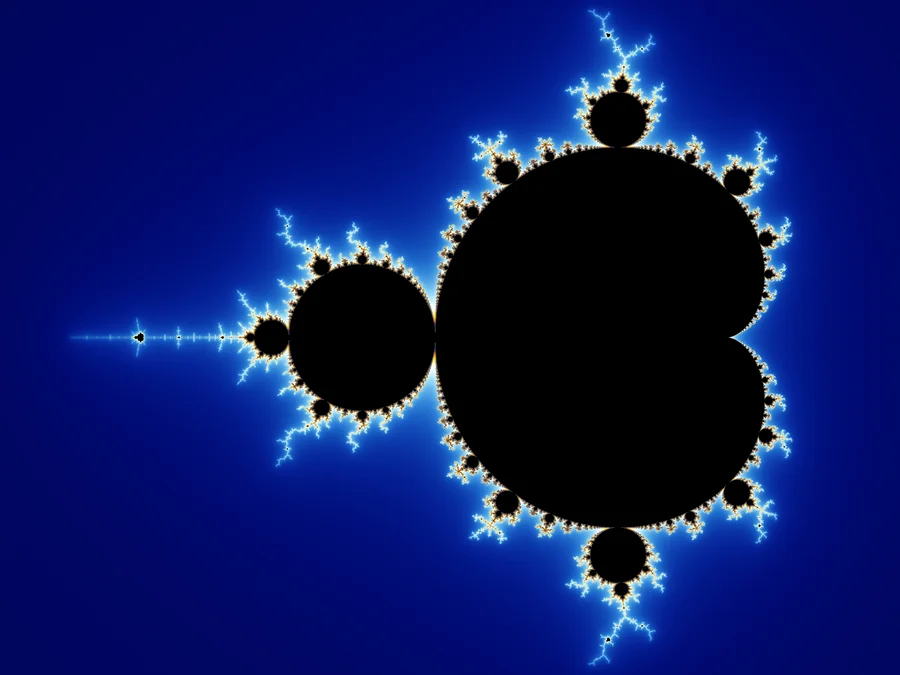
What is the Mandelbrot set?
The Mandelbrot set is defined by repeatedly applying a mathematical rule to complex numbers and checking whether the results remain bounded. Images show its intricate boundary and related patterns at different scales.
Frequently asked questions
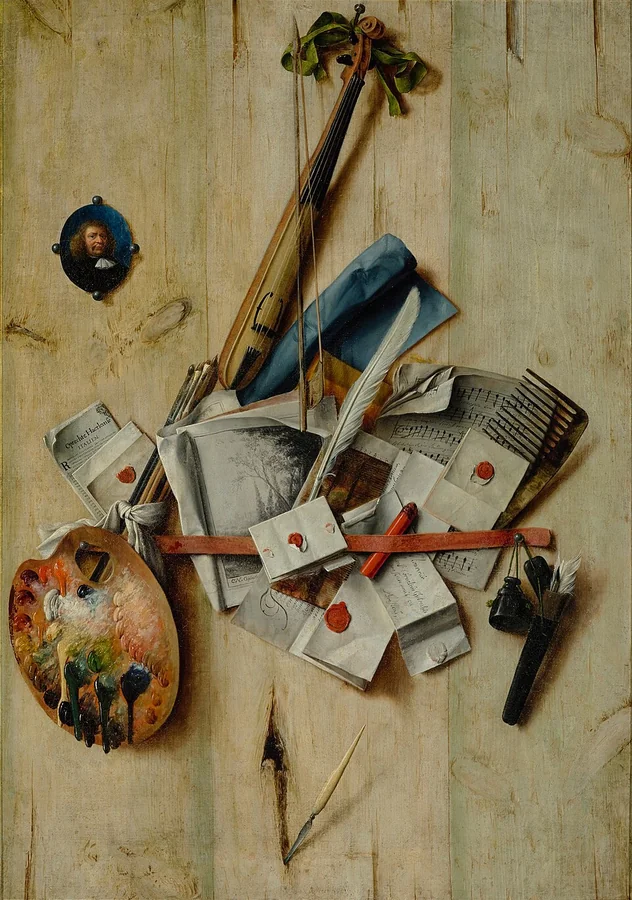
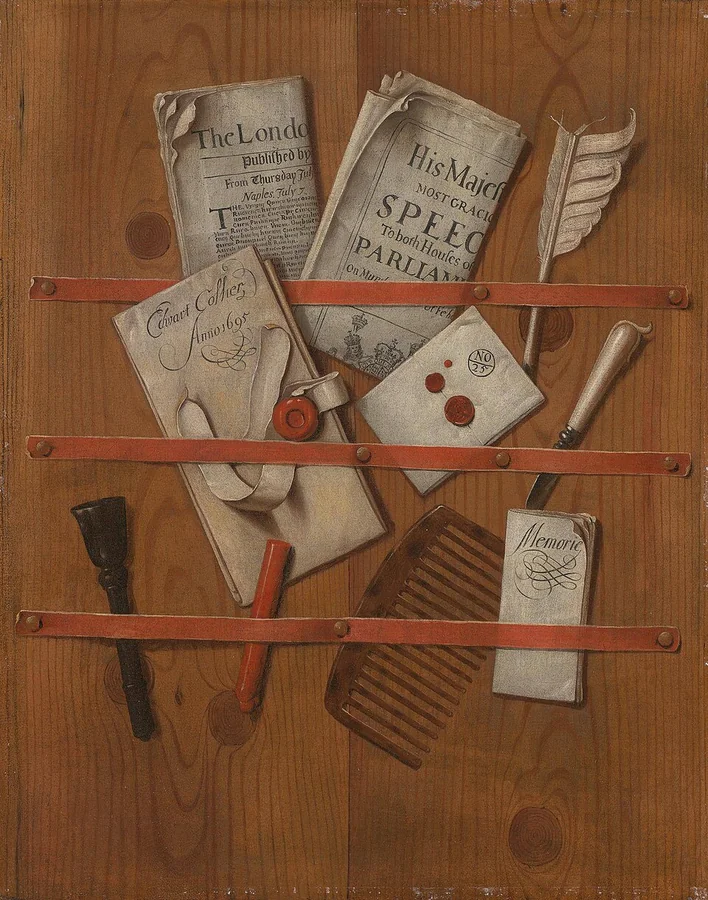
What is trompe-l’œil?
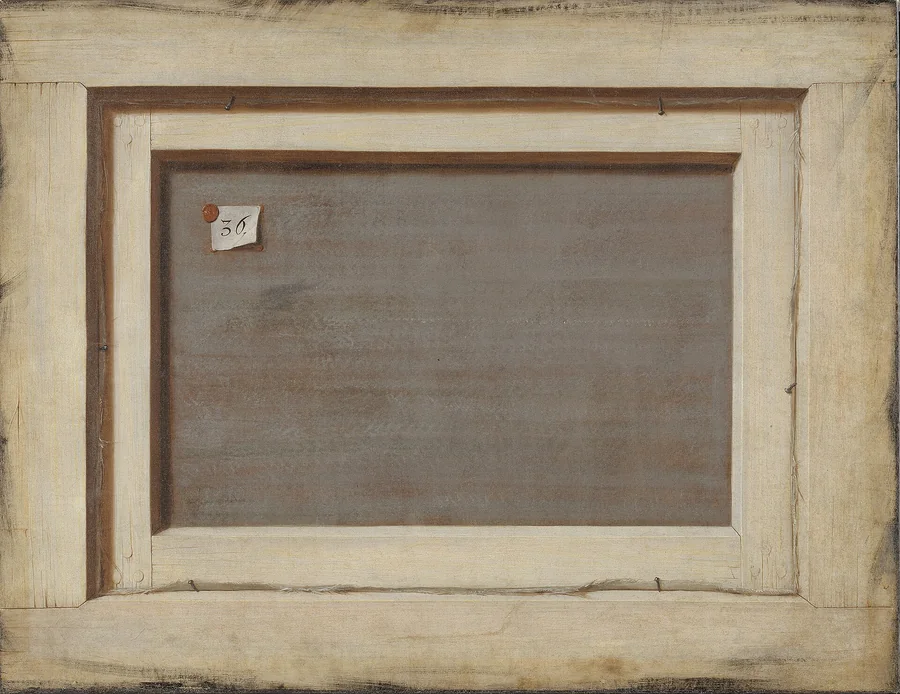
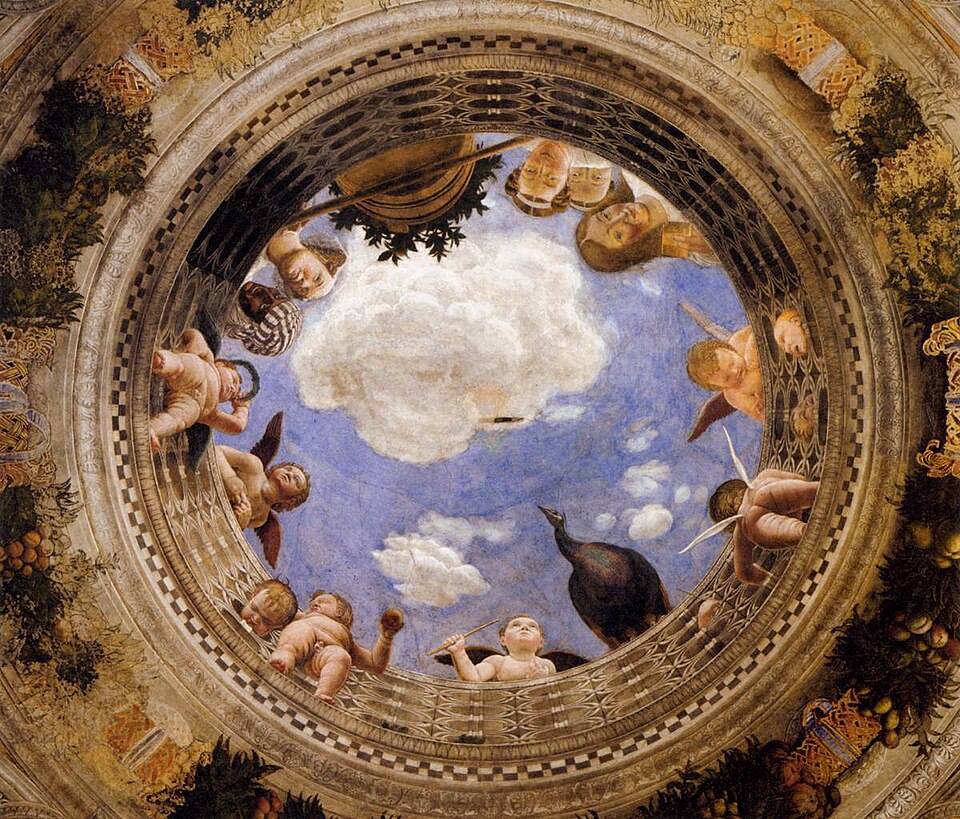
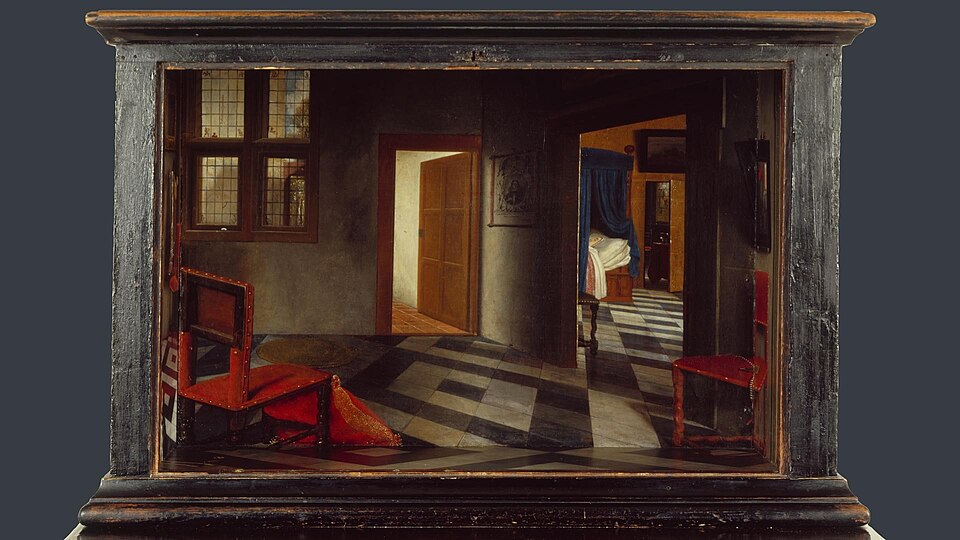
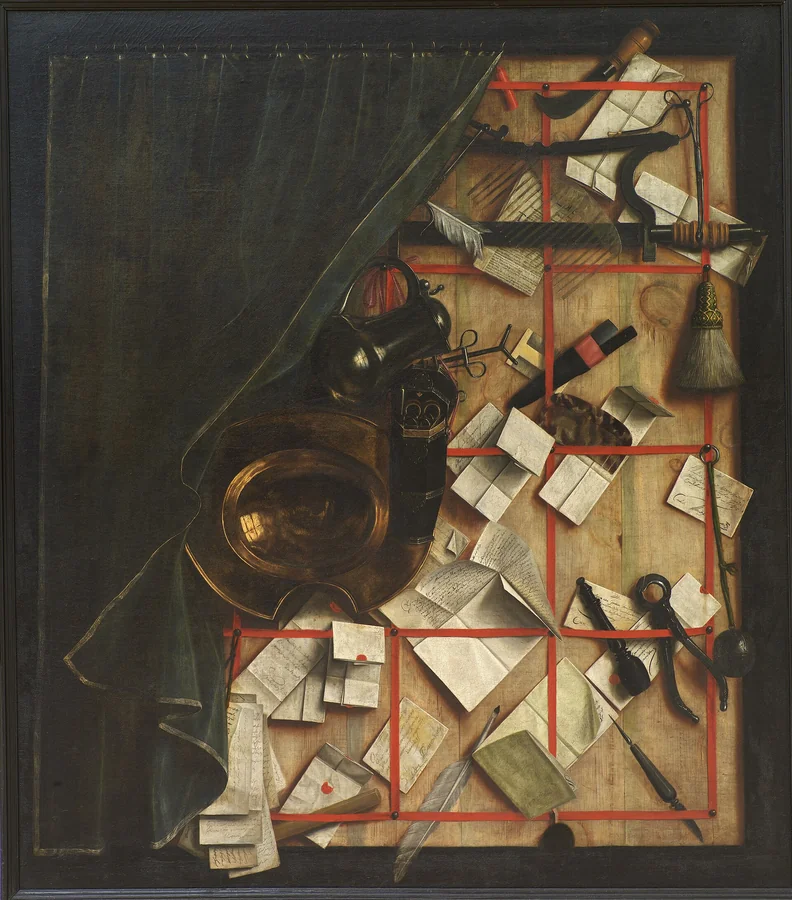
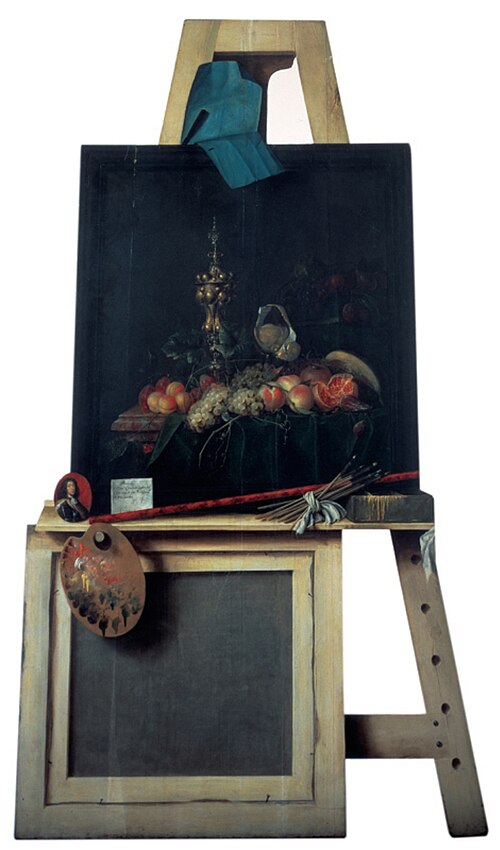
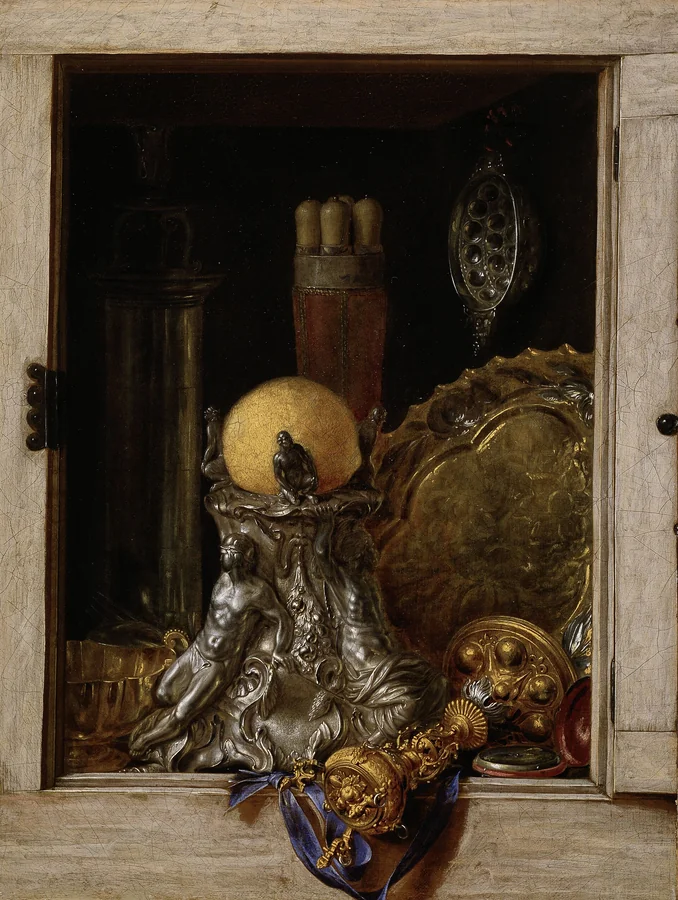
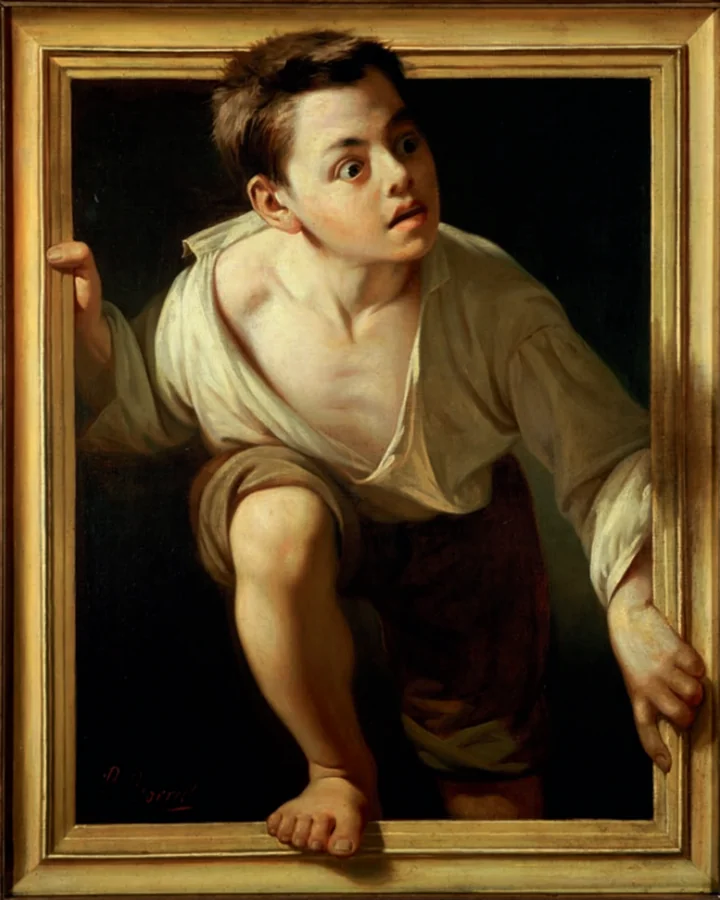
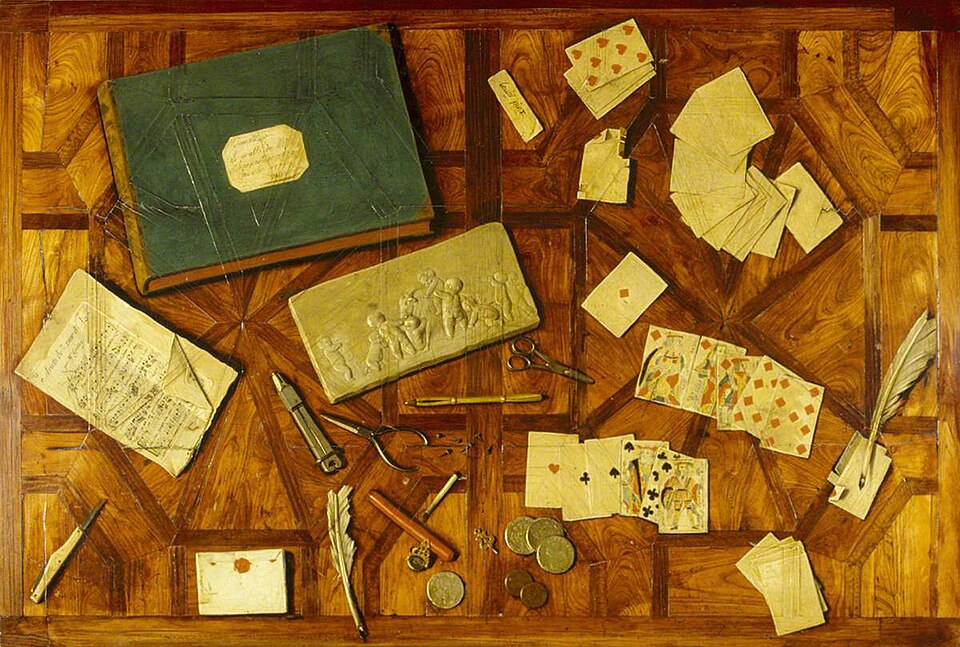
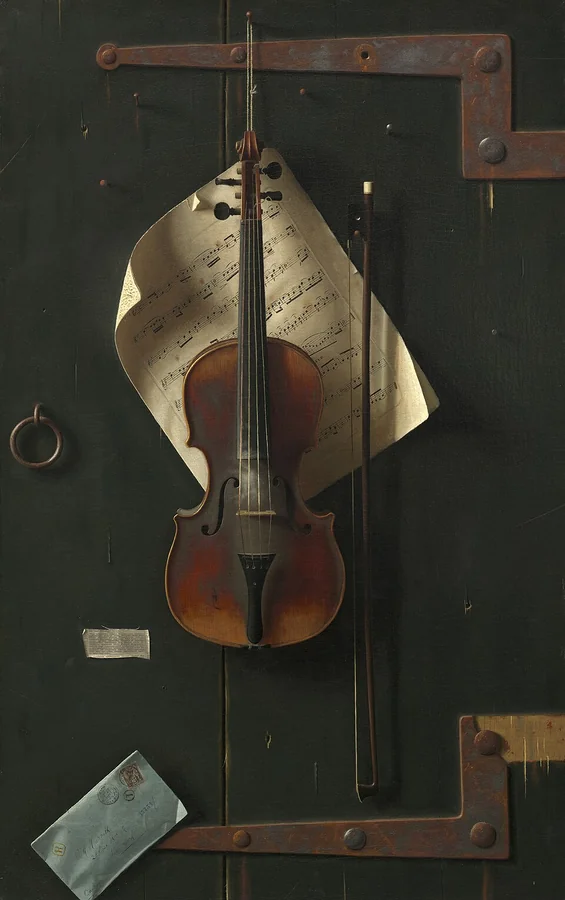
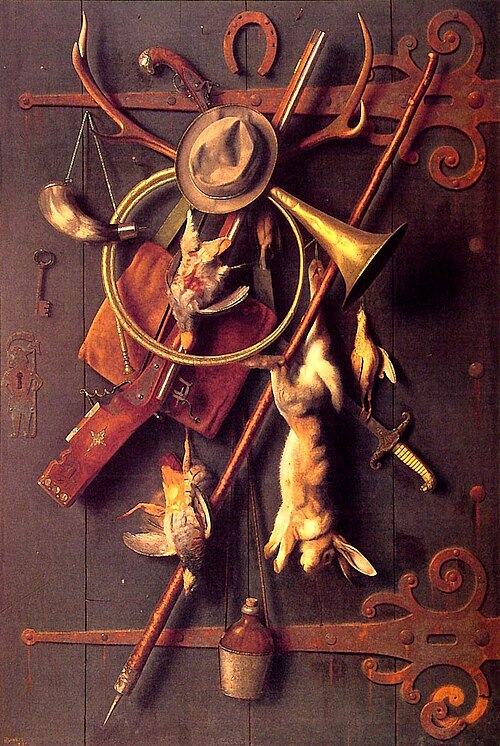
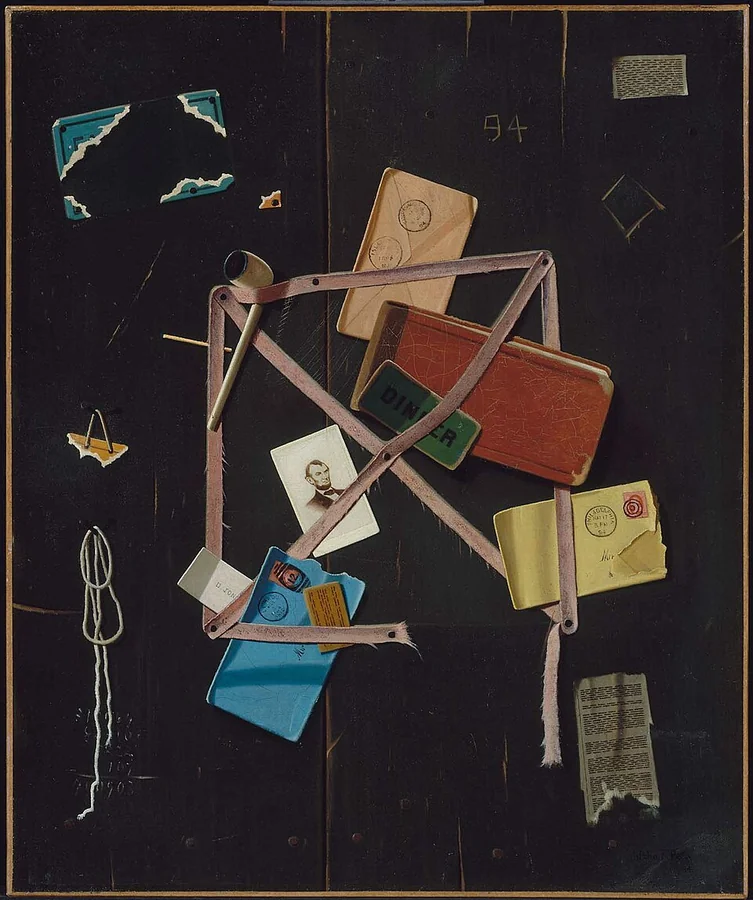
Trompe-l’œil means deceiving the eye. In painting, carefully arranged perspective, shading and familiar objects can make a flat surface appear to contain real depth or objects.
What is anamorphosis in art?
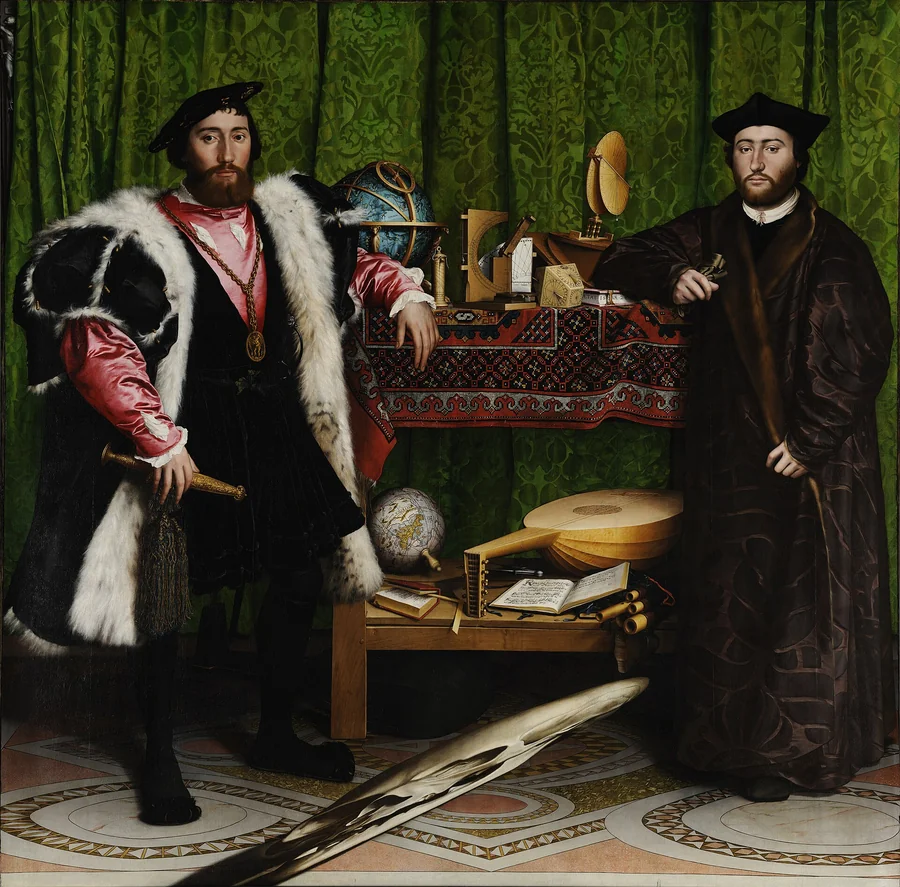
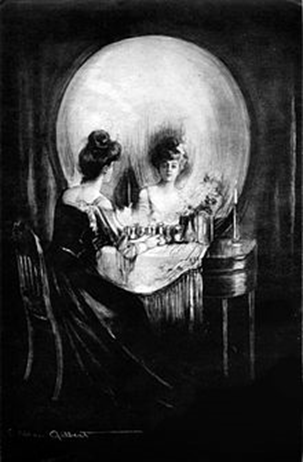
Anamorphosis is a distorted image that becomes recognisable from a particular viewpoint or with an appropriate reflective surface. Holbein’s The Ambassadors includes a skull revealed by an oblique view.
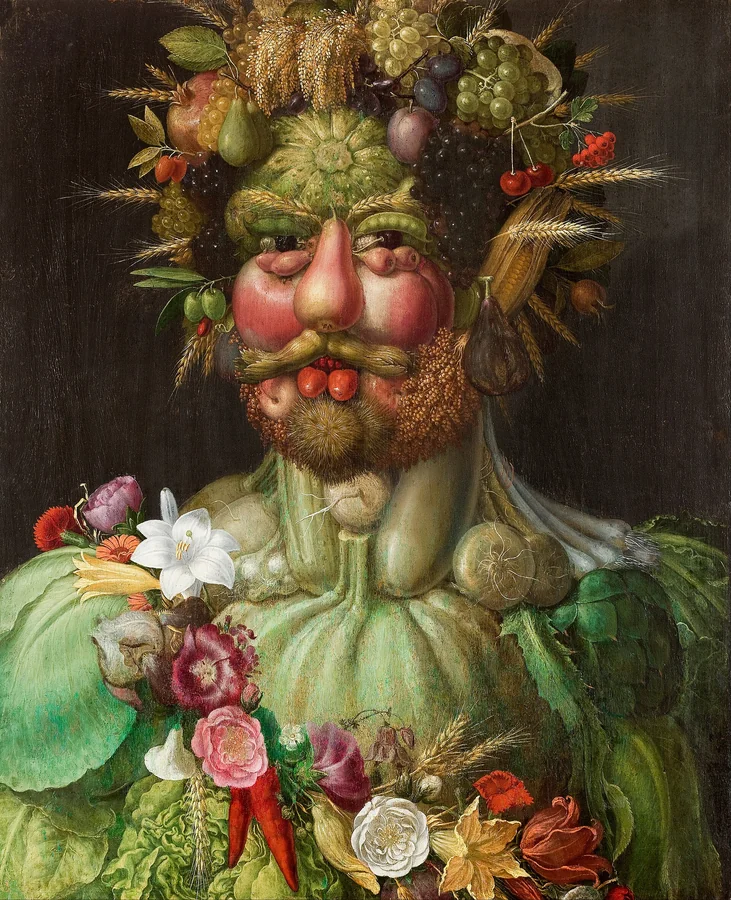
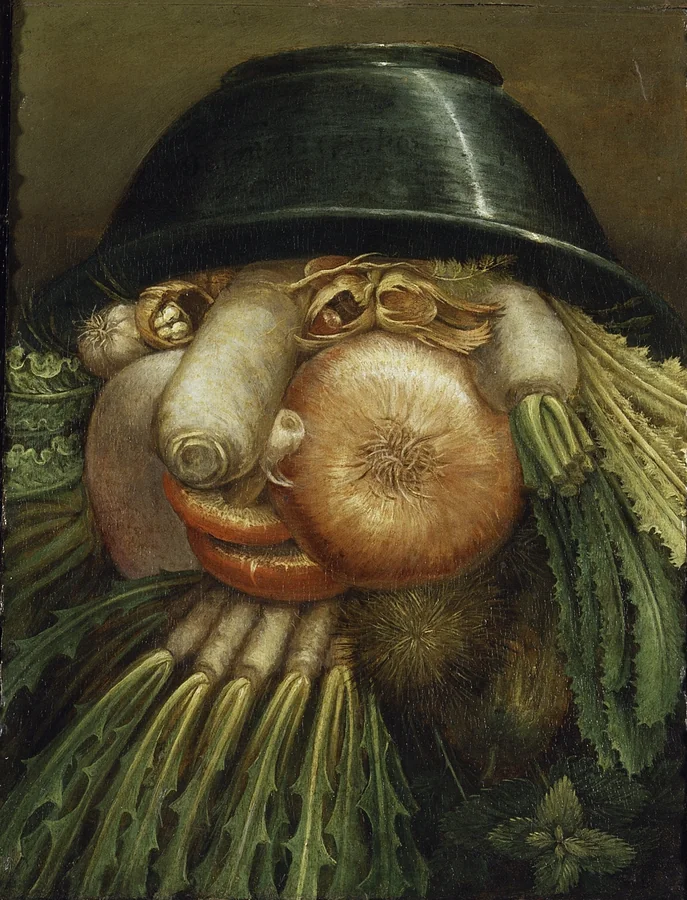
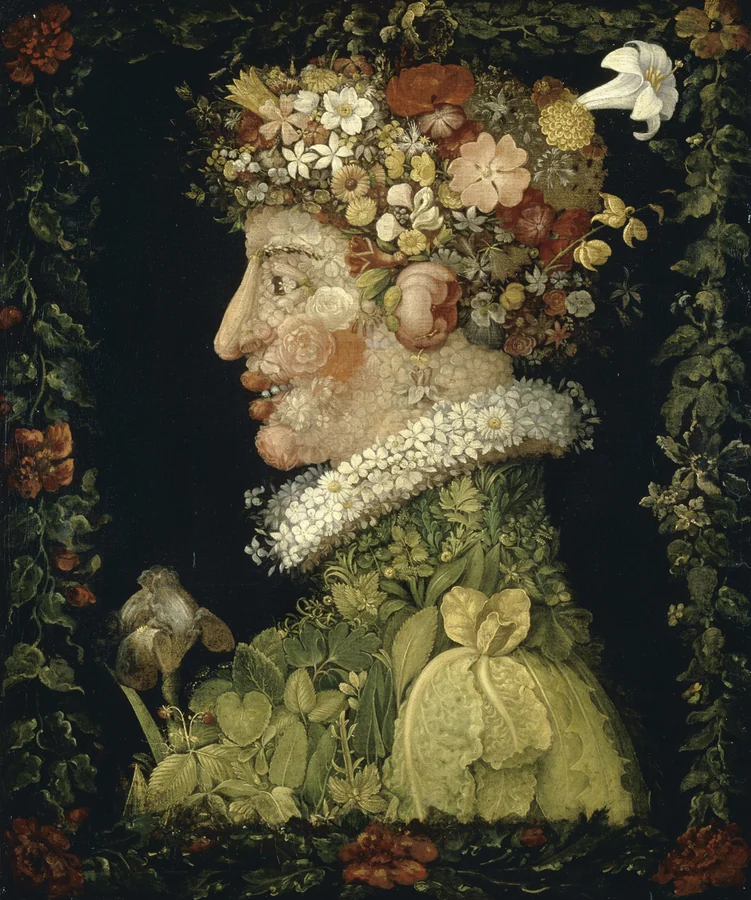
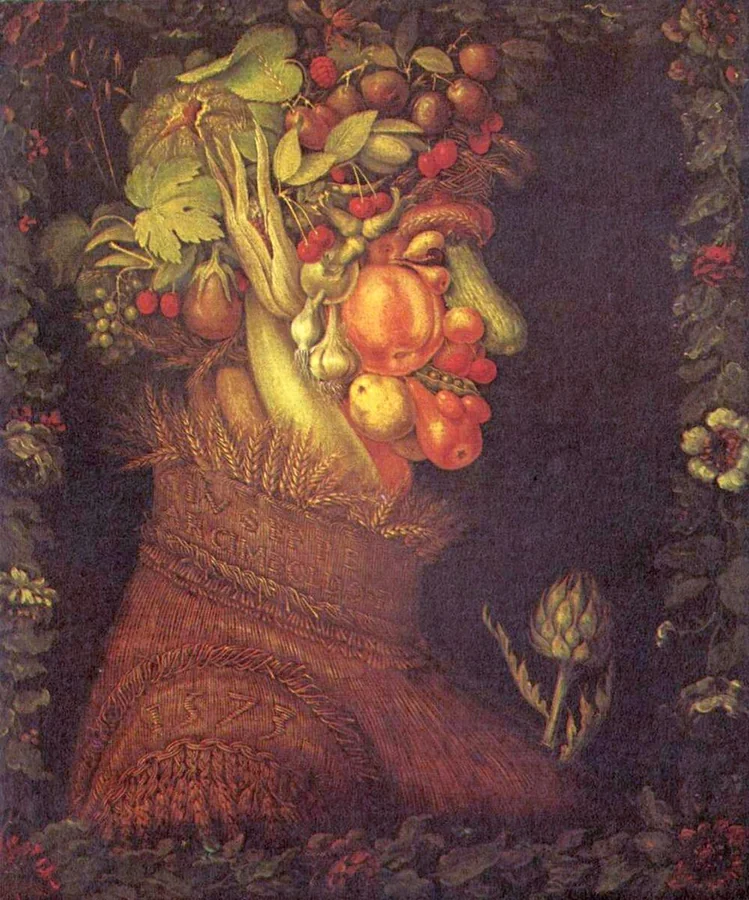
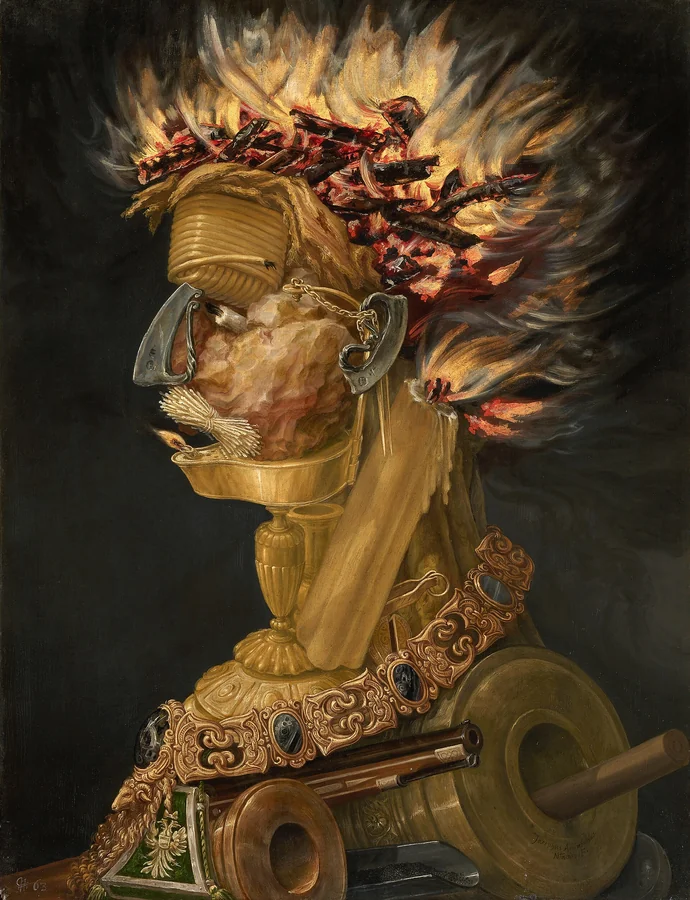
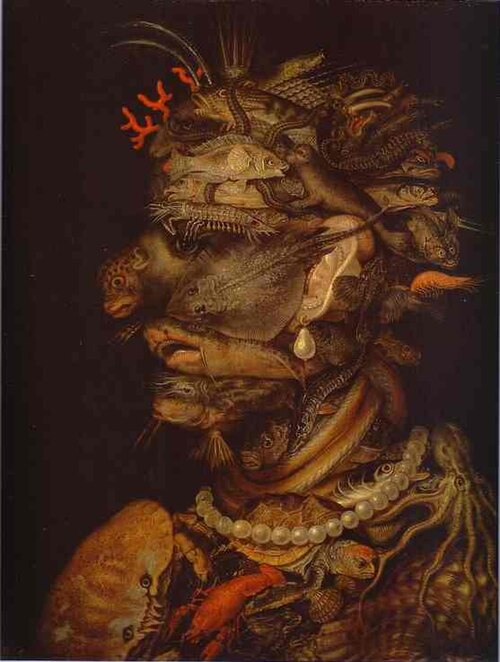
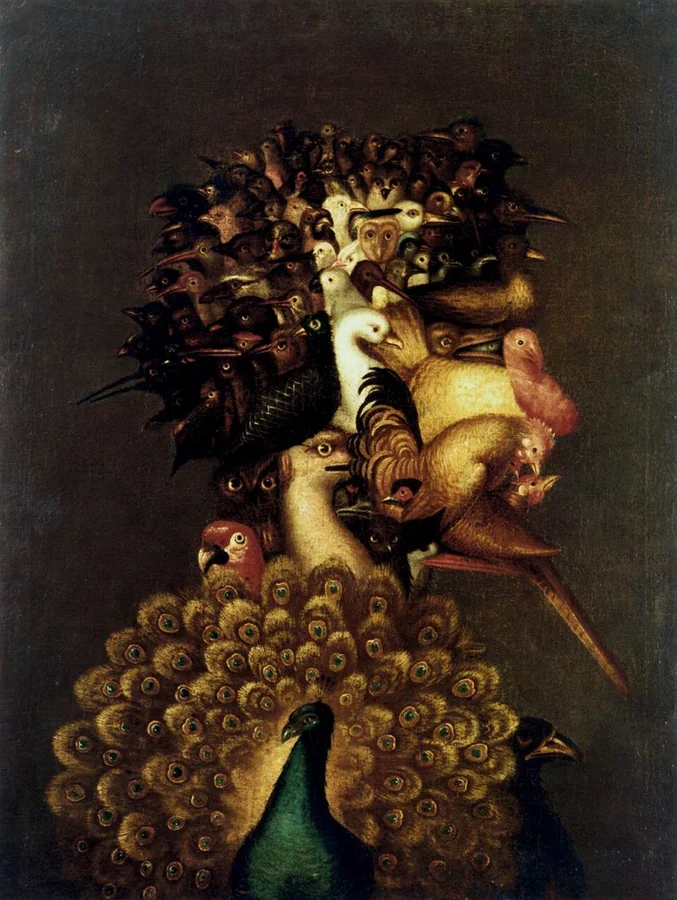
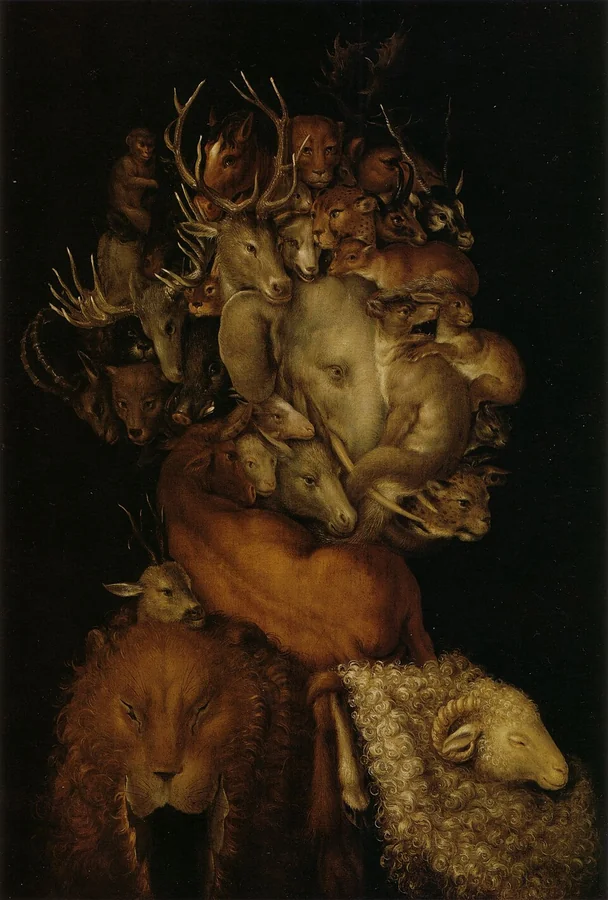
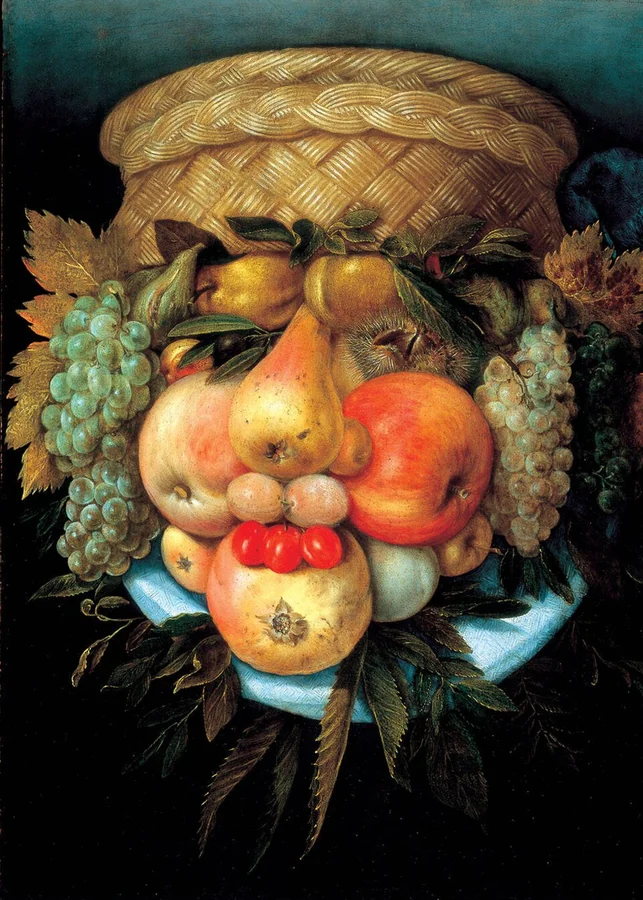
How do Arcimboldo’s portraits work?
Arcimboldo arranged recognisable objects such as fruit, flowers and books into the features of a face. Some works also reveal a second interpretation when the painting is turned upside down.
Frequently asked questions
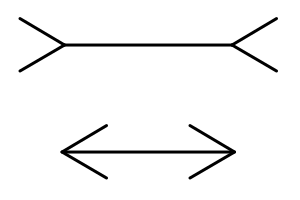
What are geometric optical illusions?
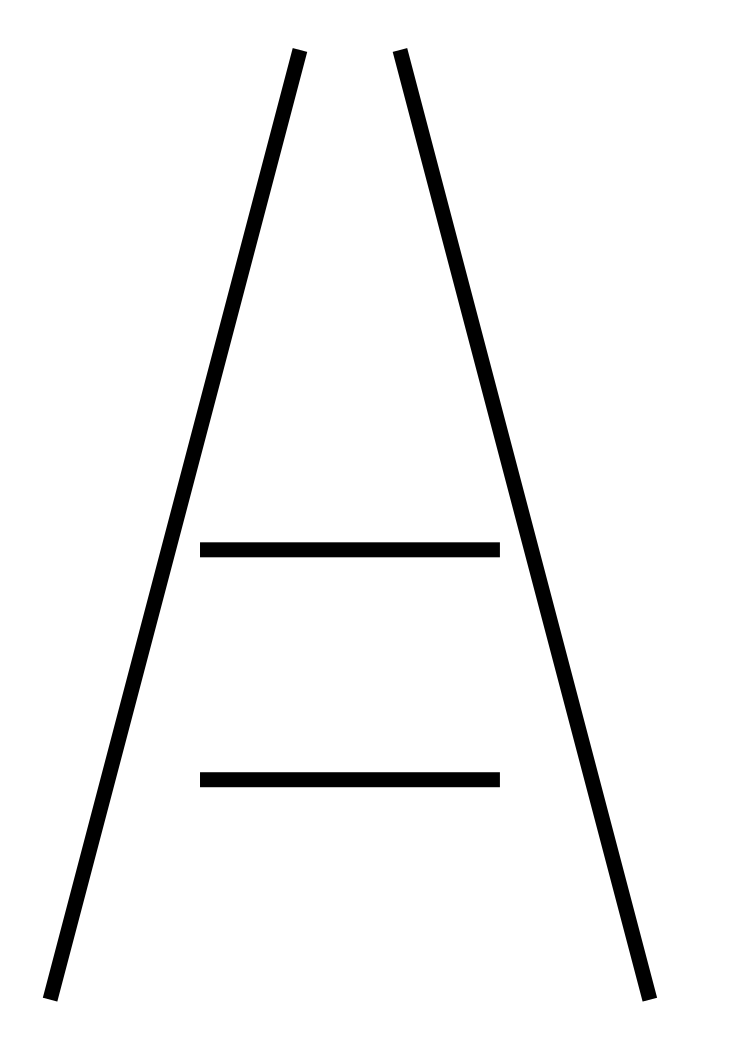
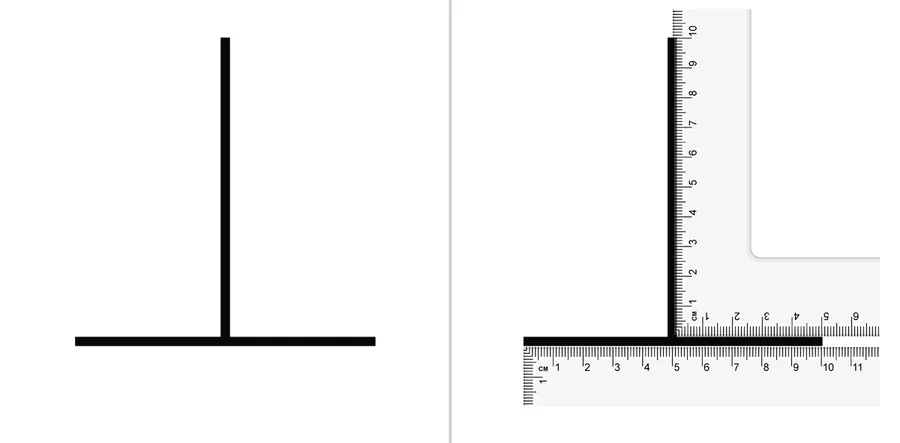
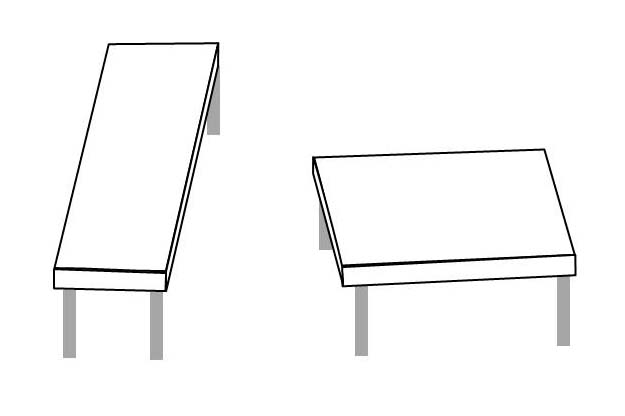
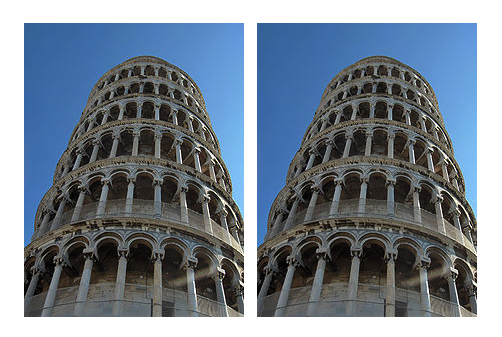
Geometric illusions change the apparent size, length, angle or alignment of shapes. Surrounding lines and perspective cues can make equal lengths look unequal or parallel lines appear tilted.
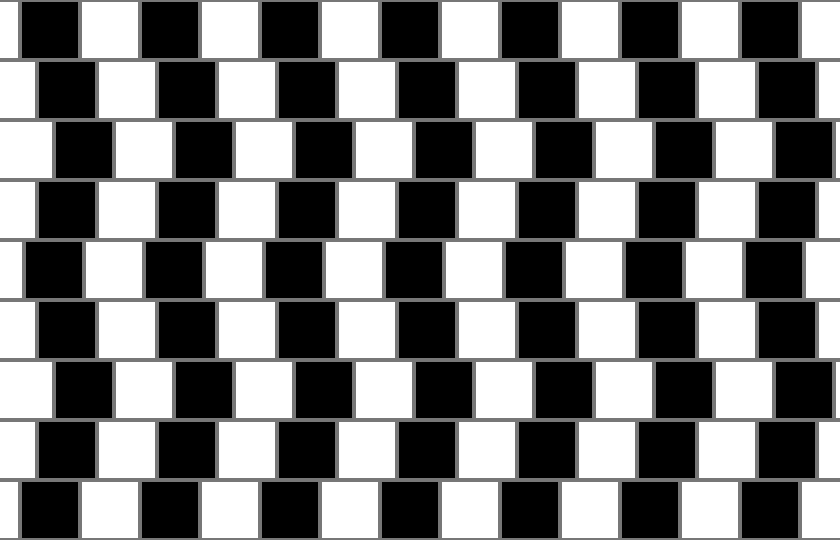
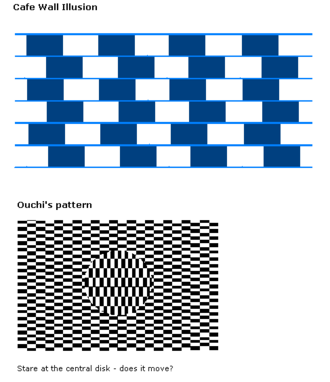
Are the lines in the Café Wall illusion parallel?
Yes. The horizontal boundaries are parallel, but the alternating arrangement of light and dark tiles makes them appear to slope.
How can I check the size of an illusion?
Follow the entry’s instructions, then compare the relevant lengths with a ruler or cover the surrounding context. This can separate the physical measurement from the visual impression.
Frequently asked questions
Why can identical shades look different?
The visual system judges a surface in relation to nearby contrast and apparent lighting. The same image value can look lighter or darker depending on its surroundings.
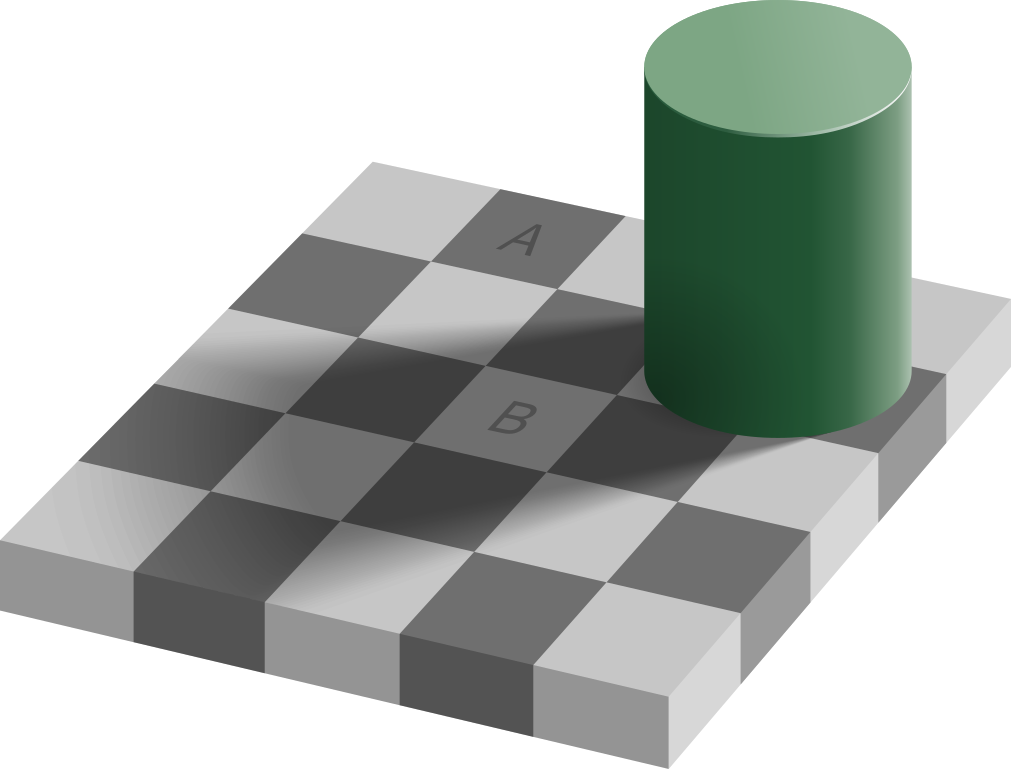
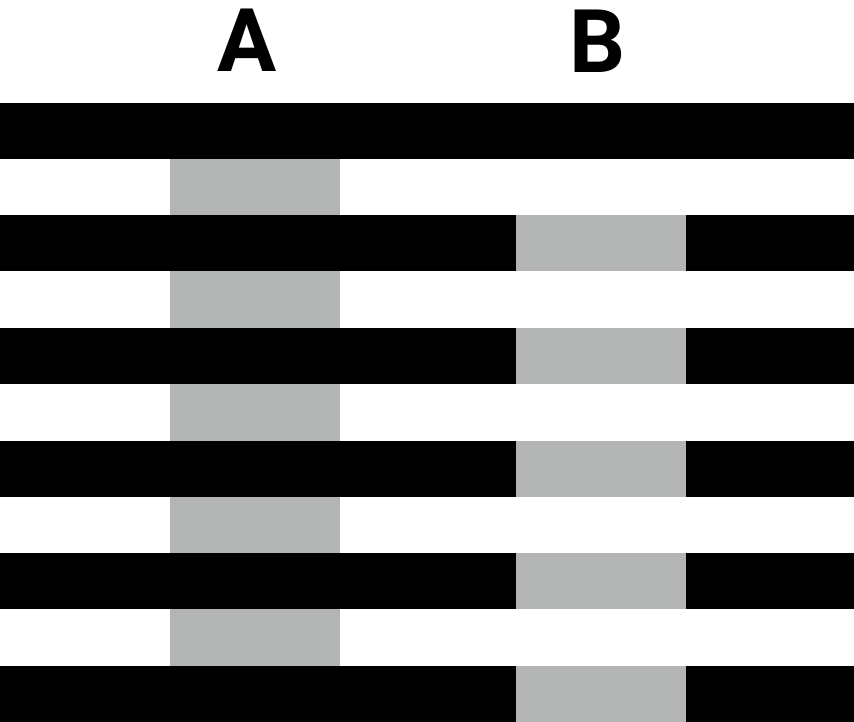
Are squares A and B in the checker shadow illusion the same shade?
Yes. The labelled squares have the same grey value. The depicted shadow and checkerboard context make them appear different; isolating the squares reveals the match.
What are Mach bands?
Mach bands are apparent light and dark strips near changes in brightness. They illustrate how the visual system responds to contrast at boundaries.
Frequently asked questions
What is a colour afterimage?
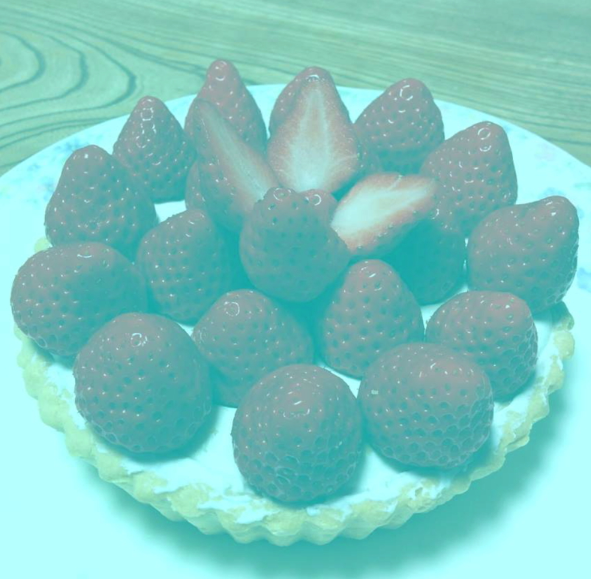
A colour afterimage is a lingering visual impression after looking away from a coloured stimulus. Adaptation in the visual system can make a different colour appear against a neutral background.
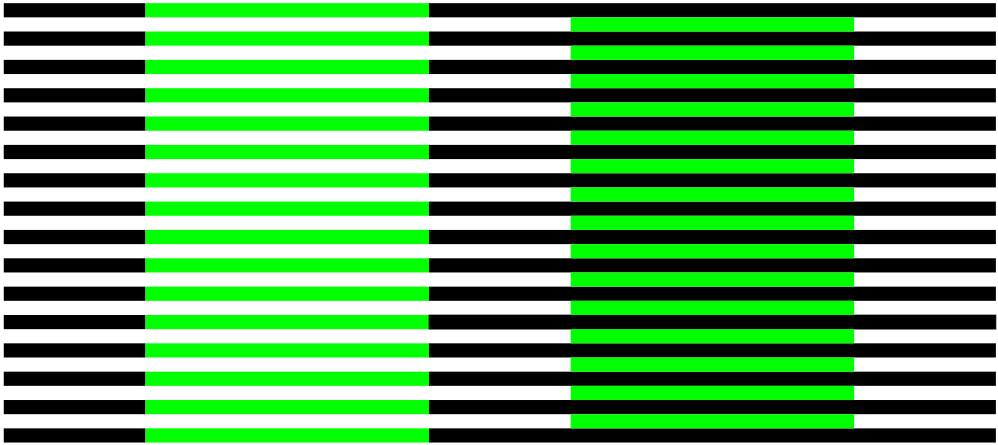
Why does a colour change when its background changes?
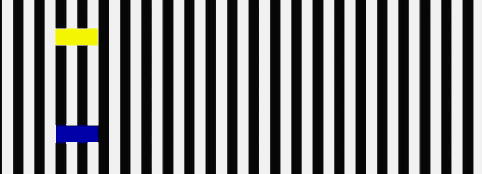
Colour perception depends partly on surrounding colours and contrast. An unchanged patch can look different when placed in a different visual context.
How should I view an afterimage demonstration?
Use the viewing instructions on the entry page. Look at the specified point, then shift to the suggested neutral area. You can stop whenever you wish; the effect varies between viewers.
Frequently asked questions
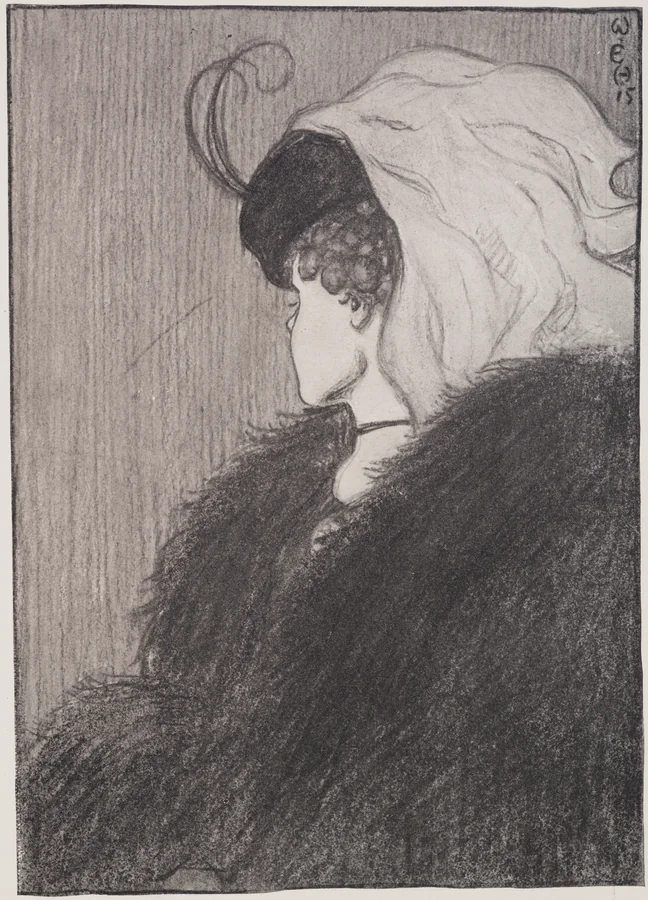
What is an ambiguous figure?
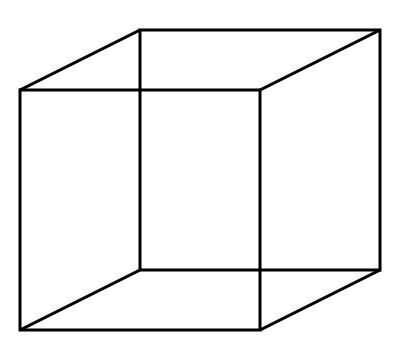
An ambiguous figure supports more than one interpretation of the same image. A viewer may switch between the interpretations even though the picture stays unchanged.
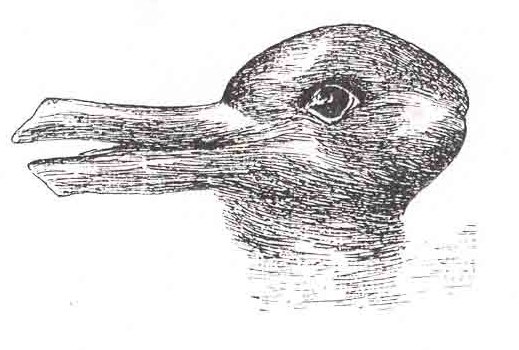
What does the duck-rabbit picture show?
The same outline can be read as a duck facing one direction or a rabbit facing the other. The shape that looks like a beak can also look like ears.
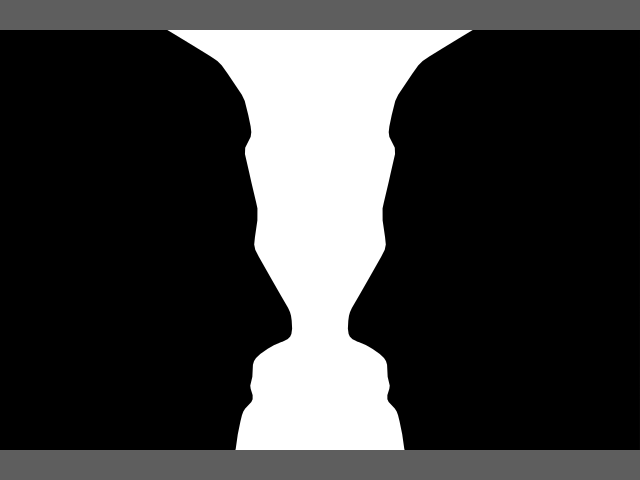
How does Rubin’s vase work?
The central region can be seen as a vase, while the surrounding regions can be seen as two facing profiles. The shared boundary changes meaning as foreground and background switch.
Frequently asked questions
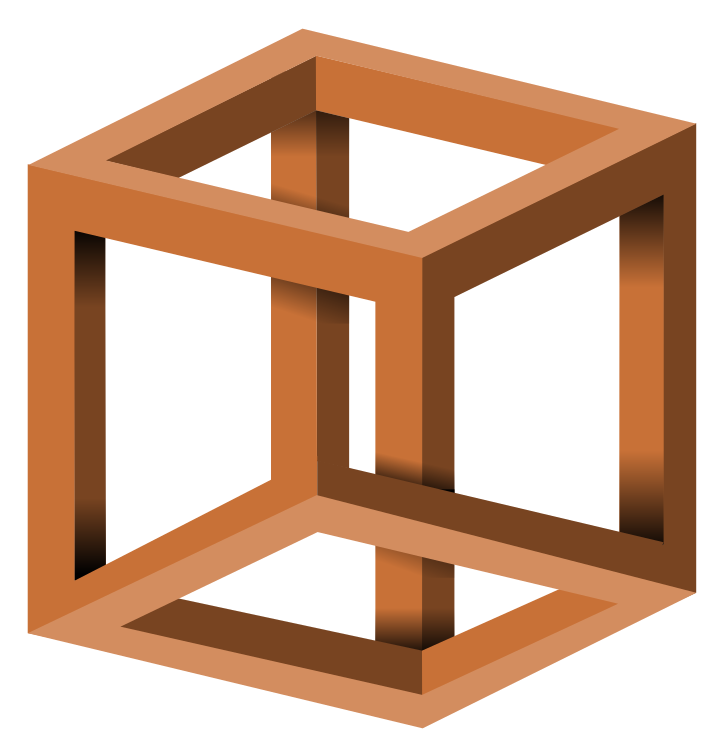
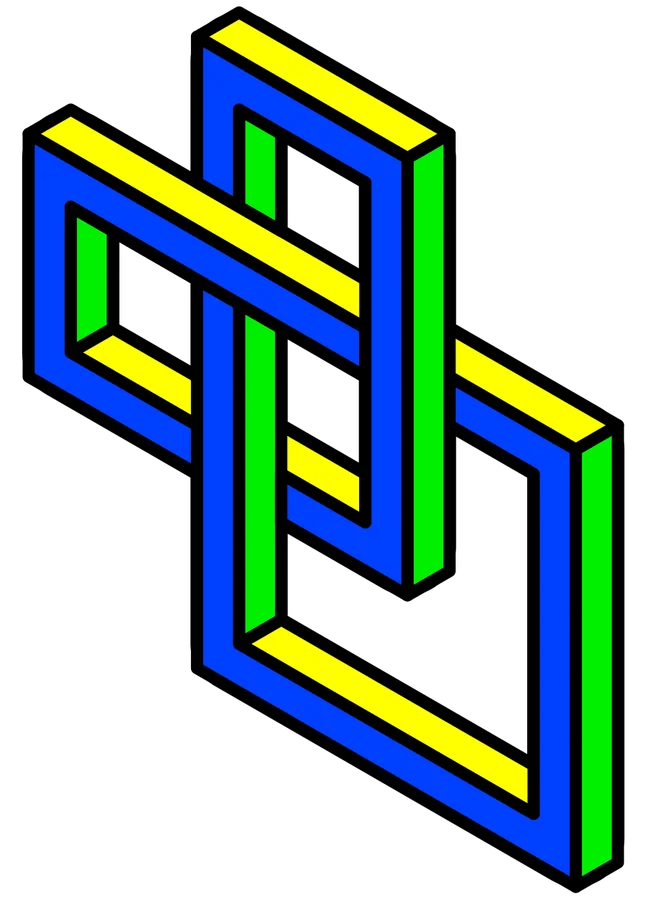
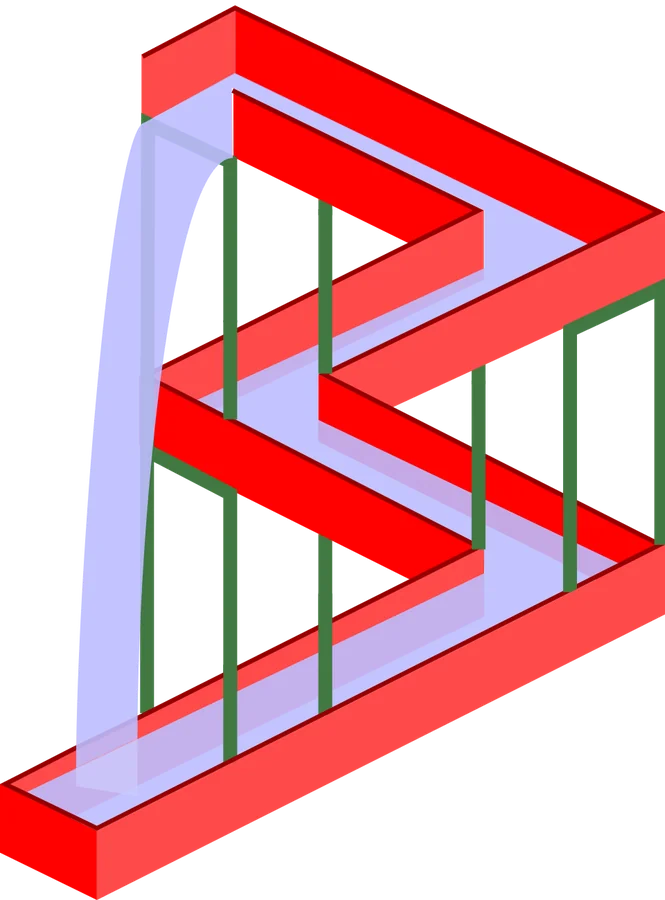
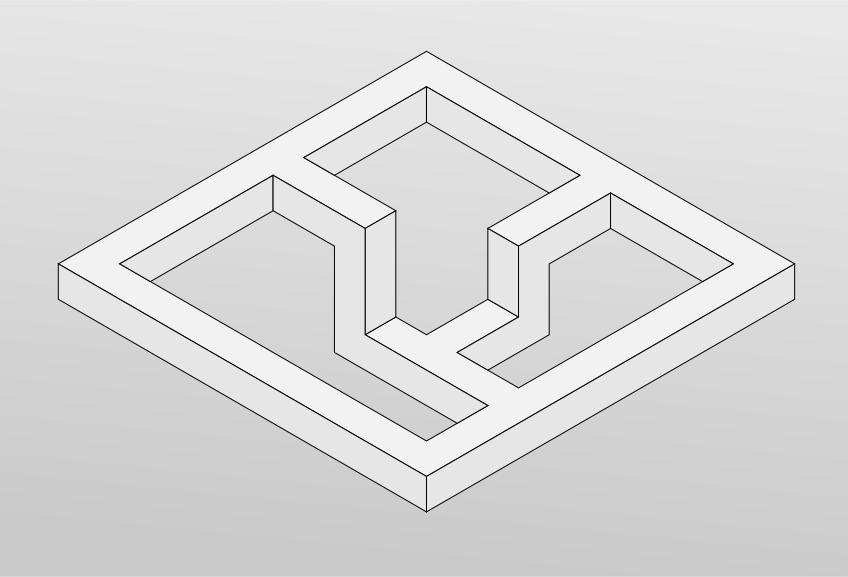
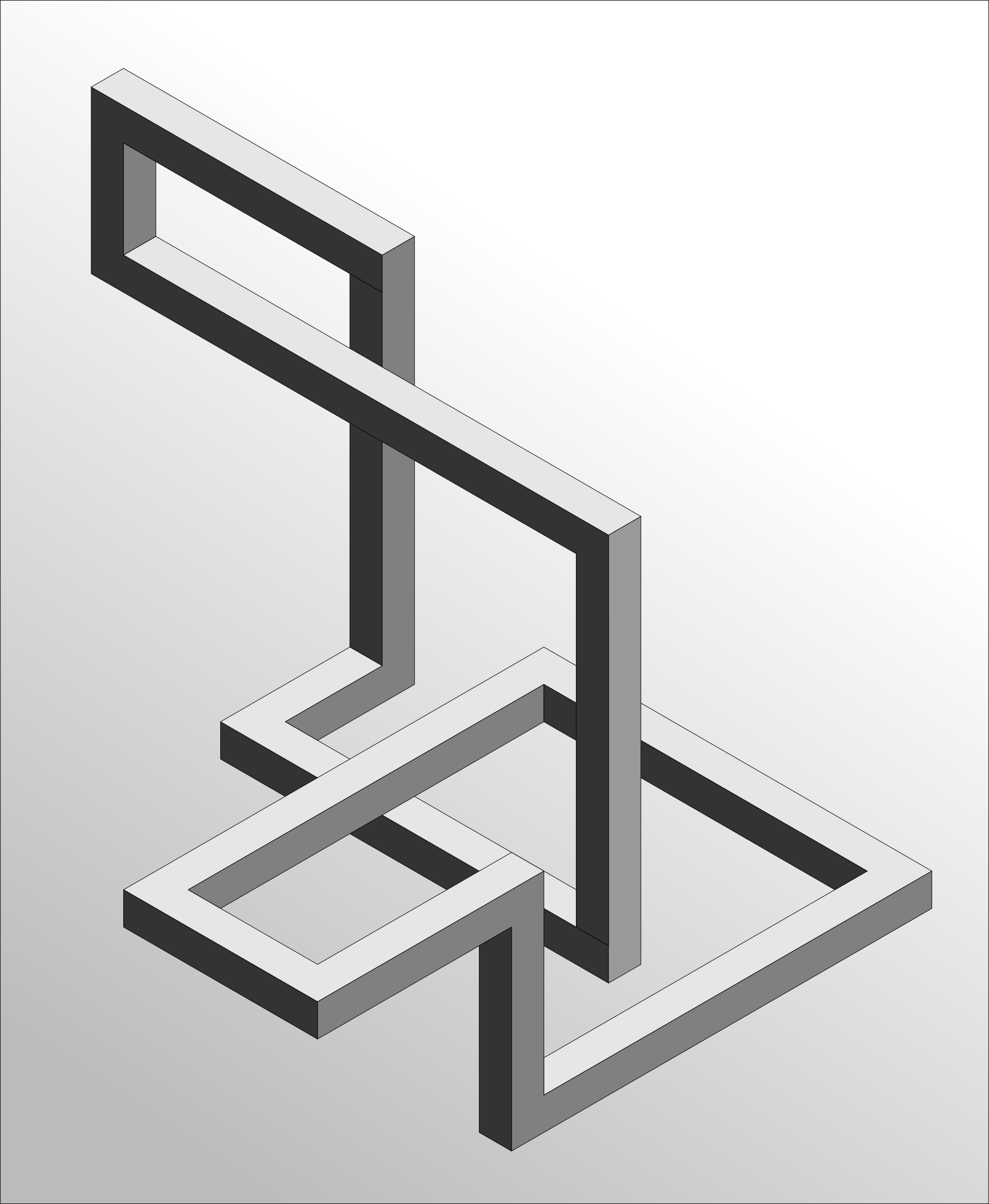
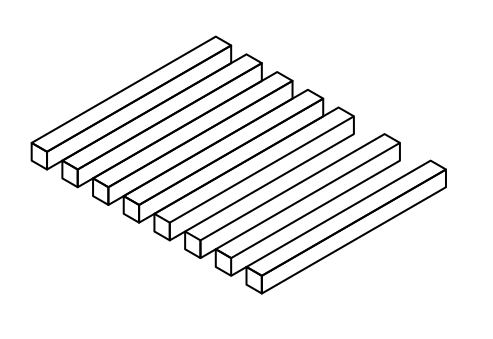
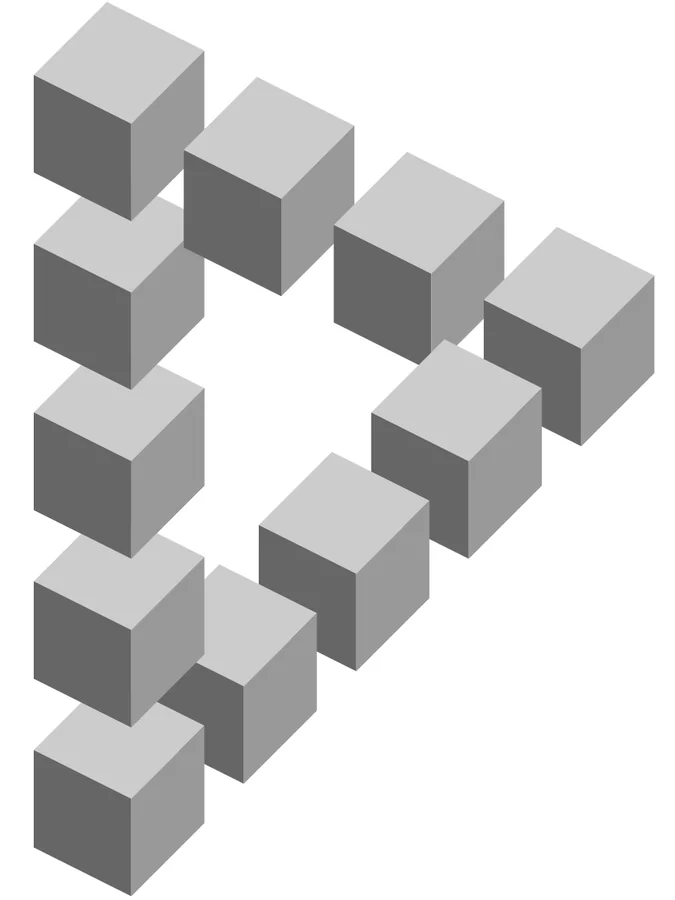
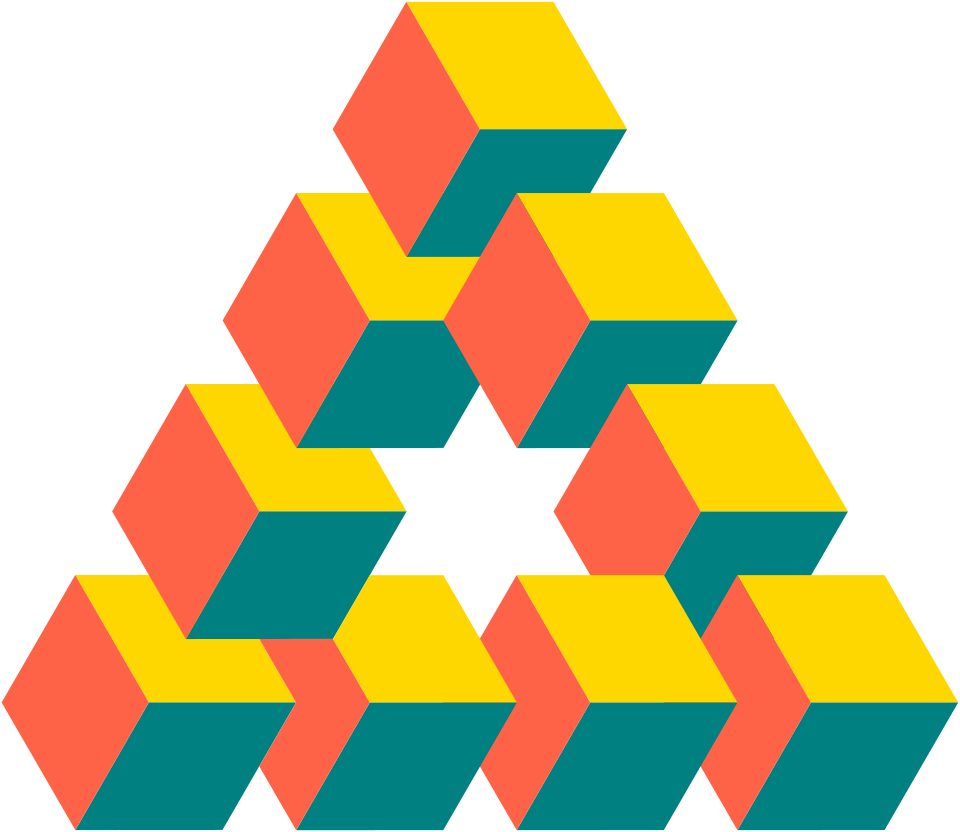
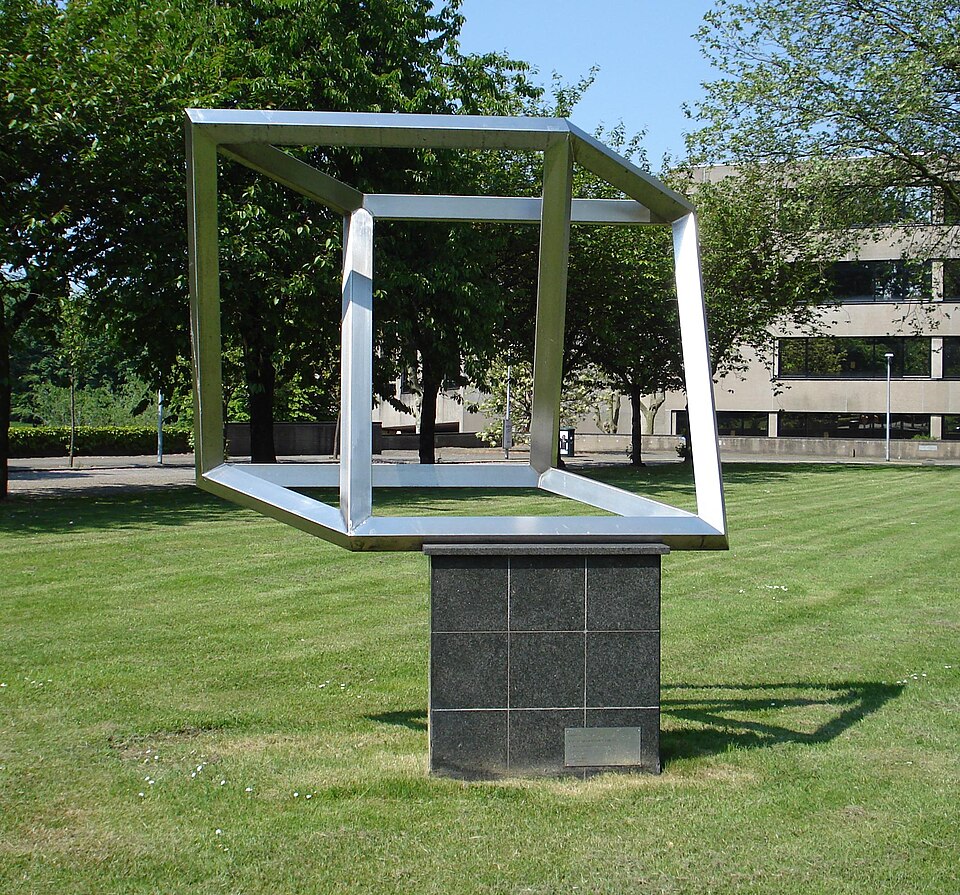
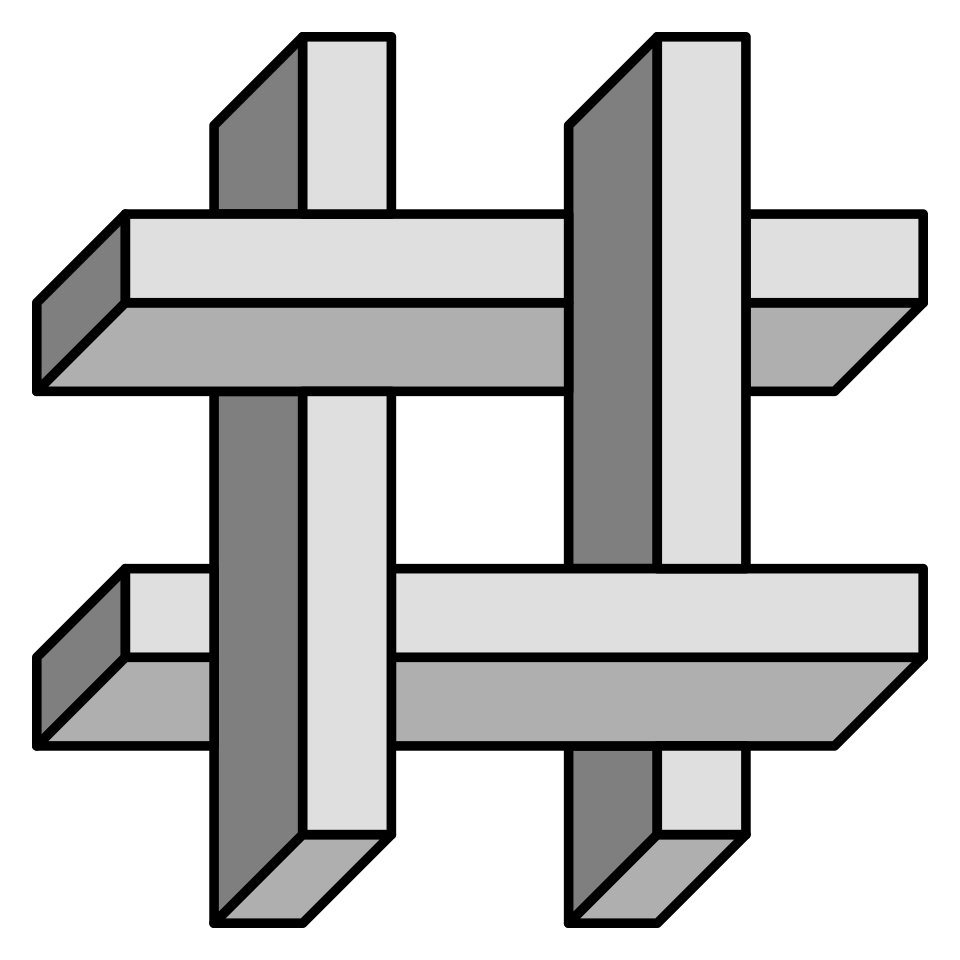
What is an impossible object?
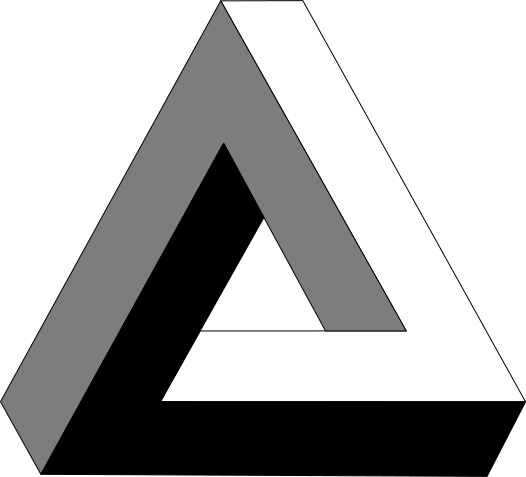
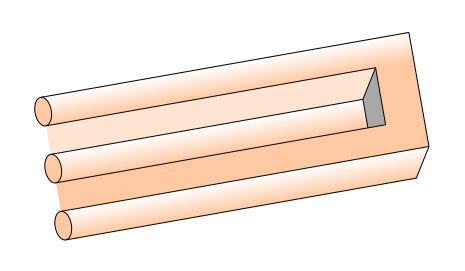
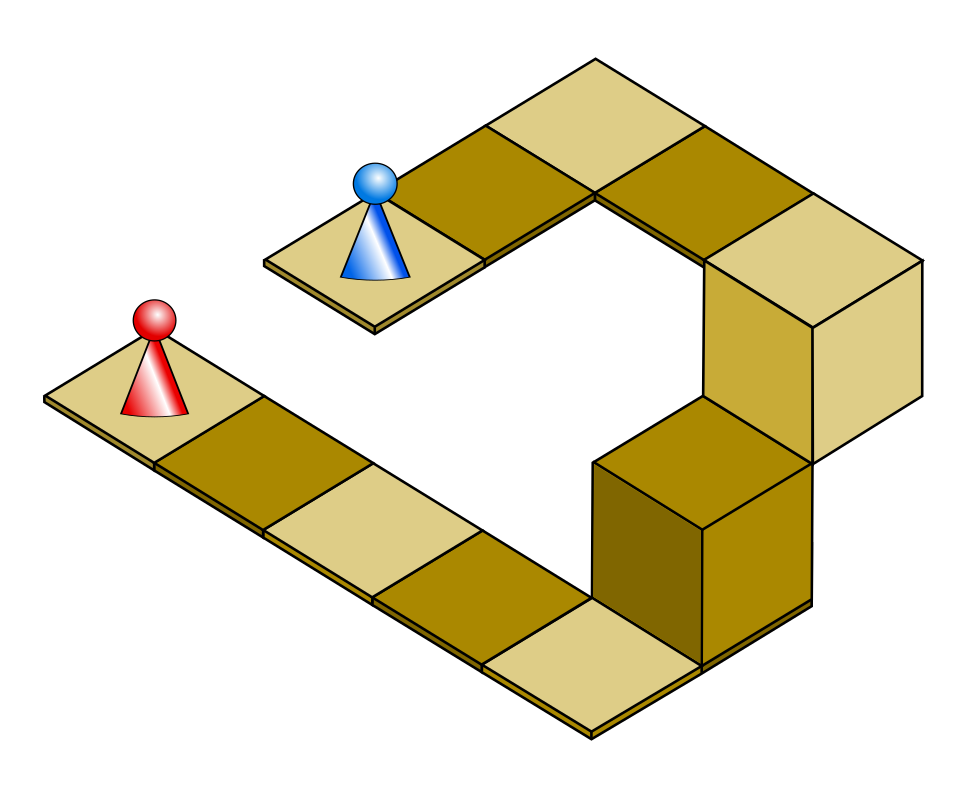
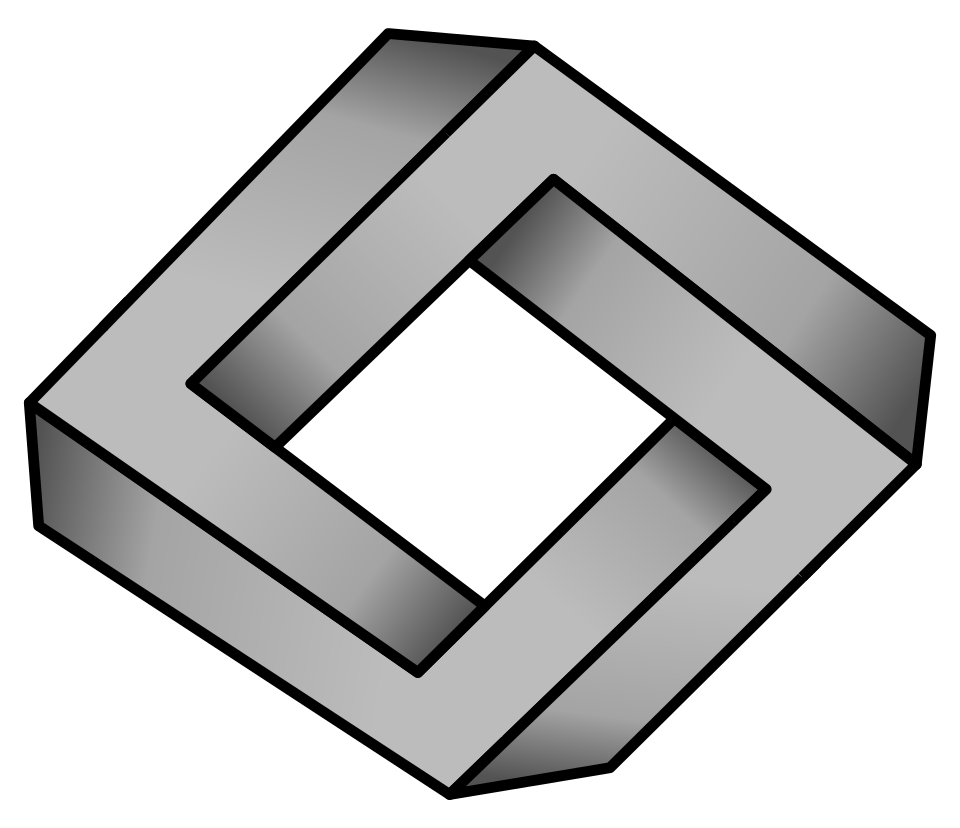
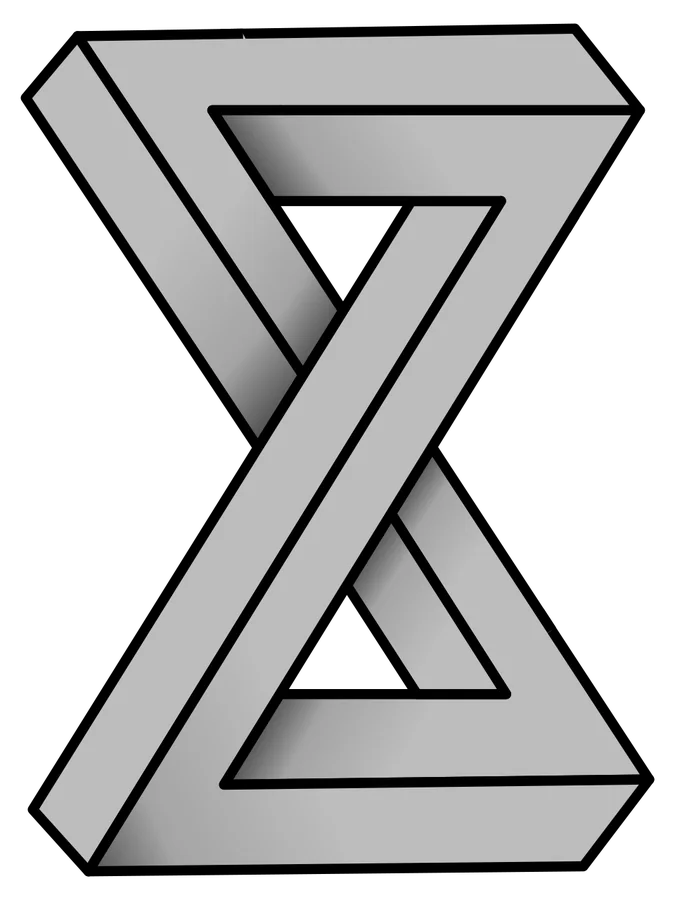
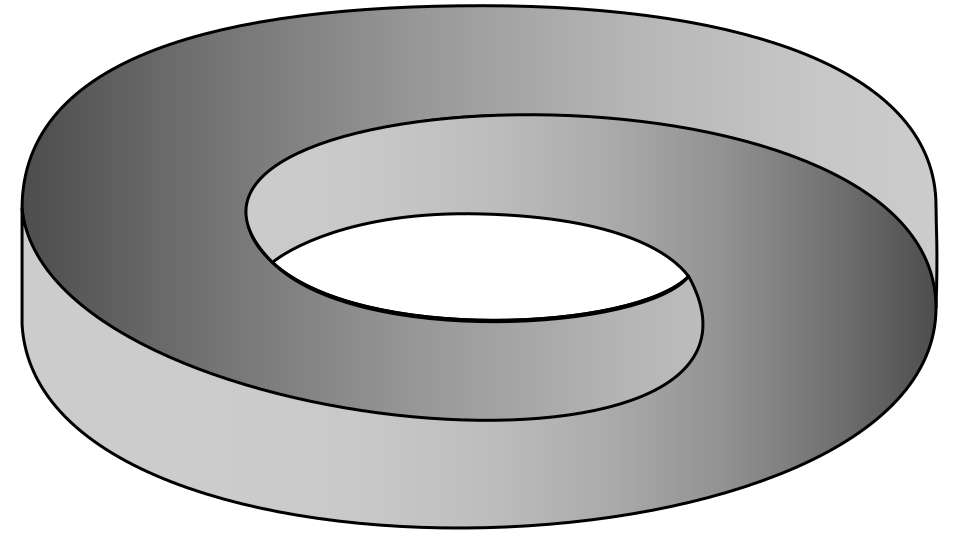
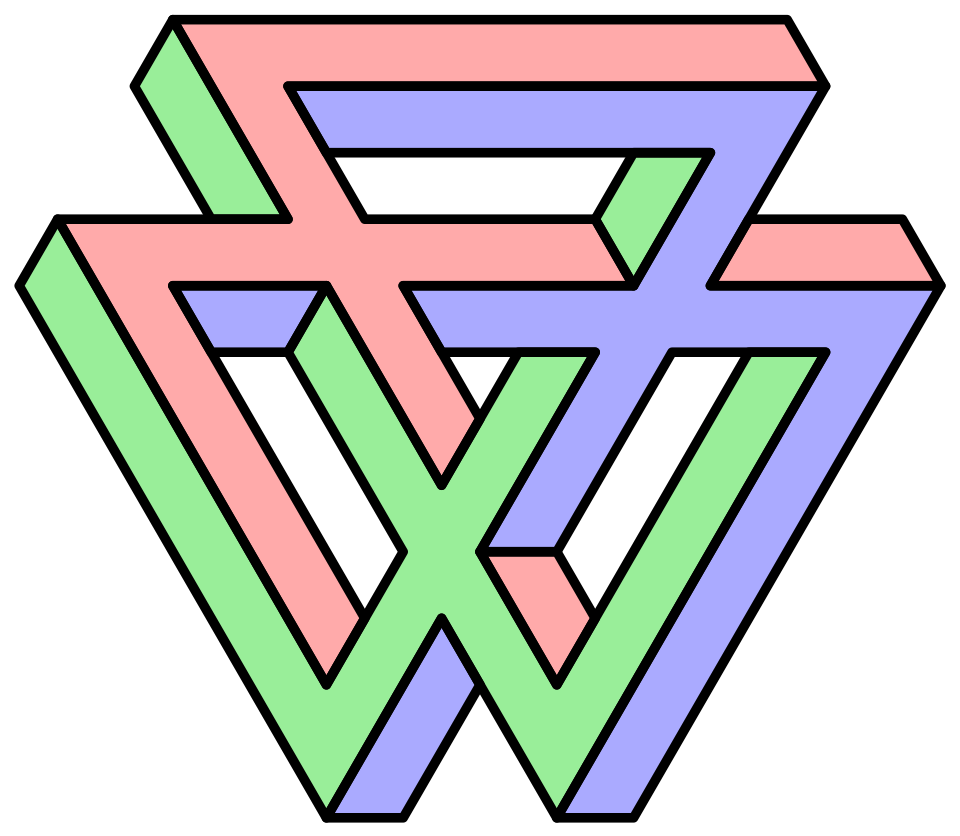
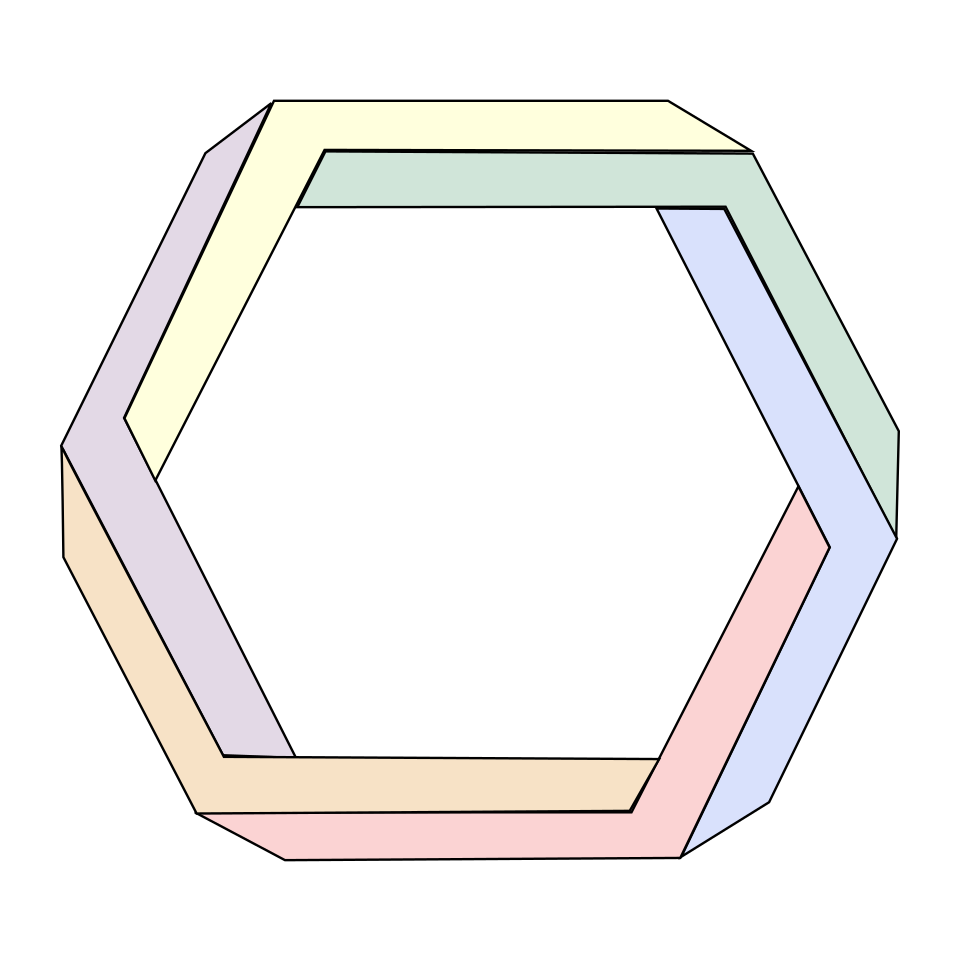
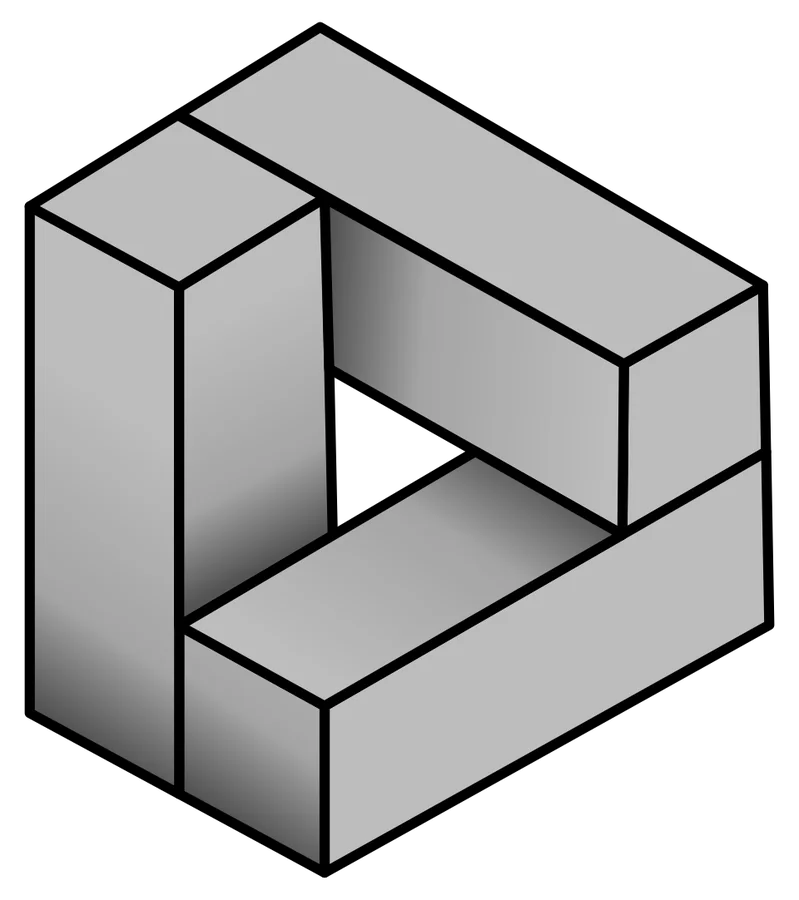
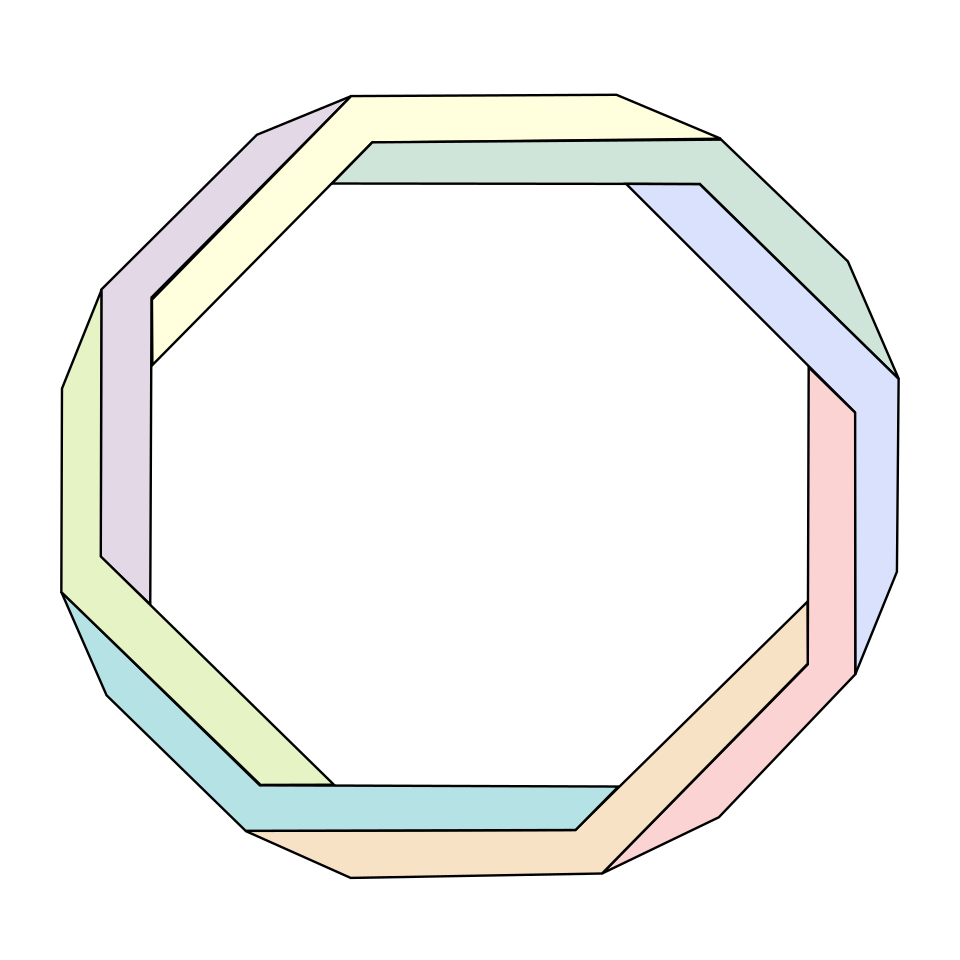
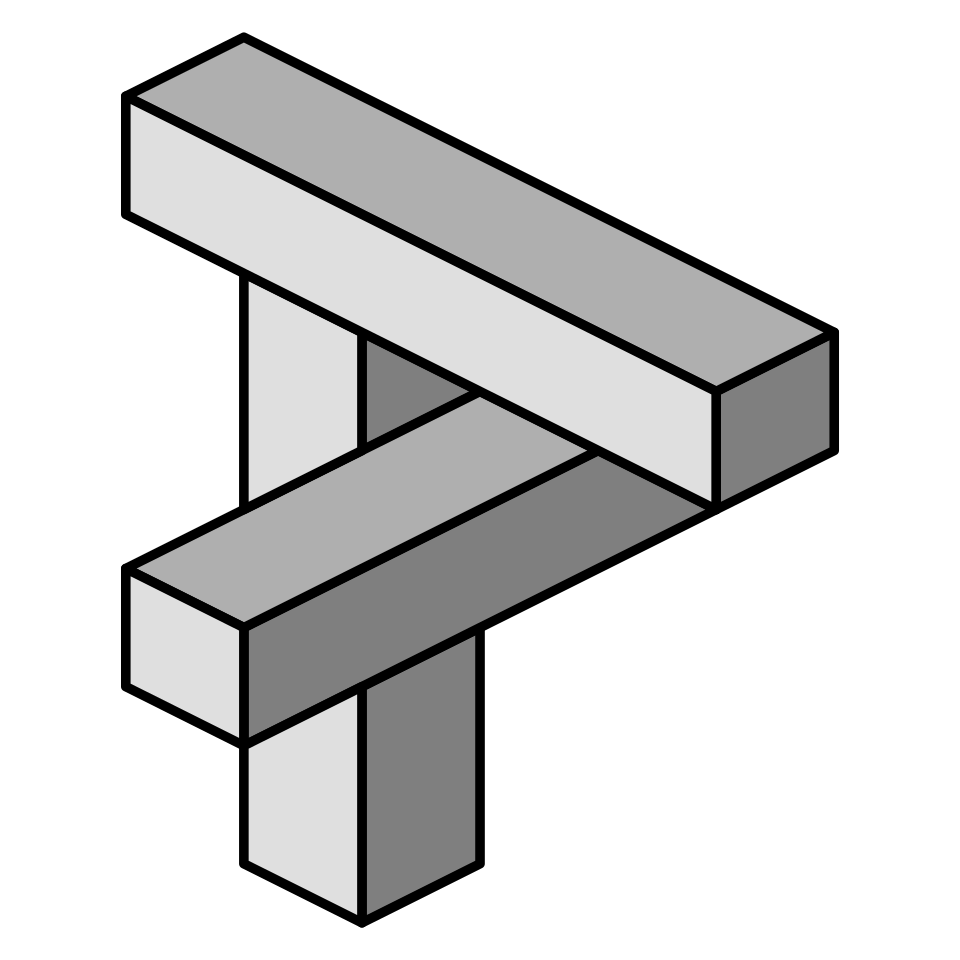
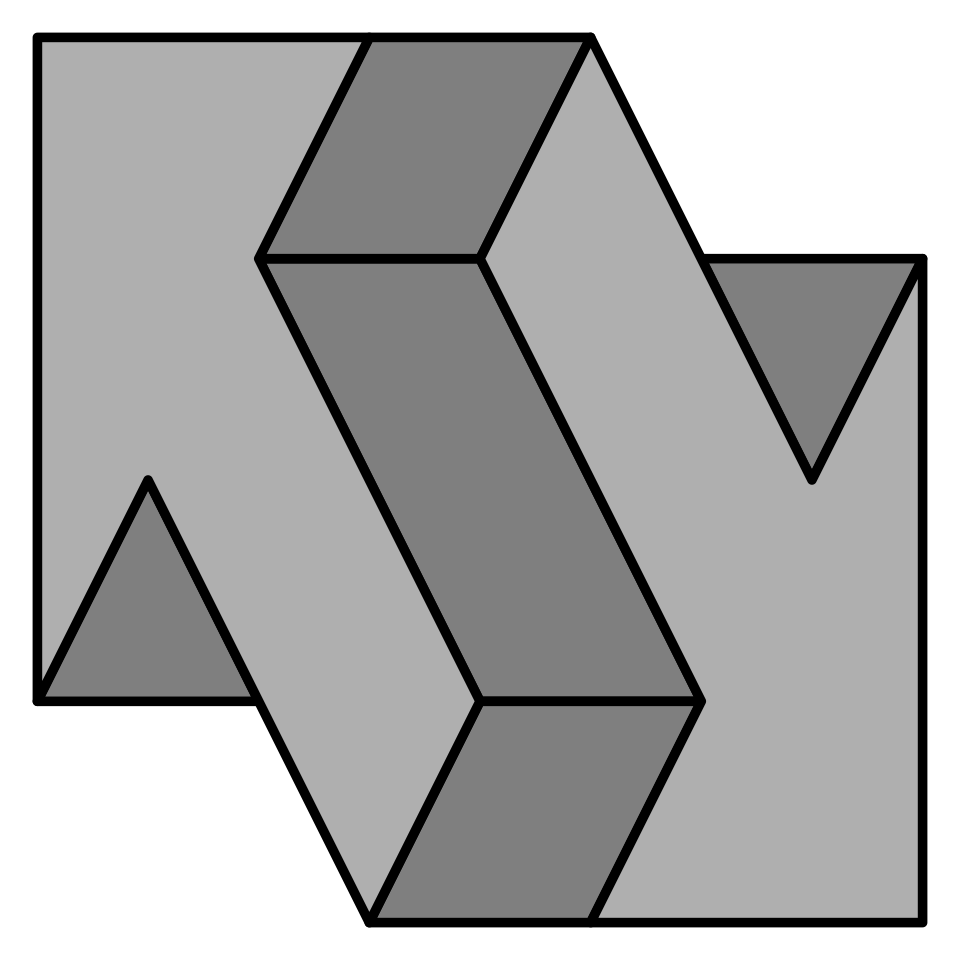
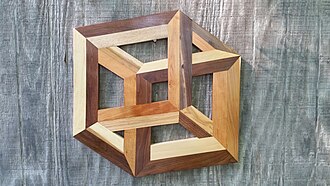
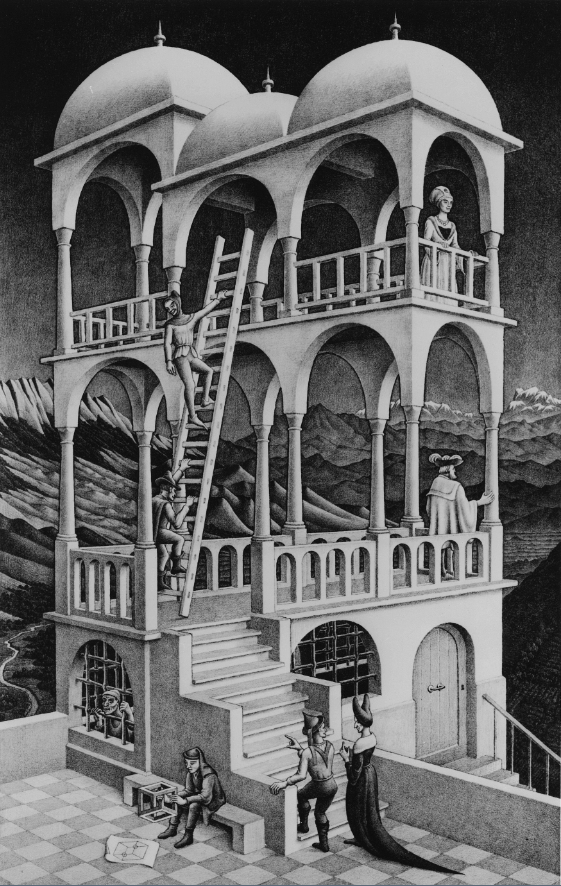
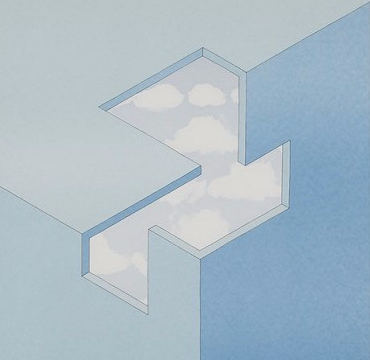
An impossible object is a drawing whose parts suggest familiar three-dimensional shapes but cannot all connect as they appear to. The contradiction becomes clearer when you trace the whole structure.
Can a Penrose triangle be built?
It cannot exist as the ordinary solid the drawing suggests. A specially arranged model can create the appearance from one viewpoint, but its actual structure differs from the pictured object.
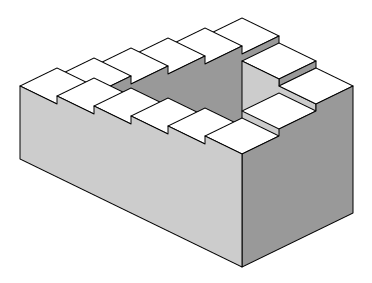
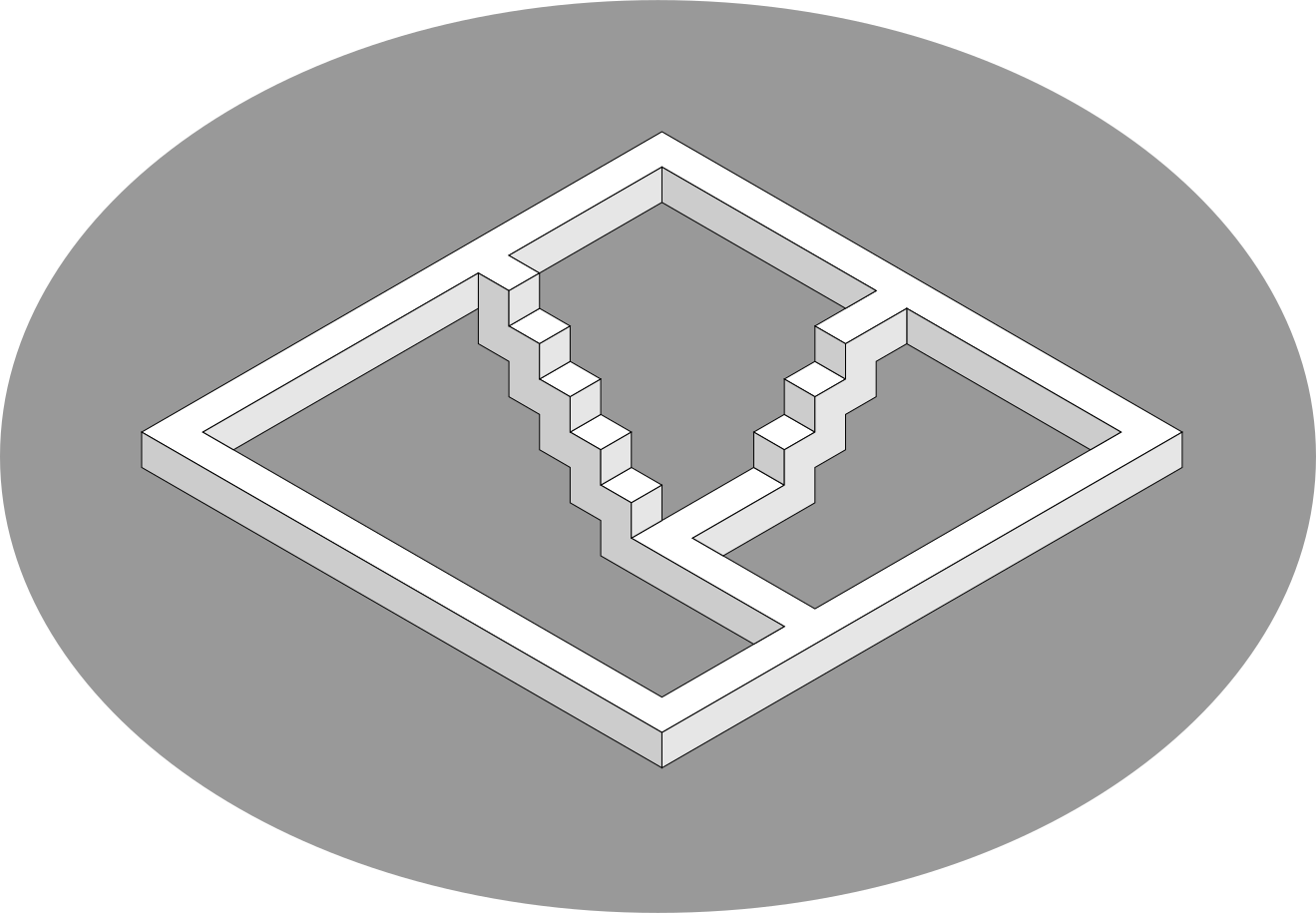
How do the Penrose stairs work?
The drawing joins plausible stair segments into an apparent loop that continually rises or falls. In ordinary space, a closed circuit cannot gain height at every step and return to its starting level.
Frequently asked questions
Why can a still picture appear to move?
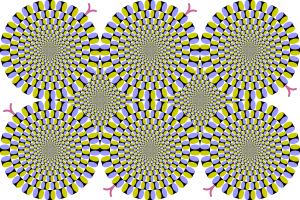
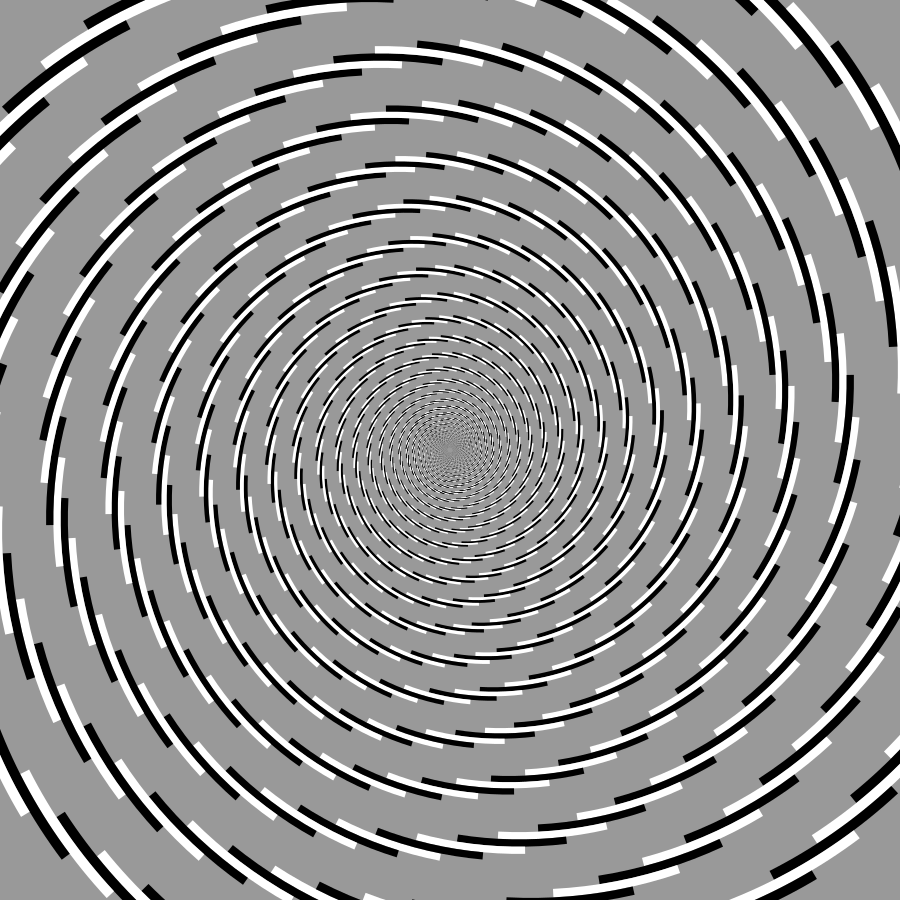
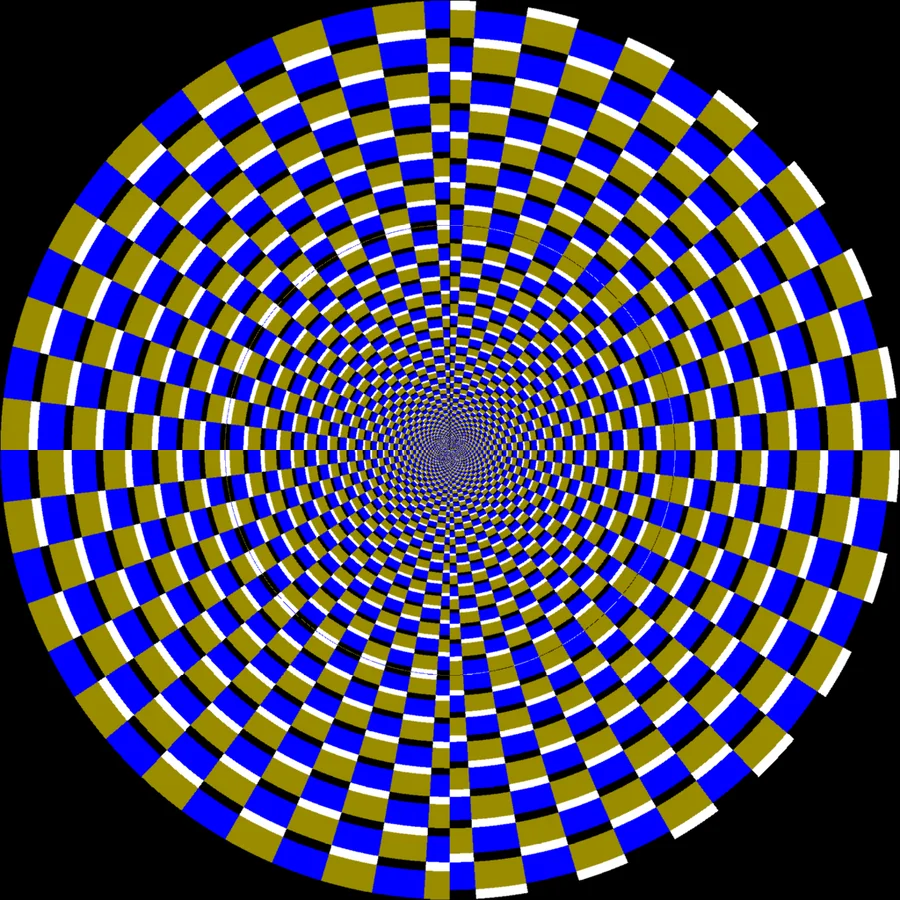
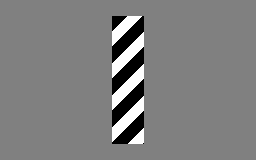
Certain arrangements of contrast and pattern can produce apparent movement, especially away from the centre of attention. A motion illusion does not always require an animated image.
Is the spinning dancer a test of personality or brain dominance?
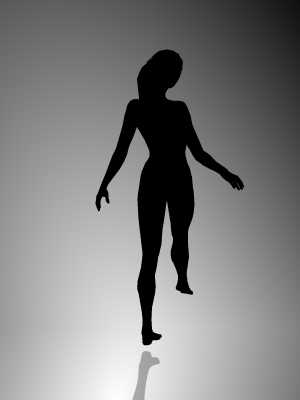
No. The silhouette has ambiguous depth cues and can be interpreted as turning in either direction. Its perceived rotation does not establish a personality type or a dominant brain hemisphere.
Do the animated illusions play automatically?
No. Through Mirror initially shows still previews. Open a demonstration and select Play animation when you want to see it move.
Frequently asked questions
What are illusory contours?
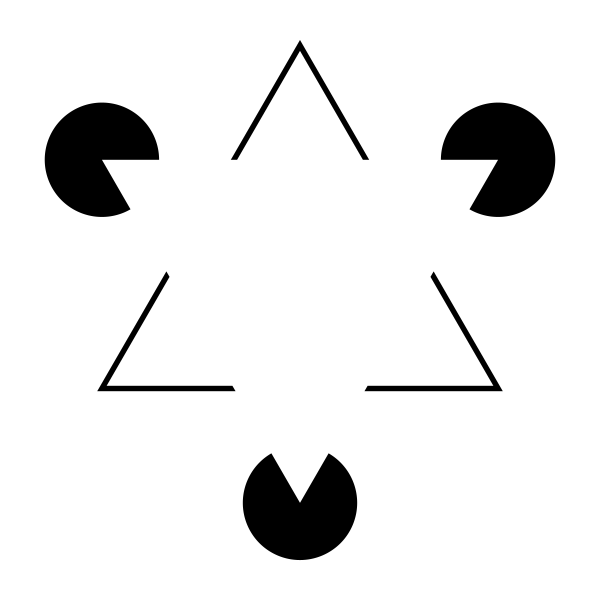
Illusory contours are apparent edges that are not explicitly drawn. Surrounding shapes can make a viewer perceive a continuous boundary or a surface.
Is there a drawn triangle in the Kanizsa triangle?
The bright triangle appears to have clear edges, but those edges are not drawn. The surrounding cut-out shapes suggest a triangle covering parts of them.
Why does the visual system complete hidden shapes?
Vision uses the relationships between visible edges and surfaces to interpret partially hidden objects. Illusory-contour demonstrations show how a coherent shape can be perceived from incomplete cues.
Frequently asked questions
What is an auditory illusion?
An auditory illusion is a surprising perception of sound influenced by context, arrangement or interpretation. Examples include ambiguous melodies, apparent changes in pitch, and the virtual barber shop’s impression of a haircut happening around you.
Can I hear the sound demonstrations on this site?
Entries explain the effects and provide listening demonstrations. For Virtual Barber Shop, use stereo headphones with the left and right sides correctly placed, then play the embedded demonstration.
How are spatial sound and binaural audio related?
Spatial sound gives audio a sense of direction and distance in three-dimensional space. Binaural audio delivers this through two headphone channels that reproduce cues reaching each ear, including timing, loudness and filtering by the head and outer ears. The virtual barber shop uses these cues to place a barber around your head. Binaural beats are a different effect: nearby tones presented separately to each ear create a perceived beat.
Frequently asked questions
What is a tactile illusion?
A tactile illusion is a surprising experience of touch or bodily sensation. Adaptation, neighbouring stimulation, body position and expectations can influence what is felt.
Do tactile illusions involve the eyes?
Some demonstrations explore touch alone, while others involve interactions between touch and vision. The entry’s instructions explain which senses and conditions are involved.
Frequently asked questions
What is a multisensory illusion?
A multisensory illusion involves interactions between senses. What a person sees, hears or feels can change how information from another sense is interpreted.
What is the McGurk effect?
The McGurk effect occurs when seeing speech movements influences the speech sound a listener perceives. Combining mismatched visual and auditory speech can produce a different perceived syllable.